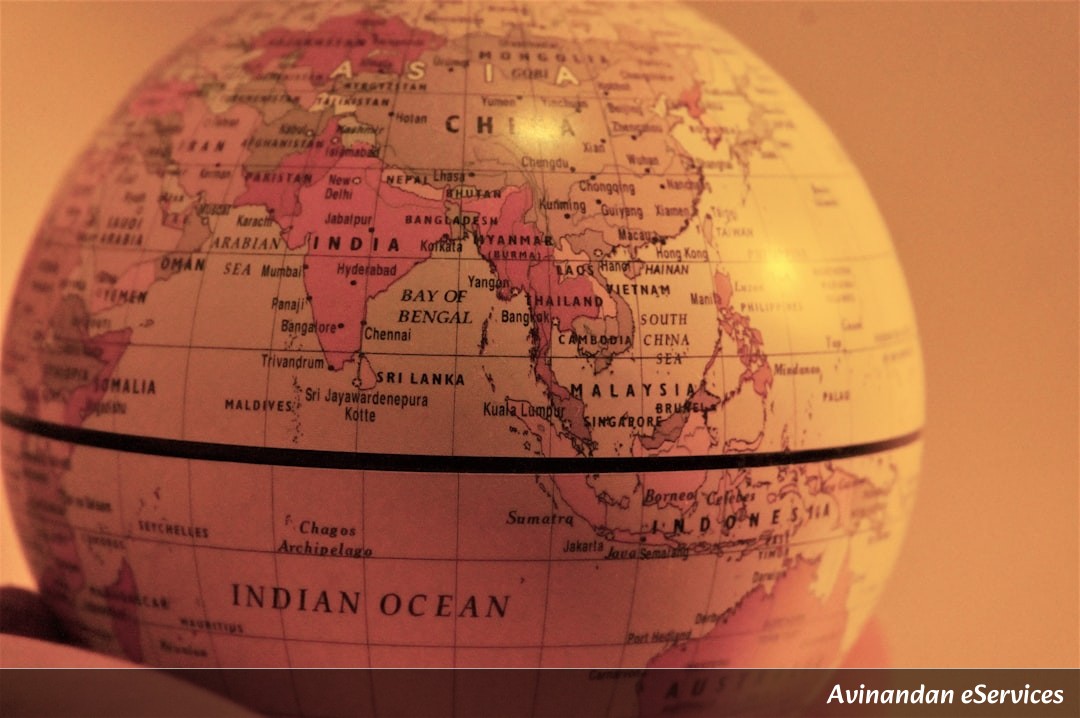
Introduction to the Topic
Have you ever looked at the label on your smartphone, your favorite pair of sneakers, or even the car your family drives? Chances are, you'll see words like 'Made in China,' 'Assembled in Vietnam,' or 'Designed in California.' In today's world, the products we use and the services we enjoy are the result of a complex global network of production and trade. This intricate web of connection is the essence of globalisation.
Welcome to our deep dive into Chapter 4 of the Class X Economics NCERT textbook, "Globalisation and the Indian Economy." This chapter is crucial because it helps us understand the massive economic shifts that have reshaped our world over the last few decades. We will explore what globalisation truly means, who the major players are (hello, MNCs!), what drives this process, and most importantly, how it has impacted India. Is it a story of endless opportunity, or are there hidden challenges? Let's unravel the threads of our interconnected global economy together.
Key Concepts Explained
What Exactly is Globalisation?
At its core, globalisation is the process of rapid integration or interconnection between countries. Think of it as the world shrinking into a 'global village.' This isn't just about companies selling their products abroad. It's a multi-faceted process involving:
- Movement of Goods and Services: A car designed in Germany might be assembled in India using parts from Japan and South Korea.
- Movement of Investments: A company from the USA might invest money to build a factory in India. This is called foreign investment.
- Movement of Technology: The latest software, machinery, and production techniques move swiftly from one country to another.
- Movement of People: People migrate between countries in search of better jobs, education, and opportunities.
In essence, globalisation means that events, decisions, and activities in one part of the world can have significant consequences for individuals and communities in distant parts of the globe.
The Engine of Globalisation: Multinational Corporations (MNCs)
A central force driving the process of globalisation is the Multinational Corporation (MNC). As the name suggests, an MNC is a company that owns or controls production in more than one nation. You interact with them every day—think of brands like Samsung, Coca-Cola, Nike, Ford, and even Indian giants like Tata Motors and Infosys, which have operations worldwide.
Why do MNCs go global?
MNCs don't set up offices and factories in other countries randomly. They are driven by a clear objective: maximizing profit. They achieve this by strategically looking for:
- Cheap Labour: They often set up production in countries where they can hire workers at lower wages, significantly reducing their production costs.
- Proximity to Markets: Being close to their customers reduces transportation costs and helps them better understand local tastes and preferences.
- Availability of Resources: They might set up in a location rich in specific raw materials or one that has a pool of skilled labour, like engineers or IT professionals.
- Favourable Government Policies: MNCs actively seek out countries that offer tax breaks, lenient labour laws, and other incentives that benefit their business.
How do MNCs operate and control production?
MNCs use several methods to spread their production and link with different countries:
- Setting up Joint Ventures: An MNC might partner with a local company. The MNC brings money (foreign investment) and the latest technology, while the local company provides knowledge of the local market and existing infrastructure. A classic example was when Ford Motors entered India in 1995 by partnering with Mahindra & Mahindra.
- Buying up Local Companies: A more common route for MNCs with large financial muscle is to simply acquire successful local companies. This gives them instant access to an established market and production facilities. For instance, the American food giant Cargill Foods bought Parakh Foods, a smaller Indian company.
- Placing Orders with Small Producers: In industries like garments, footwear, and sports goods, large MNCs often place orders with a vast network of small, independent producers around the world. The MNC dictates the price, quality standards, and delivery timelines. While they don't own the factories, they exert immense control over the production process.
Through these methods, MNCs weave together production processes across different geographies, creating complex and efficient global supply chains.
The Twin Pillars: Foreign Trade and Foreign Investment
Globalisation is built upon two key economic activities: foreign trade and foreign investment.
Foreign Trade has historically been the main channel connecting countries. It allows producers to sell their goods beyond their domestic markets and gives consumers access to a variety of goods that are not produced in their own country. The most significant effect of foreign trade is the integration of markets. When Chinese toys enter the Indian market, they compete with Indian toys. This competition forces prices to converge and ensures that producers are aware of global quality standards.
Foreign Investment refers to the investment made by MNCs to set up factories, offices, or acquire assets in another country. This is also known as Foreign Direct Investment (FDI). It's more than just a flow of money; it brings with it advanced technology, modern managerial practices, and access to new markets, playing a vital role in the economic landscape of the host country.
What Factors Have Enabled Globalisation?
The rapid pace of globalisation we see today didn't happen by chance. It was propelled by two major forces:
1. Technology: The Great Enabler
Rapid improvements in technology have been a game-changer.
- Transportation Technology: The invention of containers for shipping has made it possible to transport huge volumes of goods across oceans at incredibly low costs. Faster air travel has also reduced the time it takes to move goods and people.
- Information and Communication Technology (ICT): This is perhaps the most revolutionary factor. The advent of the internet, email, teleconferencing, and mobile phones allows people to communicate instantly across the globe at negligible costs. An MNC can easily manage a team in India from its headquarters in New York, sharing designs and instructions in real-time. This seamless flow of information is the nervous system of the global production network.
2. Liberalisation of Trade and Investment Policies
For a long time after independence, the Indian government used trade barriers to regulate foreign trade. A trade barrier is a restriction set by the government, such as a tax on imports (tariff), to protect domestic producers from foreign competition. This was done to allow nascent Indian industries to grow without facing a flood of cheaper foreign goods.
However, starting around 1991, India initiated a major policy shift. The government began removing these barriers. This process of removing government-imposed restrictions on trade and business is known as liberalisation. This 'opening up' of the economy allowed for goods to be imported and exported easily and encouraged foreign companies to set up factories in India. This policy decision was a crucial green signal for globalisation to take root in India.
The Referee: World Trade Organization (WTO)
To manage the rules of this new globalised world, international bodies were created. The most prominent among them is the World Trade Organization (WTO). Its main objective is to liberalise international trade and establish a rule-based system. It sets the rules for trade between nations and acts as a forum for negotiations and settling disputes.
However, the WTO has been a subject of intense debate. While it claims to promote free trade for all, critics argue that in practice, the rules are often skewed in favour of developed countries. For example, developed nations often pressure developing countries to remove their trade barriers, while they themselves continue to provide massive subsidies to their own farmers, creating an unfair competitive environment. This debate highlights the power imbalances that exist within the framework of globalisation.
The Impact of Globalisation in India: A Mixed Bag
Globalisation has had a profound and complex impact on India. It’s not a simple story of good or bad; it's a mix of both.
The Positives: What Went Right?
- Greater Choice and Quality for Consumers: For the urban consumer, globalisation has been a boon. There is a wider variety of high-quality goods available at competitive prices, from cars and electronics to processed foods.
- Creation of New Jobs: MNCs have invested in industries like electronics, automobiles, and food processing, creating new jobs. The service sector, particularly IT and BPOs (call centres), has seen a massive boom, providing employment to millions of skilled, English-speaking youth.
- Growth of Indian Companies: Some Indian companies have risen to the challenge. They have invested in new technology, improved their production standards, and successfully collaborated with or competed against MNCs. A few have even become MNCs themselves (e.g., Tata Motors, Infosys, Asian Paints).
- Boost to the Economy: The influx of foreign investment and the growth of trade have contributed significantly to India's economic growth rate.
The Negatives: The Challenges and Concerns
- Destruction of Small Producers: Globalisation has posed a major challenge to small, local manufacturers. They simply cannot compete with the low prices of imported goods from giant MNCs. Industries like toy manufacturing, batteries, and capacitors have been severely hit, leading to factory closures and widespread job losses.
- Uncertain Employment and Exploitation of Labour: To stay competitive, companies often hire workers on a 'flexible' basis—meaning temporary jobs without security or benefits. The pressure to reduce costs often leads to a suppression of workers' rights, longer working hours, and low wages, particularly in sectors like the garment industry.
- Widening Inequality: The benefits of globalisation have not been shared equally. They have largely favoured the educated, skilled, and wealthy population residing in urban centres. The vast majority of the population engaged in agriculture or the unorganised sector has been left behind, leading to a growing gap between the rich and the poor.
The Struggle for a Fair Globalisation
Globalisation is an irreversible reality. The question is not whether to have it, but how to make it more just and equitable. Fair globalisation is a concept that advocates for policies that create opportunities for everyone and ensure that the benefits of economic growth are distributed more evenly.
Achieving this requires proactive steps from multiple actors:
- The Government: It must play a crucial role by creating policies that protect the interests of all its citizens, not just the powerful. This includes enforcing labour laws, supporting small producers to become more competitive, and, if necessary, using trade barriers strategically to protect vulnerable industries.
- International Negotiations: The government must negotiate for fairer rules at the WTO and form alliances with other developing countries to counter the dominance of developed nations.
- People's Movements: In recent years, campaigns and protests by people's organisations have played a significant role in influencing trade and investment decisions, both nationally and internationally.
Summary & Key Takeaways
As we conclude our journey through this chapter, let's recap the most important points to remember:
- Globalisation is the rapid process of integration between countries, driven by the movement of goods, services, investment, and technology.
- Multinational Corporations (MNCs) are the key drivers of globalisation, organising production across multiple countries to maximise profit.
- Two major factors have enabled modern globalisation: rapid advancements in technology (especially transport and ICT) and the policy of liberalisation (removing trade barriers).
- The World Trade Organization (WTO) sets the rules for international trade, but its fairness is often debated, with accusations of bias towards developed countries.
- The impact of globalisation on India is mixed. It has brought benefits like more choice for consumers and new jobs in some sectors but has also hurt small producers and created job insecurity for many workers.
- The path forward lies in striving for a 'fair globalisation', which ensures that the benefits are shared more equitably among all sections of society.
Understanding globalisation is essential for making sense of the modern world. It helps us see the connections between our daily lives and the complex economic forces that shape our planet, encouraging us to think critically about how we can build a more prosperous and just global community.