Arjun: Oh no! Priya, look! I was getting a glass of water and it slipped. Shards of glass are everywhere! I wish there was a type of glass that didn't shatter into a million dangerous pieces.
Priya: Be careful, Arjun! Don't step on it. But you know, your wish actually came true over a hundred years ago, thanks to a very clumsy accident!
Arjun: A clumsy accident? What do you mean? Did someone trip and invent something amazing? That sounds like a story I’d like to hear!
Priya: Exactly! It’s the story of how safety glass was invented. It’s one of my favourite science stories because it shows how mistakes can sometimes lead to brilliant discoveries. It’s a principle scientists call 'serendipity' – finding something good without looking for it.
A Lucky Drop in the Lab
Arjun: Wow, serendipity! Cool word. So who was the clumsy person who made this discovery?
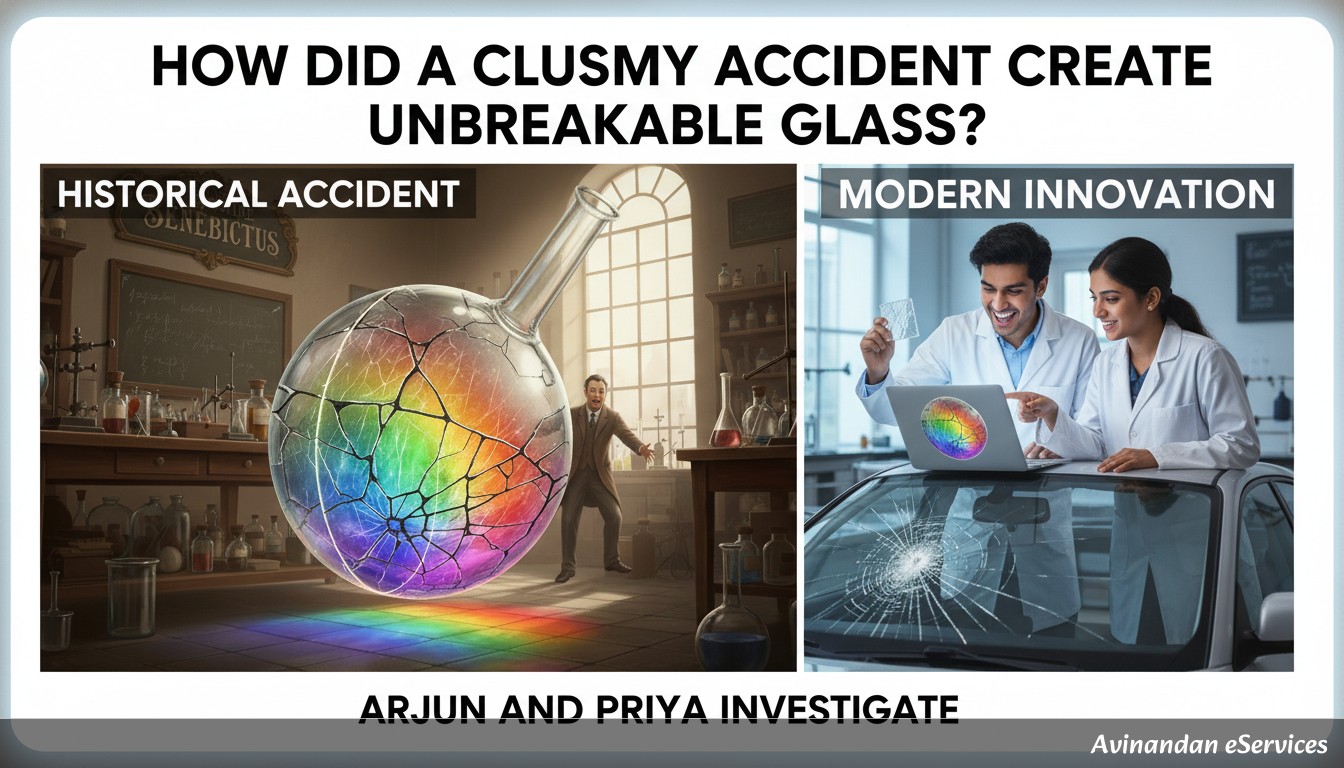
Priya: His name was Édouard Bénédictus, and he was a French artist, composer, and chemist. One day in 1903, he was working in his lab and accidentally knocked a glass flask off a high shelf.
Arjun: And it shattered into a million pieces, just like my glass?
Priya: That’s what he expected! He heard it hit the floor with a thud, but when he looked down, he was amazed. The flask was cracked all over, like a spider's web, but it hadn’t shattered. It had kept its original shape completely!
Arjun: No way! How is that even possible? Was it a magic flask?
Priya: Haha, not magic, just science! Bénédictus was very curious, so he looked closer. He remembered that the flask had once contained a type of liquid plastic called cellulose nitrate. The liquid had evaporated, but it left a thin, invisible film coating the inside of the glass.
The Secret Ingredient: A Sticky Film
Arjun: So, a thin plastic film stopped the glass from breaking apart? How?
Priya: Think of it like a super-strong glue. When the glass cracked, the little plastic film held all the broken pieces together. It was like giving the glass a secret, invisible skeleton! The glass itself broke, but the film wouldn't let the pieces fly apart.
Arjun: That’s brilliant! So he knew right away that he had invented something amazing?
Priya: Well, he made a note of it, but he didn't do anything with the idea at first. He just put the special flask on a shelf and kind of forgot about it. But then, a few weeks later, he read a story in the newspaper that changed everything.
Arjun: A newspaper story? What was it about?
Priya: It was about a terrible car accident. In those days, car windshields were made of regular glass. When there was a crash, the windshield would shatter into sharp, dagger-like pieces, which was very dangerous for the people inside. The story he read was about two young women who were badly injured by flying glass.
Arjun: Oh, that’s so sad. But I think I know where this is going!
Priya: You got it! Bénédictus suddenly remembered his clumsy moment in the lab. He thought, 'What if I put that plastic film between two sheets of glass? It could stop the glass from shattering in an accident!' He rushed back to his lab and started experimenting right away.
From Lab Accident to Lifesaver
Arjun: So he basically made a glass sandwich? Glass, then plastic, then glass?
Priya: Exactly! He called his invention 'Triplex'. The first versions were used for the small glass eyepieces in gas masks for soldiers during World War I. They needed something that wouldn't shatter and blind them. It was a huge success!
Arjun: And then in cars?
Priya: Yes, but it took a while for car companies to start using it because it was more expensive than normal glass. Henry Ford was one of the first to make it a standard feature on his cars in the late 1920s. Today, almost every car in the world has a laminated safety glass windshield. That little clumsy accident in a French lab has saved countless lives!
Arjun: Wow. So every time I look through a car window, I’m looking at an invention that started with a dropped flask. That's incredible. It's used in other places too, right?
Priya: Absolutely! It’s used in skyscraper windows, bank teller screens, display cases in museums, and even some phone screens. It’s all based on that same simple idea of layering glass and plastic to make it stronger and safer. All because a scientist paid attention to an accident!
So, What Did We Learn Today?
Priya: It's amazing how a small, unexpected event can change the world. Here's a quick recap of what we learned about safety glass:
- The invention of safety glass was a complete accident, an example of scientific 'serendipity'.
- It was discovered in 1903 by a French scientist named Édouard Bénédictus.
- He dropped a glass flask that had a thin, dried film of cellulose nitrate plastic inside.
- The flask cracked but didn't shatter because the plastic film held all the broken pieces together.
- Inspired by car accident injuries, he created laminated glass by sandwiching a layer of plastic between two sheets of glass.
- This invention, now used in car windshields and buildings worldwide, has saved millions of lives.
Arjun: And we learned that sometimes, being a little clumsy can lead to a great idea... as long as you pay attention to the results! Now, can you help me clean up this very UNSAFE glass?
Priya: Of course! Let's get the dustpan.