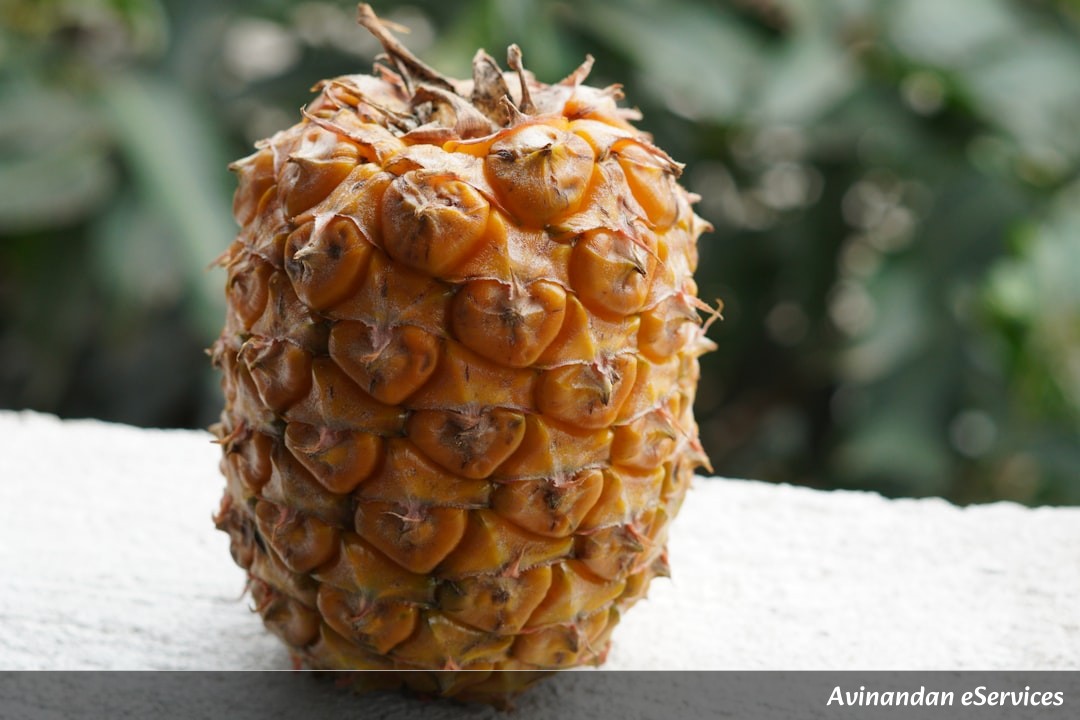
Aarav: Ow! Ananya, I think this pineapple is attacking me! I was just enjoying this bowl of fresh fruit, and now my tongue feels like it is being poked by a thousand tiny needles. Is it possible to be allergic to just the third bite of a fruit?
Ananya: Haha, don't worry, Aarav! You aren't having an allergic reaction. That tingle is actually a sign of one of the weirdest facts in the plant kingdom. Believe it or not, while you are eating the pineapple, the pineapple is actually eating you back!
Aarav: Wait, what? That sounds like something out of a science fiction movie. How can a fruit eat a person? It doesn't even have a mouth!
Ananya: You're right, it doesn't have a mouth, but it has something even more effective: biology! Pineapples contain a very special group of enzymes called bromelain. These enzymes are 'proteases,' which is a fancy way of saying they are like microscopic chemical scissors designed specifically to chop up proteins.
Aarav: Microscopic scissors? That's cool, but what does that have to do with my tongue stinging?
Ananya: Well, think about what your tongue and the inside of your mouth are made of. They are made of proteins! When you chew a piece of fresh pineapple, the bromelain starts working immediately. It begins to break down the protective mucous lining in your mouth and the surface proteins on your tongue. The stinging sensation you feel is literally the enzyme starting to digest the surface cells of your mouth.
Aarav: That is terrifying, Ananya! Does that mean if I eat enough pineapple, my tongue will just... disappear?
Ananya: Not at all! Our bodies are amazing at self-repair. As soon as you stop eating and swallow the pineapple, your mouth starts rebuilding those proteins. Plus, once the bromelain hits your stomach, your stomach acid is so strong that it denatures the enzyme—basically, it breaks the 'scissors' so they can't cut anymore. So the pineapple only has the upper hand while it's in your mouth.
Aarav: Phew, that’s a relief. But why would a plant even have 'meat-eating' scissors inside it? It’s not like a pineapple is out there hunting goats or something.
Ananya: Scientists think it’s a brilliant defense mechanism. Imagine you’re a hungry insect or a small animal looking for a snack. If you take a bite of a pineapple and it immediately starts making your mouth sore, you’re probably going to stop eating it and move on to a different fruit. It’s the plant’s way of saying, 'Hey, leave my seeds alone!'
Aarav: That makes sense. It’s like a biological 'Keep Out' sign. Is bromelain found in all parts of the pineapple?
Ananya: It is, but it's most concentrated in the stem—the tough, woody part in the middle that most people throw away. In fact, companies that make meat tenderizer often use the juice from those stems. Have you ever noticed how some recipes tell you to marinate tough meat in pineapple juice?
Aarav: Yes! My dad does that when he makes kebabs. He says it makes the meat super soft.
Ananya: Exactly! The bromelain 'scissors' chop up the tough collagen fibers in the meat, making it much more tender. But you have to be careful—if you leave the meat in the juice for too long, it will turn into a mushy paste because the enzymes don't know when to stop!
Aarav: Wow. So, if these enzymes are so powerful, do the people who work in pineapple factories have to wear gloves?
Ananya: That is a great question, and the answer is a bit shocking. Yes, workers who handle pineapples all day definitely have to wear gloves. In fact, there is a famous fact that people who harvest or process pineapples for years can actually lose their fingerprints! The constant contact with the bromelain wears down the ridges on their skin over time. Luckily, if they stop working with the fruit, their fingerprints eventually grow back.
Aarav: No way! Losing your fingerprints because of a fruit? I’m never going to look at a pineapple the same way again. But wait, why doesn't canned pineapple make my mouth sting?
Ananya: That’s the secret of heat! Enzymes are very sensitive to temperature. When pineapples are canned, they are heated up to kill bacteria and seal the tin. That heat 'cooks' the bromelain enzymes, changing their shape so they can't function as scissors anymore. That’s why canned pineapple or pineapple on a hot pizza doesn't bite back—the 'scissors' are broken.
Aarav: So, if I want to eat my pineapple without the 'fight,' I should just cook it? But I like it fresh!
Ananya: You can still eat it fresh! Some people find that soaking the pineapple chunks in salt water for a few minutes helps. The salt helps neutralize the enzyme slightly. Or, you can just think of the tingle as a badge of honor for winning a battle against a very feisty fruit!
Aarav: I think I'll take the 'battle' option. It makes snacking feel like an adventure.
So, What Did We Learn Today?
- Pineapples contain Bromelain: This is a powerful group of enzymes that act like 'microscopic scissors' to break down proteins.
- The 'Tingle' is Real: When you eat fresh pineapple, it is actually starting to digest the proteins on your tongue and in your mouth.
- Defense Mechanism: The plant likely evolved this enzyme to discourage insects and animals from eating it before it’s ready.
- Heat Disables the Enzyme: Canned or cooked pineapple doesn't sting because high temperatures destroy the bromelain's structure.
- Industrial Uses: Because it breaks down protein, bromelain is used as a natural meat tenderizer and can even wear away the fingerprints of people who handle the fruit constantly!
Aarav: Thanks, Ananya! Next time I see a pineapple, I’ll remember to say, 'I’m not trapped in here with you, you’re trapped in here with me!'
Ananya: Spoken like a true scientist, Aarav!