Introduction: What is the PM-JANMAN Mission?
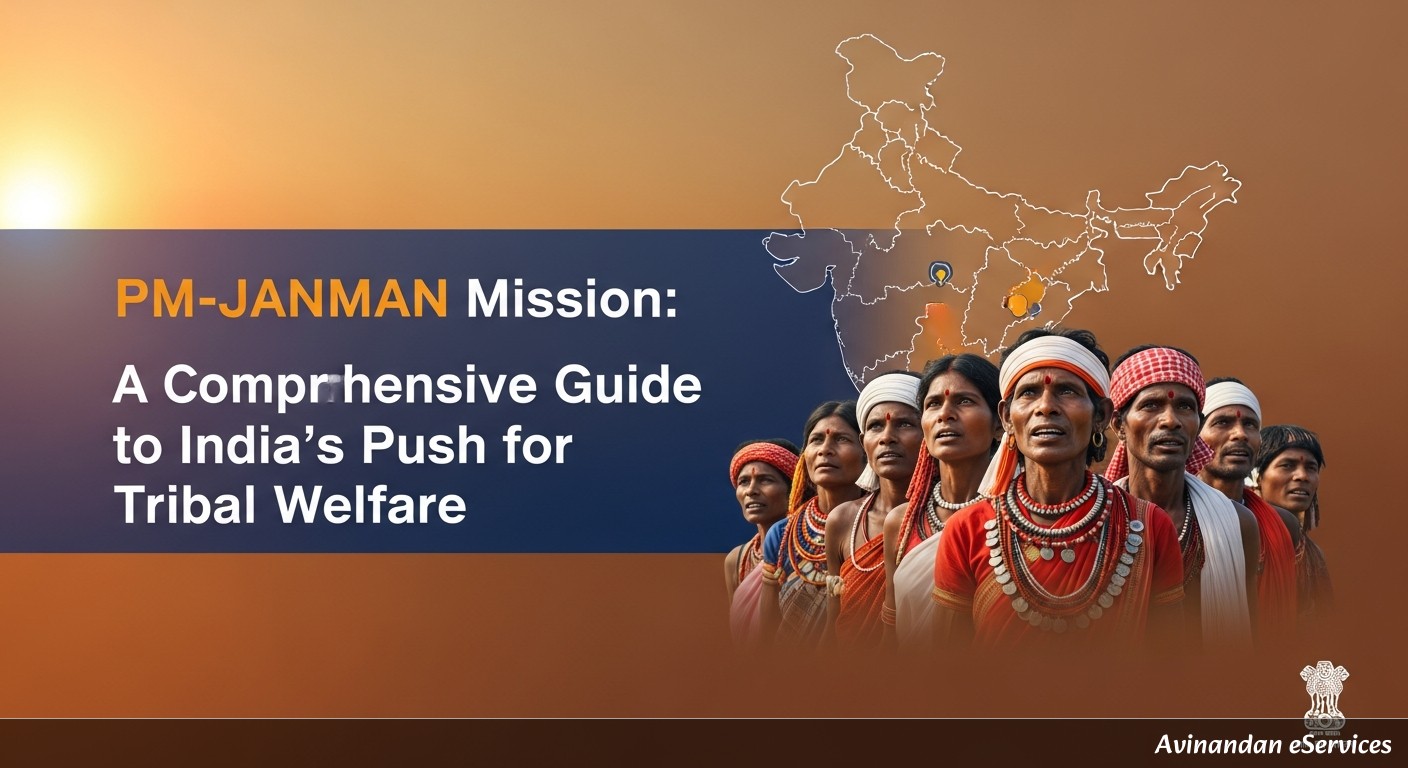
The Pradhan Mantri Janjati Adivasi Nyaya Maha Abhiyan (PM-JANMAN) is a landmark mission launched by the Government of India to address the critical gaps in development for a section of society that has remained on the margins for decades. Announced by the Prime Minister on Janjatiya Gaurav Diwas, November 15, 2023, this mission represents a concerted effort to uplift the socio-economic conditions of the 75 Particularly Vulnerable Tribal Groups (PVTGs) in the country. With a significant budget of ₹24,104 crore, the mission aims to saturate PVTG households and their habitations with essential facilities and services that have long been inaccessible to them.
At its core, the PM-JANMAN mission is a convergence of efforts from nine different Union Ministries, all working in tandem to deliver holistic development. It moves away from a fragmented approach to welfare and adopts a comprehensive strategy focused on 11 critical interventions. The goal is to provide a safety net and a ladder of opportunity for these communities, ensuring they are not left behind in India's growth story. The mission is time-bound, with a clear objective to implement these interventions over three years, from 2023-24 to 2025-26.
Who are the Particularly Vulnerable Tribal Groups (PVTGs)?
To understand the significance of PM-JANMAN, it's crucial to know who the PVTGs are. The concept of identifying the most disadvantaged tribes began with the Dhebar Commission in 1973, which created a category called 'Primitive Tribal Groups' (PTGs). In 2006, the Government of India renamed this category to Particularly Vulnerable Tribal Groups (PVTGs).
PVTGs are communities within the broader category of Scheduled Tribes (STs) that are considered more vulnerable due to specific characteristics. The criteria for identifying a community as a PVTG include:
- A pre-agricultural level of technology, often relying on hunting and gathering.
- A stagnant or declining population.
- Extremely low levels of literacy.
- Economic backwardness.
As of today, there are 75 such communities identified across 18 states and the Union Territory of Andaman and Nicobar Islands. These groups often live in isolated, remote habitations, making access to government services and infrastructure a significant challenge. PM-JANMAN is specifically designed to overcome these barriers and ensure comprehensive development reaches their doorstep.
Key Features and Objectives
The PM-JANMAN mission is structured around a clear set of objectives aimed at bridging the developmental divide for PVTGs. The overarching goal is to improve their quality of life and integrate them into the mainstream socio-economic framework.
Primary Objectives:
- Saturate with Basic Facilities: To ensure every PVTG household and habitation has access to fundamental amenities like safe housing, clean drinking water, and sanitation.
- Enhance Connectivity: To build all-weather roads and provide telecom connectivity (mobile towers) to connect remote PVTG villages to the rest of the country.
- Improve Social Indicators: To uplift the status of education, health, and nutrition through the establishment of Anganwadi centres, hostels, and mobile medical units.
- Provide Sustainable Livelihoods: To create opportunities for income generation through skill development and the establishment of Van Dhan Vikas Kendras for the promotion of minor forest produce.
- Ensure 100% Coverage of Entitlements: To provide essential documents like Aadhaar cards, Caste Certificates, and Jan Dhan bank accounts to every individual, enabling them to access various other government schemes.
The 11 Critical Interventions:
The mission focuses its resources on 11 specific areas, implemented by nine key ministries:
- Housing: Providing pucca (permanent) homes for all eligible households.
- Clean Drinking Water: Ensuring piped water supply or community water sources for all habitations.
- Health and Nutrition: Deploying Mobile Medical Units to reach remote areas and improving healthcare access.
- Education: Establishing hostels and improving access to schools for PVTG children.
- Road Connectivity: Building roads to connect PVTG habitations to the main road network.
- Telecom Connectivity: Installing mobile towers for improved communication.
- Electrification: Providing electricity to all households, including through off-grid solar solutions where necessary.
- Sustainable Livelihoods: Setting up Van Dhan Vikas Kendras and promoting skill development.
- Anganwadi Centres: Establishing centres for early childhood development and nutrition.
- Multipurpose Centres (MPCs): Creating community hubs for various activities and services.
- Documentation: Ensuring all individuals have essential identity and social security documents.
Who is Eligible? (Eligibility Criteria)
The primary beneficiaries of the PM-JANMAN mission are the families and individuals belonging to the 75 identified Particularly Vulnerable Tribal Groups (PVTGs) residing in 18 States and 1 Union Territory. The mission's approach is not based on individual applications for every component but on a 'saturation' model. This means the government proactively aims to cover all identified PVTG households and habitations to ensure no one is left out.
The identification of beneficiaries and infrastructure gaps is a data-driven process. The Ministry of Tribal Affairs, in coordination with state governments, has undertaken a comprehensive data collection exercise at the habitation level using the PM Gati Shakti mobile application. This helps in accurately mapping the needs of each community and directing resources effectively. For specific benefits like housing under PMAY-G, beneficiaries are identified based on the housing deprivation parameters from the Socio-Economic and Caste Census (SECC) 2011 data, targeting families that are houseless or living in kutcha houses.
How to Apply / Avail the Benefits
Unlike many other government schemes where individuals need to apply online or through an office, PM-JANMAN is implemented in a mission mode. The benefits are designed to be delivered directly to the communities through a coordinated effort by various government agencies.
The process focuses on bringing the government to the doorstep of the PVTG communities. Here’s how it works:
- Awareness and Outreach: The government is conducting large-scale Information, Education, and Communication (IEC) campaigns in PVTG areas. These camps are organized to inform residents about the mission and facilitate the creation of essential documents.
- On-the-Spot Services: During these camps, officials help residents enroll for Aadhaar cards, open Jan Dhan bank accounts, get caste certificates, and register for schemes like Ayushman Bharat.
- Infrastructure Development: For larger projects like road construction, electrification, and building houses, the identification and implementation are done by the respective line ministries and state/district administrations based on the collected data. Nodal officials and local administrators are tasked with identifying beneficiaries and ensuring the projects are implemented on the ground.
- Community Engagement: Local administration is encouraged to hold meetings in tribal colonies to select beneficiaries and understand their specific problems and demands, ensuring a participatory approach.
Citizens belonging to PVTG communities should participate in the awareness camps being organized in their areas and get in touch with local administrative officials, such as the District Collector, Tahsildar, or officials from the Tribal Welfare Department, to ensure they are included in the beneficiary lists.
Official Sources
Press Information Bureau (PIB) - Cabinet Approval of PM-JANMAN: https://pib.gov.in/PressReleasePage.aspx?PRID=1980392
Press Information Bureau (PIB) - Implementation Details of PM-JANMAN: https://pib.gov.in/PressReleaseIframePage.aspx?PRID=2038755
Press Information Bureau (PIB) - IEC Campaign on PM-JANMAN Mission: https://pib.gov.in/PressReleasePage.aspx?PRID=2049363