How can you weigh a planet? A mountain might be the answer!
Arjun: Isha, I was just spinning this globe and had a really weird thought. We know how much I weigh, and we can weigh an elephant, and even a big ship. But how do we know how much the Earth weighs? You can't just pop the entire planet on a giant bathroom scale!
Isha: Haha, that’s a brilliant question, Arjun! You’re right, there’s no scale big enough for a planet. But scientists figured out a super clever way to do it over 200 years ago. And you won't believe what they used… a mountain!
Arjun: A mountain? No way! How? Did they carve a giant number on it? Or did they try to lift it?
Isha: Nothing like that. They used the mountain’s gravity! It’s all part of a famous experiment called the Schiehallion experiment. It sounds like a magic spell, doesn't it? Schiehallion!
Arjun: It does! So, the mountain has its own gravity? I thought only huge things like the Earth and the Sun had gravity.
Isha: That’s a common mistake! Sir Isaac Newton figured out that *everything* with mass has a gravitational pull. Your book has gravity, this chair has gravity, even you have gravity! The reason we don’t feel it is because the pull is incredibly, incredibly tiny. But Earth is so massive that its gravity is super strong, and it keeps us all stuck to the ground.
Arjun: Whoa. So I have my own gravitational field? Awesome! But a mountain is way bigger than me. Is its gravity strong enough to actually *do* something?
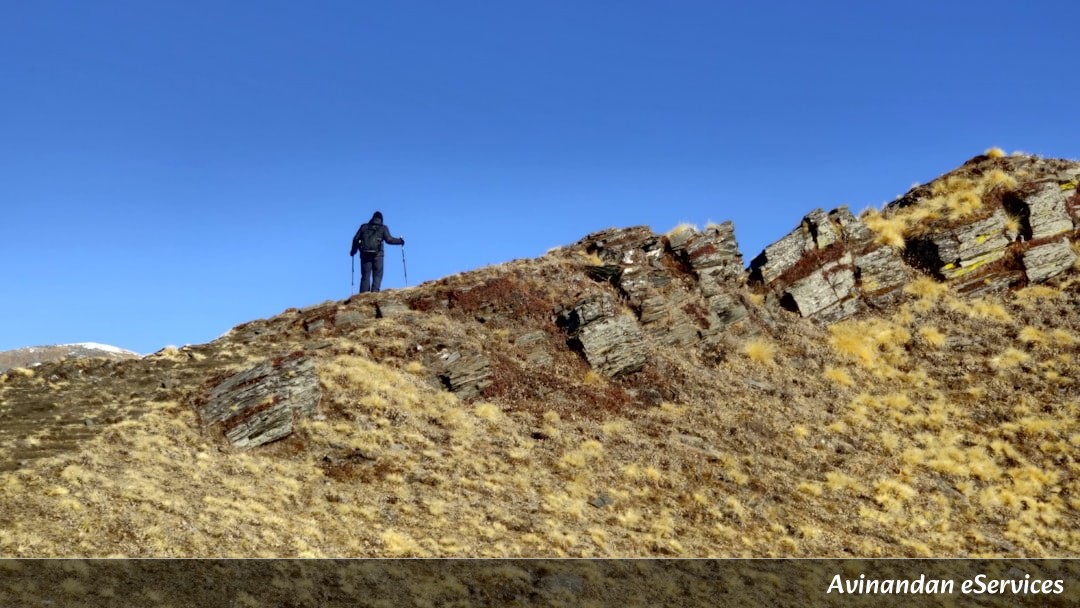
Isha: Exactly! It's still tiny compared to the Earth’s, but it's just big enough to measure if you're very, very careful. In 1774, a scientist named Nevil Maskelyne decided to do just that. He and his team went to a big, cone-shaped mountain in Scotland called Schiehallion.
Arjun: So what did they do? Did they have fancy computers and lasers?
Isha: Not at all! This was long before any of that. They used a simple tool called a plumb line, which is basically just a weight hanging on a string. We call it a pendulum. Normally, gravity pulls the string straight down, pointing directly to the center of the Earth.
Arjun: Okay, I get that. So where does the mountain come in?
Isha: This is the clever bit. They took very precise measurements with the pendulum far away from the mountain. Then, they brought it close to the side of Schiehallion. They predicted that the mountain’s own gravity would pull the pendulum weight sideways, just a tiny, tiny bit. The string wouldn't hang perfectly straight anymore; it would be deflected towards the mountain.
Arjun: So the string would be leaning a little? That must have been a really small lean to see!
Isha: It was! The angle was minuscule, about the width of a single grain of sand held at arm's length. They spent months on that cold, rainy Scottish mountain, building little observatories on both sides and taking hundreds of measurements with their telescopes and pendulums to be sure. It was really difficult work.
Arjun: Wow, they must have really wanted to know the answer! But okay, I'm still stuck. They measured a tiny wobble in a string. How on Earth does that tell you the weight of the *whole Earth*?
Isha: It’s all about ratios. Think of it like a cosmic tug-of-war. On one side, you have the Earth pulling the pendulum down. On the other, you have the mountain pulling it sideways. By measuring the angle of the lean, they figured out the ratio between the Earth’s gravitational pull and the mountain's pull.
Arjun: A ratio… like in my maths class?
Isha: Exactly like that! Before they did the pendulum part, another team of surveyors had spent months mapping every inch of the mountain. They figured out its exact shape, size, and what kind of rock it was made of. From that, they could calculate the mountain's mass. So, they knew the mountain’s mass, and they knew the ratio of its gravity to the Earth’s gravity.
Arjun: Wait… I think I see it! If you know how heavy the mountain is, and you know how much stronger the Earth's pull is compared to the mountain's pull… you can just multiply to find the Earth’s weight!
Isha: You’ve got it! That’s precisely what they did. Their calculation was amazingly close to the value we use today, which we've confirmed with modern satellites and technology. They managed to weigh the world using a mountain, a pendulum, and a whole lot of brainpower and patience.
So, What Did We Learn Today?
Isha: It’s pretty amazing how a simple observation can lead to such a huge discovery. Here’s a quick summary:
- Everything that has mass, from a tiny ant to a giant star, has its own gravitational pull.
- In the 1770s, scientists in the Schiehallion experiment used this principle to weigh the Earth for the first time.
- They chose a regularly shaped mountain in Scotland and carefully measured its tiny gravitational pull on a pendulum.
- By calculating the mountain's own mass and then comparing its gravitational pull to the Earth's, they were able to figure out the mass of the entire planet.
Arjun: That’s the coolest thing I’ve learned all week! It shows that sometimes to answer a giant question, you don’t need a giant machine. You just need a really clever idea… and maybe a mountain!