Rohan: Mira! These leftover samosas are perfectly hot! The microwave is like magic. How does it heat up food so fast without any fire or hot plate? It doesn’t even make the dish hot, just the food!
Mira: That’s a great question, Rohan! It’s not magic, it’s science. And the story of how the microwave oven was invented is one of my favourites. It involves a top-secret project, a curious engineer, and a melted chocolate bar!
Rohan: A chocolate bar? No way! You have to tell me. Did someone drop their chocolate into a machine?
Mira: Haha, something like that! The story starts during World War II with an American engineer named Percy Spencer. He wasn’t trying to invent a way to heat up samosas. He was working on something called radar.
Rohan: I’ve heard of radar! It’s what they use to spot airplanes and ships, right?
Mira: Exactly! Radar works by sending out invisible waves of energy, called microwaves. When these waves hit an object, like an airplane, they bounce back, and the radar system can tell where the object is. The heart of this system was a device called a magnetron, which was like a powerful whistle for creating these microwaves.
Rohan: Okay, so he was a radar expert. Where does the chocolate come in?
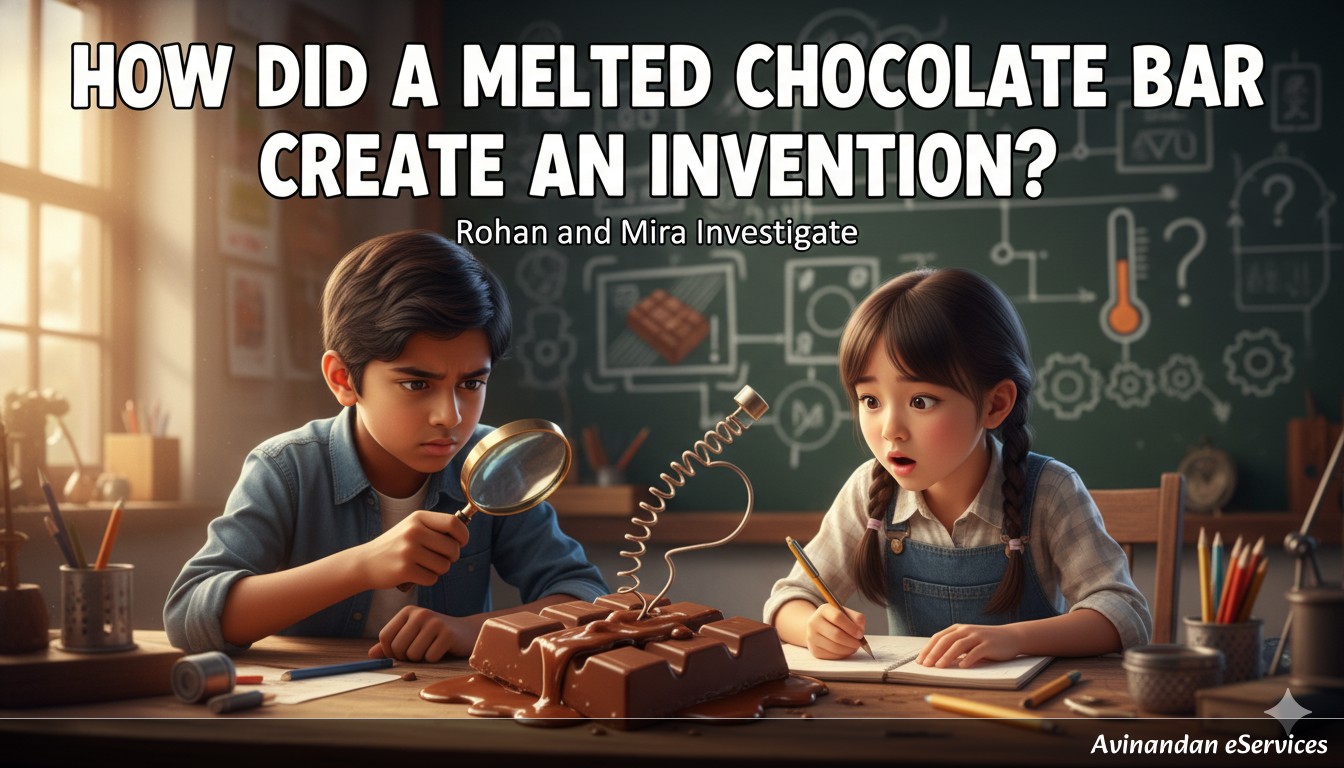
Mira: Well, one day, Percy Spencer was standing in front of a working magnetron. He had a chocolate bar in his pocket, just a little snack. A few moments later, he reached into his pocket and found a gooey, melted mess! His chocolate had turned to liquid, but the room wasn’t hot, and he hadn’t been standing next to a heater.
Rohan: Whoa! So the magnetron did it? The microwaves melted his chocolate?
Mira: That’s what he thought! But a true scientist doesn't just guess, they test their ideas. He was so curious. He could have just been annoyed about his snack being ruined, but instead, he saw a scientific puzzle. So, he decided to run an experiment.
Rohan: What did he do? Did he try melting another chocolate bar?
Mira: He went even bigger! He sent someone out to get a bag of popcorn kernels. He placed the bag near the magnetron, and within moments, popcorn started popping and flying all over the laboratory! Everyone was amazed.
Rohan: That is so cool! From a secret war project to a popcorn machine! What happened next?
Mira: He wanted to do another test. The next morning, he brought in an egg. He put the egg in a kettle and pointed the magnetron at the opening. One of his curious colleagues leaned in for a closer look, and… SPLAT! The egg exploded, splattering hot yolk everywhere!
Rohan: Eww! But also, wow! So the microwaves cooked the egg from the inside out so fast that the steam built up and made it explode?
Mira: You got it! That messy explosion proved his theory. These microwaves were transferring energy to the food, making it hot. He realised this could change the way we cook forever! He had accidentally discovered a brand-new way to heat things up.
Rohan: So how exactly do the waves cook the food? You said it’s about energy.
Mira: It’s brilliant, really. Most food contains a lot of water. Microwaves are especially good at making water molecules wiggle and spin around incredibly fast. Imagine rubbing your hands together to warm them up – that’s heat from friction. Now imagine millions of tiny water molecules inside your samosa all spinning and rubbing against each other thousands of times per second. They create a lot of friction, and that friction creates heat, cooking the food from the inside!
Rohan: Ah, that’s why my samosa was hot but the plate was still cool! The plate doesn’t have much water in it, so the microwaves mostly passed right through it and went straight for the food. It’s not magic, it’s just targeting water molecules!
Mira: Precisely! Percy Spencer and his company, Raytheon, then built the very first microwave oven. It wasn’t like the ones we have today, though. The first one was called the “Radarange,” and it was almost 6 feet tall and weighed over 340 kilograms! It was as big as a fridge!
Rohan: That’s huge! I’m glad they made them smaller. It’s amazing to think that every time I heat up my leftovers, I’m using a technology that came from finding airplanes in a war and a scientist who didn’t ignore his melted chocolate bar.
So, What Did We Learn Today?
Mira: Let's sum it up! It was a pretty amazing journey from a lab accident to our kitchen.
- The microwave oven was invented by accident in 1945 by an engineer named Percy Spencer.
- He was working with radar technology when he noticed that microwaves from a machine called a magnetron had melted a chocolate bar in his pocket.
- He tested his discovery with popcorn (which popped!) and an egg (which exploded!).
- Microwaves cook food by making the water molecules inside it vibrate very quickly. This creates friction, which produces heat and cooks the food from the inside out.
Rohan: And we learned that some of the best discoveries happen when you get curious about a surprise! Instead of being upset about his snack, Percy asked “Why did that happen?” and that question gave us a whole new way to cook!