Aarav and Priya's Science Corner: The Butterfly and the Crying Turtle
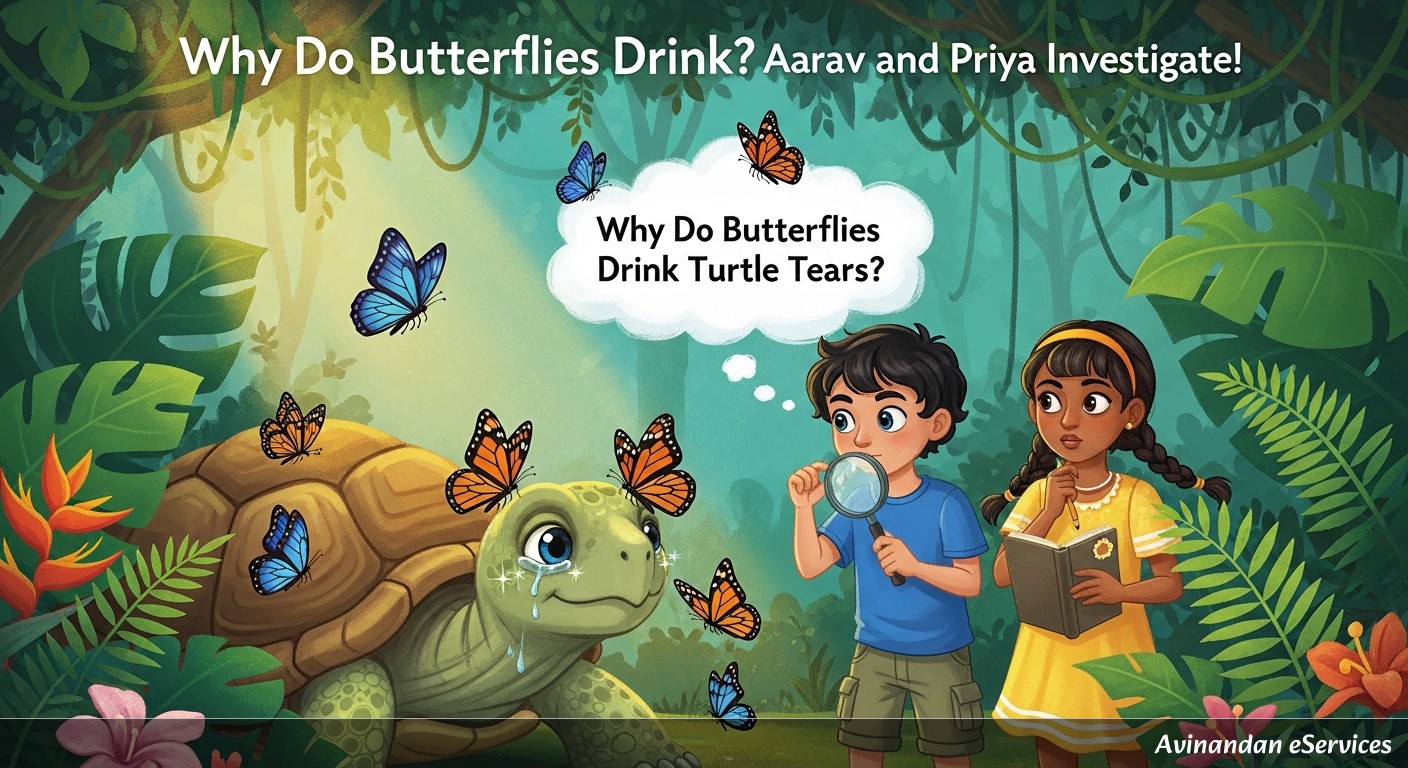
Aarav: Priya, you have to see this photo I found online! It’s a picture of a beautiful butterfly sitting right on a turtle’s nose. It almost looks like the turtle is crying and the butterfly is comforting it. It’s so sweet!
Priya: Aww, I think I’ve seen pictures like that from the Amazon rainforest. It does look sweet, but something very different and very scientific is happening. The butterfly isn’t comforting the turtle… it’s drinking its tears!
Aarav: Drinking its tears? No way! That’s so… weird! Why would a butterfly do that? Don’t they drink sweet nectar from flowers?
Priya: They do, and that’s the key to the whole mystery. Flower nectar is full of sugar, which gives butterflies the energy to fly. But it has almost no salt, and just like us, butterflies need salt and other minerals to survive. Tears are salty, so for a butterfly, a turtle’s tear is like a tiny, salty sports drink!
Aarav: A sports drink? Made of tears? That’s wild! So, they need the salt to be strong and healthy?
Priya: Exactly! The scientific name for salt is sodium chloride, and the sodium part is super important for an insect's body to work properly. It helps with their muscles and nerves. Male butterflies especially need a lot of salt. They pass it to the female butterflies when they mate, which helps their eggs develop and be healthier. So, finding salt is a very important mission for them.
Aarav: Okay, that makes sense. But are turtles the only place they can get it? Can’t they just find a salt shaker somewhere?
Priya: Haha, not quite! But they are very clever at finding other sources. Have you ever seen a bunch of butterflies gathered on a patch of wet mud? That’s called ‘puddling.’ They are sucking up the water from the mud to get the salts and minerals in it. They might also get salt from animal poop or even sweat on a person’s skin if you’re hiking in the jungle!
Aarav: Wow! So they are like tiny mineral detectives. But why the turtles? Why not some other animal?
Priya: That's a great question. Turtles are perfect for a few reasons. First, they are slow-moving and calm, so they don't really mind a lightweight butterfly landing on their face. A faster animal might just shoo it away. Second, turtles can't easily wipe their eyes like we can, so the tears are right there for the taking. In a place like the Amazon rainforest, salt is very rare and gets washed away by the rain, so these calm, slow, tear-producing reptiles become one of the best and most reliable salt sources around.
Aarav: That’s incredible. But… does it hurt the turtle? I’d be pretty annoyed if a butterfly was drinking my tears!
Priya: Scientists have studied this, and it doesn't seem to harm the turtles at all. The butterfly’s mouthpart, its proboscis, is very soft, like a tiny straw. The turtle barely feels it. You could say it’s a type of relationship called commensalism. That’s a fancy word for when one animal benefits—in this case, the butterfly getting its salt—and the other animal isn’t really helped or harmed. The turtle just keeps sunbathing while the butterfly has a little drink.
Aarav: So it’s a win for the butterfly and just a normal Tuesday for the turtle. This is one of the coolest and weirdest things I’ve ever heard. A butterfly drinking tears to help its future babies be strong. Nature is so much more connected than I thought.
Priya: It really is! This whole tear-drinking behavior even has a scientific name: lachryphagy. ‘Lachry’ comes from the Latin word for tears, and ‘phagy’ means ‘to eat.’ So, it literally means ‘tear-eating.’ It shows that even the smallest creatures have found amazing ways to survive and get what they need from their environment.
So, What Did We Learn Today?
Priya: Let’s sum up this amazing natural wonder!
- Some butterflies, especially in places like the Amazon, drink animal tears to get salt (sodium).
- Their main food, flower nectar, is full of sugar for energy but has very little salt, which is essential for their health.
- This behavior is called lachryphagy, which means 'tear-eating'.
- Turtles are a good source because they are slow, calm, and can't easily wipe their eyes.
- This interaction doesn't harm the turtle, making it a fascinating example of how different species can be connected in surprising ways.
Aarav: I’ll never look at a picture of a butterfly and a turtle the same way again. It’s not a sad turtle being comforted, it’s a butterfly getting a necessary salty snack. Awesome!