Introduction: A Moment in Time
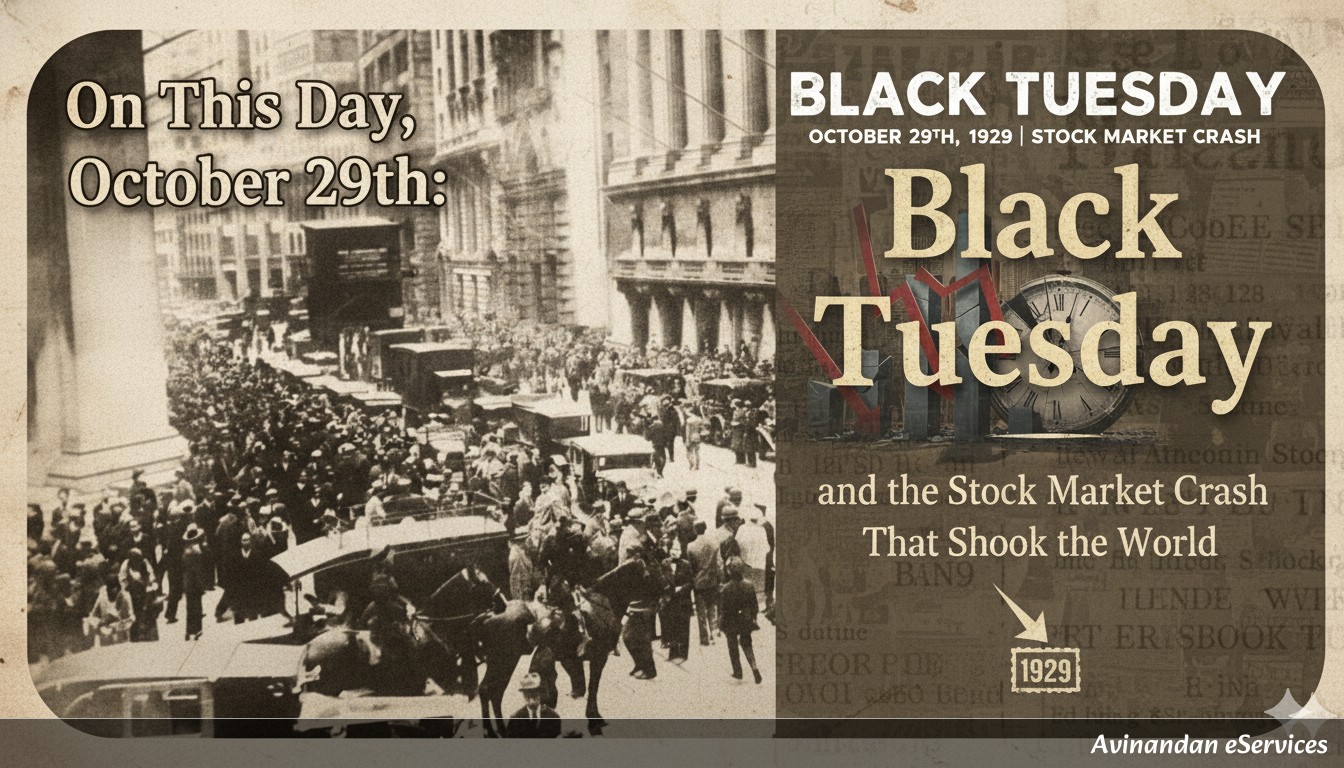
Imagine the scene: New York City, the heart of a vibrant and seemingly invincible American economy. The Roaring Twenties were in full swing, a decade of unprecedented prosperity, technological innovation, and cultural dynamism. Jazz music spilled out of speakeasies, hemlines were rising, and the stock market seemed to be a one-way ticket to unimaginable wealth. For many, the future was a golden promise. But on October 29, 1929, that promise shattered into a million pieces. This was the day that would forever be etched in the annals of history as 'Black Tuesday', the day the stock market crashed with such cataclysmic force that it plunged the United States, and much of the world, into the darkest economic chapter of the 20th century: the Great Depression.
The Build-Up: What Led to This Day?
The seeds of Black Tuesday were sown throughout the preceding years of dizzying economic expansion. The 1920s saw a period of rampant speculation, where the stock market became a national obsession. Millions of ordinary Americans, lured by the promise of quick riches, poured their life savings into stocks. A dangerous practice known as buying 'on margin' became commonplace, allowing investors to purchase stocks with a small down payment, borrowing the rest from their brokers. This created a precarious house of cards, where the entire system depended on the continuous upward trajectory of stock prices. By August 1929, an astonishing $8.5 billion was out on loan for margin buying, an amount greater than all the currency circulating in the United States at the time.
Beneath the surface of this speculative frenzy, however, the American economy was showing signs of strain. Industrial and agricultural overproduction led to a glut of goods that consumers, many of whom had low wages, simply could not afford to buy. Farmers were already struggling with debt due to falling prices, and factory owners began to cut production and lay off workers. Furthermore, the Federal Reserve, in an attempt to curb speculation, had raised interest rates in August 1929, making credit tighter. Experienced investors began to sense the impending danger and quietly started to sell their holdings, causing the market to falter in September.
The Event Itself
The week leading up to Black Tuesday was a period of escalating panic. On October 24th, 'Black Thursday', the market lost 11% of its value at the opening bell, with a record 12.9 million shares traded as investors scrambled to sell. A coalition of prominent bankers, including Richard Whitney of the New York Stock Exchange, attempted to stem the tide by publicly purchasing large blocks of stock, creating a temporary rally. But their efforts were ultimately futile. The following week, the panic returned with a vengeance.
Monday, October 28th, or 'Black Monday', saw the Dow Jones Industrial Average plummet by nearly 13%. Then came the devastating blow. On Tuesday, October 29th, the floodgates of panic burst open. A staggering 16.4 million shares were traded on the New York Stock Exchange in a single day, a record that would stand for nearly four decades. The ticker tape, unable to keep up with the sheer volume of transactions, ran hours behind, leaving investors in a state of bewildered terror. By the end of the day, the Dow had fallen another 12%. An estimated $14 billion in stock value was wiped out in a single day, bringing the total loss for the week to a catastrophic $30 billion. The Roaring Twenties had come to a screeching, brutal halt.
The Aftermath and Legacy
The immediate aftermath of Black Tuesday was a scene of financial carnage. Fortunes that had taken years to build vanished in a matter of hours. The stories of investors being ruined are legion, with tales of millionaires becoming paupers overnight. But the impact of the crash \textended far beyond the confines of Wall Street. With consumer confidence shattered, spending and investment dried up. Businesses, unable to sell their products, were forced to close their doors, leading to mass unemployment. Banks, which had invested heavily in the stock market, began to fail in droves. In 1930 alone, 1,352 banks collapsed, and by 1931, that number had risen to 2,294. The crash triggered a domino effect that plunged the nation into the Great Depression, a decade of unprecedented economic hardship that saw unemployment soar to 25% and left millions of Americans destitute.
The legacy of Black Tuesday and the subsequent Great Depression was profound and long-lasting. It fundamentally reshaped the role of the American government in the economy. President Franklin D. Roosevelt's New Deal programs, such as the Social Security Act and the creation of the Federal Deposit Insurance Corporation (FDIC) to protect bank deposits, were direct responses to the crisis. New regulations were imposed on the stock market to prevent a repeat of the speculative excesses of the 1920s, including the Securities Exchange Act of 1934. The Great Depression also had a lasting psychological impact on the generation that lived through it, instilling values of thrift and a deep-seated distrust of the financial system. While the economic turmoil of the 1930s eventually gave way to the prosperity of the post-World War II era, the lessons of Black Tuesday remain a stark reminder of the fragility of financial markets and the devastating human cost of economic collapse.
References
- Britannica. (n.d.). Stock market crash of 1929.
- Wikipedia. (n.d.). Wall Street Crash of 1929.
- Investopedia. (2024). The Stock Market Crash of 1929 and the Great Depression.
- Jagran Josh. (2025). This Day in History: What Happened Today in History – 29 October.
- Ducksters. (n.d.). The Great Depression End and Legacy.
- AP News. (2022). Today in History: October 29, 'Black Tuesday' signals start of Great Depression.
- Lumen Learning. (n.d.). The Stock Market Crash of 1929.
- Corporate Finance Institute. (n.d.). Black Tuesday - 1929 Stock Market Crash.
- MTSU Sidelines. (2019). Black Tuesday, 90 years later: five survivors tell their stories.
- The Financial Express. (2025). Stock market crash of 1929 that triggered the Great Depression.
- Federal Reserve History. (n.d.). Stock Market Crash of 1929.
- TIME. (2014). Black Tuesday 1929 Stock Market Crash Anniversary.
- The Day the Bubble Burst. (2018). Black Tuesday: The People Who Lived Through The Great Depression.