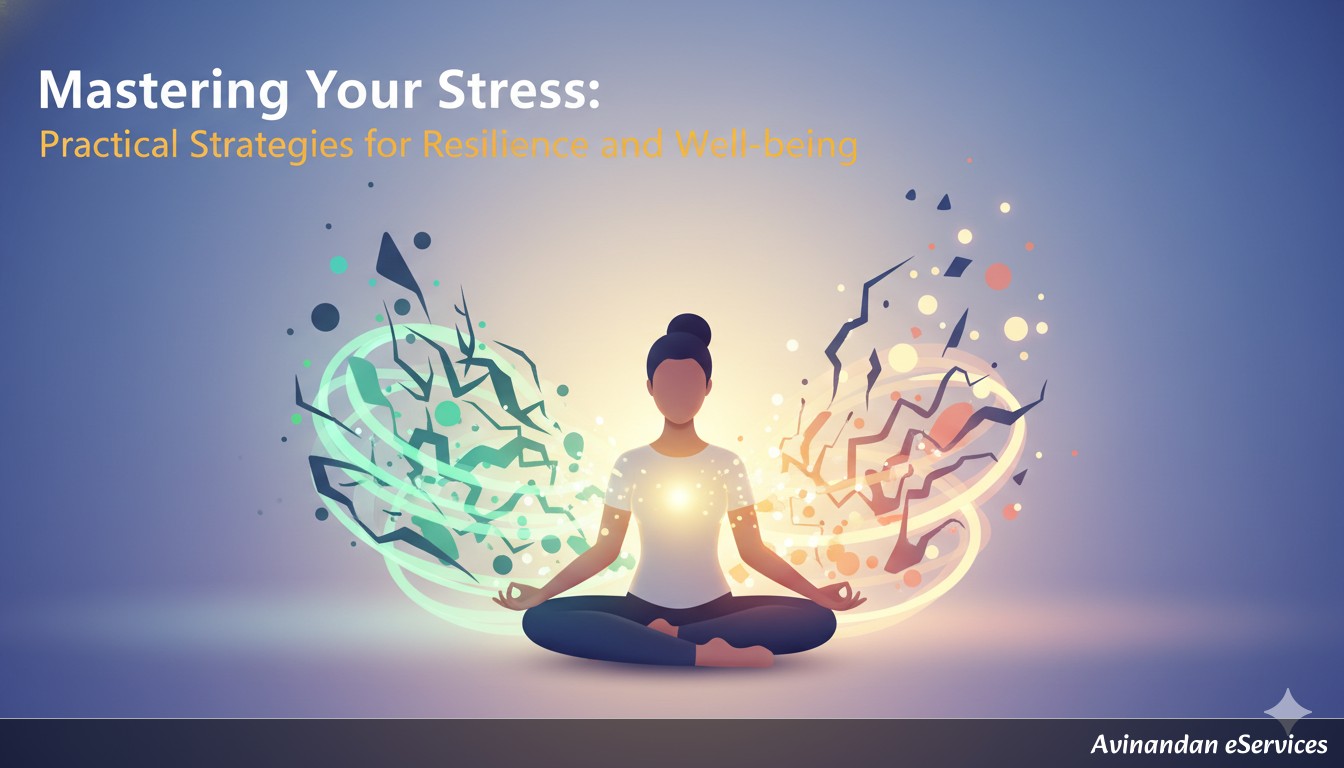
In today's fast-paced world, stress and anxiety have become unwelcome but common companions for many. While occasional stress is a normal part of life, chronic stress can take a significant toll on both our mental and physical health. Fortunately, cultivating resilience and adopting effective stress management techniques can empower us to navigate life's challenges with greater ease and improve our overall well-being.
Understanding Stress and Its Impact
Stress is our body's natural response to perceived threats or demands. This 'fight-or-flight' response, triggered by hormones like adrenaline and cortisol, prepares us to act. However, when stressors are constant and prolonged, this response can remain activated, leading to chronic stress. Chronic stress can manifest in various ways, including irritability, anxiety, depression, headaches, insomnia, digestive issues, and a weakened immune system [5, 9, 18]. Over time, it can contribute to serious health problems such as heart disease, high blood pressure, and diabetes [9, 13, 18].
Building Resilience: Your Inner Strength
Resilience is not about avoiding stress, but rather about our ability to cope with it, adapt to adversity, and even grow from challenging experiences [26]. It's a skill that can be learned and strengthened. Key elements of resilience include:
- Finding Purpose: Having a sense of meaning in life can help you navigate challenges by motivating you to learn from experiences and keep moving forward [16].
- Believing in Yourself: Confidence in your ability to cope with life's stresses is a cornerstone of resilience. Practice positive self-talk and acknowledge your strengths [16].
- Developing a Social Network: Strong relationships with loved ones provide crucial support and a sense of belonging [11, 15, 17].
- Embracing Change: Flexibility and adaptability are key. Viewing change as an opportunity rather than a threat can bolster resilience [11, 16].
- Maintaining Optimism: Cultivating a positive outlook, even in difficult times, helps in seeing setbacks as temporary and future circumstances as potentially better [11, 16].
- Nurturing Yourself: Prioritizing self-care, including adequate sleep, healthy eating, and enjoyable activities, primes your mind and body to handle stress [11, 16].
- Developing Problem-Solving Skills: Taking decisive action rather than feeling paralyzed by problems empowers you to move forward [11, 16].
- Establishing Goals: Setting realistic goals provides direction and a sense of accomplishment [11, 16].
- Taking Action: Proactively addressing challenges, even with small steps, can prevent inertia and build momentum [11, 16].
Effective Stress Management Techniques
Incorporating various strategies into your daily life can significantly reduce stress and enhance your well-being.
Mindfulness and Meditation
Mindfulness is the practice of paying attention to the present moment without judgment [1, 4, 7, 10]. By focusing on your breath, bodily sensations, or immediate surroundings, you can interrupt racing thoughts and reduce reactivity to stress [1, 4, 7, 10, 33, 34]. Mindfulness-based stress reduction (MBSR) programs combine meditation, body awareness, and yoga to help manage stress [4, 6]. Regular practice can change brain structures associated with attention and emotional regulation, leading to reduced stress and improved well-being [4, 7, 10].
Cognitive Behavioral Therapy (CBT)
Cognitive Behavioral Therapy (CBT) is a goal-oriented talk therapy that helps identify and change unhelpful thought patterns and behaviors contributing to anxiety and stress [2, 3, 8, 12, 14]. CBT involves working with a therapist to challenge negative thoughts, develop coping mechanisms, and practice new behaviors, such as exposure therapy for phobias [2, 3, 8, 14]. It's a structured approach that equips individuals with practical skills to manage their emotional responses more effectively [12].
Physical Activity
Regular exercise is a powerful stress reliever. Physical activity can elevate mood, distract from worries, relieve tension, and improve overall health [21, 24, 27, 29, 31, 32]. Aim for at least 150 minutes of moderate-intensity exercise per week, incorporating activities you enjoy, such as brisk walking, yoga, or cycling [24, 29, 31]. Exercise stimulates the release of endorphins, the body's natural mood boosters [21].
Social Support
Connecting with others is vital for managing stress and building resilience [11, 15, 17, 22, 23, 25, 26]. Strong social networks provide emotional comfort, practical assistance, and a sense of belonging. Sharing your burdens with trusted friends, family, or colleagues can buffer the negative effects of stress and help you recover more quickly [15, 22, 23]. Don't hesitate to reach out for support, and remember that offering support to others can also enhance your own well-being [25].
Healthy Lifestyle Choices
Beyond specific techniques, adopting a healthy lifestyle provides a strong foundation for stress management:
- Balanced Diet: Nourishing your body with fresh, whole foods supports neurotransmitter production and overall well-being. Limit processed foods, excessive sugar, and caffeine [21, 24, 29, 31].
- Sufficient Sleep: Quality sleep is crucial for emotional regulation and stress recovery. Establish a regular sleep schedule and create a relaxing bedtime routine [21, 27, 29, 30, 31].
- Hydration: Drinking enough water is essential for physical and mental function.
- Limiting Alcohol and Caffeine: These substances can exacerbate anxiety and disrupt sleep [21, 28, 31].
Taking Action for a Calmer You
Managing stress and building resilience is an ongoing journey. By understanding the impact of stress, cultivating your inner strength, and consistently applying effective management techniques, you can navigate life's pressures more effectively. Remember that even small, consistent steps can lead to significant improvements in your well-being.
References
- Mayo Clinic. (n.d.). Mindfulness exercises. Retrieved from [https://www.mayoclinic.org/healthy-lifestyle/stress-management/in-depth/mindfulness-exercises/art-20047989](https://www.mayoclinic.org/healthy-lifestyle/stress-management/in-depth/mindfulness-exercises/art-20047989)
- National Center for Biotechnology Information. (2021, June 17). Cognitive-Behavioral Treatments for Anxiety and Stress-Related Disorders. Retrieved from [https://www.ncbi.nlm.nih.gov/pmc/articles/PMC8223077/](https://www.ncbi.nlm.nih.gov/pmc/articles/PMC8223077/)
- National Health Service. (n.d.). Cognitive behavioural therapy (CBT). Retrieved from [https://www.nhs.uk/mental-health/talking-therapies-mind-based-treatments/cognitive-behavioural-therapy-cbt/](https://www.nhs.uk/mental-health/talking-therapies-mind-based-treatments/cognitive-behavioural-therapy-cbt/)
- Healthline. (2019, October 30). Mindfulness meditation: A research-proven way to reduce stress. Retrieved from [https://www.healthline.com/nutrition/mindfulness-meditation](https://www.healthline.com/nutrition/mindfulness-meditation)
- Healthline. (n.d.). The Effects of Stress on Your Body. Retrieved from [https://www.healthline.com/health/stress-effects-on-body](https://www.healthline.com/health/stress-effects-on-body)
- Wikipedia. (n.d.). Mindfulness-based stress reduction. Retrieved from [https://en.wikipedia.org/wiki/Mindfulness-based_stress_reduction](https://en.wikipedia.org/wiki/Mindfulness-based_stress_reduction)
- University of Rochester Medical Center. (n.d.). Mindfulness meditation: A research-proven way to reduce stress. Retrieved from [https://www.urmc.rochester.edu/encyclopedia/content.aspx?contenttypeid=1&contentid=4592](https://www.urmc.rochester.edu/encyclopedia/content.aspx?contenttypeid=1&contentid=4592)
- Big Health. (2022, May 15). A therapist explains what receiving CBT for anxiety is really like. Retrieved from [https://www.bighealth.com/blog/cbt-for-anxiety-therapist-explanation](https://www.bighealth.com/blog/cbt-for-anxiety-therapist-explanation)
- Medical News Today. (n.d.). Chronic stress: Symptoms, examples, effects, and recovery. Retrieved from [https://www.medicalnewstoday.com/articles/chronic-stress](https://www.medicalnewstoday.com/articles/chronic-stress)
- University of Minnesota. (n.d.). Mindfulness for Stress Reduction. Retrieved from [https://www.takingcharge.csh.umn.edu/mindfulness-stress-reduction](https://www.takingcharge.csh.umn.edu/mindfulness-stress-reduction)
- Zurich Insurance. (2023, April 11). 10 ways to boost your personal resilience and better cope with stress. Retrieved from [https://www.zurich.com/en/knowledge/topics/resilience/10-ways-to-boost-personal-resilience-and-cope-with-stress](https://www.zurich.com/en/knowledge/topics/resilience/10-ways-to-boost-personal-resilience-and-cope-with-stress)
- Cleveland Clinic. (n.d.). Cognitive Behavioral Therapy (CBT): What It Is & Techniques. Retrieved from [https://my.clevelandclinic.org/health/treatments/23770-cognitive-behavioral-therapy-cbt](https://my.clevelandclinic.org/health/treatments/23770-cognitive-behavioral-therapy-cbt)
- VCU Health. (2024, August 26). The ways chronic stress can impact your body. Retrieved from [https://www.vcuhealth.org/news/the-ways-chronic-stress-can-impact-your-body](https://www.vcuhealth.org/news/the-ways-chronic-stress-can-impact-your-body)
- National Center for Biotechnology Information. (n.d.). Cognitive-behavioral therapy for anxiety disorders: an update on the empirical evidence. Retrieved from [https://www.ncbi.nlm.nih.gov/pmc/articles/PMC7158716/](https://www.ncbi.nlm.nih.gov/pmc/articles/PMC7158716/)
- EBSCO. (n.d.). Social support and mental health. Retrieved from [https://www.ebsco.com/research-stars/social-support-and-mental-health](https://www.ebsco.com/research-stars/social-support-and-mental-health)
- Verywell Mind. (2025, March 25). 10 Ways to Build Resilience. Retrieved from [https://www.verywellmind.com/how-to-build-resilience-2795634](https://www.verywellmind.com/how-to-build-resilience-2795634)
- National Center for Biotechnology Information. (n.d.). Social Support and Resilience to Stress: From Neurobiology to Clinical Practice. Retrieved from [https://www.ncbi.nlm.nih.gov/pmc/articles/PMC7754115/](https://www.ncbi.nlm.nih.gov/pmc/articles/PMC7754115/)
- Mayo Clinic. (n.d.). Chronic stress puts your health at risk. Retrieved from [https://www.mayoclinic.org/healthy-lifestyle/stress-management/in-depth/stress/art-20046055](https://www.mayoclinic.org/healthy-lifestyle/stress-management/in-depth/stress/art-20046055)
- National Institutes of Health. (2020, August 6). 7 Steps to Manage Stress and Build Resilience. Retrieved from [https://orwh.od.nih.gov/spotlight/7-steps-manage-stress-and-build-resilience](https://orwh.od.nih.gov/spotlight/7-steps-manage-stress-and-build-resilience)
- ColumbiaDoctors. (2023, May 19). Chronic Stress Can Hurt Your Overall Health. Retrieved from [https://www.columbiadoctors.org/news/chronic-stress-can-hurt-your-overall-health](https://www.columbiadoctors.org/news/chronic-stress-can-hurt-your-overall-health)
- (n.d.). Lifestyle strategies and stress management. Retrieved from [https://depression.medicine.umich.edu/resources/expert-advice/lifestyle-strategies-and-stress-management](https://depression.medicine.umich.edu/resources/expert-advice/lifestyle-strategies-and-stress-management)
- Lumen Learning. (n.d.). Social Support and Stress Reduction. Retrieved from [https://courses.lumenlearning.com/wm-psychology/chapter/social-support-and-stress-reduction/](https://courses.lumenlearning.com/wm-psychology/chapter/social-support-and-stress-reduction/)
- University of Kentucky. (2025, June 7). The Importance of Social Support in Managing Stress and Burnout. Retrieved from [https://uknow.uky.edu/student-life/importance-social-support-managing-stress-and-burnout](https://uknow.uky.edu/student-life/importance-social-support-managing-stress-and-burnout)
- Healthline. (2025, February 3). 16 Simple Ways to Relieve Stress and Anxiety. Retrieved from [https://www.healthline.com/health/stress-relief-tips](https://www.healthline.com/health/stress-relief-tips)
- American Psychological Association. (2019, October 8). Manage stress: Strengthen your support network. Retrieved from [https://www.apa.org/topics/stress/support](https://www.apa.org/topics/stress/support)
- Georgetown University. (n.d.). Stress & Building Resilience. Retrieved from [https://studenthealth.georgetown.edu/wellness/stress-management/stress-and-building-resilience](https://studenthealth.georgetown.edu/wellness/stress-management/stress-and-building-resilience)
- Eisenberg Family Depression Center. (n.d.). Lifestyle strategies and stress management. Retrieved from [https://depression.medicine.umich.edu/resources/expert-advice/lifestyle-strategies-and-stress-management](https://depression.medicine.umich.edu/resources/expert-advice/lifestyle-strategies-and-stress-management)
- American Anxiety & Depression Association of America. (2010, September 8). Tips and Strategies to Manage Anxiety and Stress. Retrieved from [https://adaa.org/finding-help/treatment/therapy/stress-and-anxiety-management-skills](https://adaa.org/finding-help/treatment/therapy/stress-and-anxiety-management-skills)
- Rethink Mental Illness. (2024, October 18). 10 tips to Manage Anxiety and Stress. Retrieved from [https://www.rethink.org/advice-and-support/i-have-mental-health-problems/10-tips-to-manage-anxiety-and-stress/](https://www.rethink.org/advice-and-support/i-have-mental-health-problems/10-tips-to-manage-anxiety-and-stress/)
- Mayo Clinic. (2023, December 23). Resilience: Build skills to endure hardship. Retrieved from [https://www.mayoclinic.org/healthy-lifestyle/adult-health/in-depth/resilience/art-20046370](https://www.mayoclinic.org/healthy-lifestyle/adult-health/in-depth/resilience/art-20046370)
- Cleveland Clinic. (n.d.). Stress Management: Meditation, Relaxation, Health Benefits. Retrieved from [https://my.clevelandclinic.org/health/articles/11877-stress-management-meditation-relaxation-health-benefits](https://my.clevelandclinic.org/health/articles/11877-stress-management-meditation-relaxation-health-benefits)
- NHS. (n.d.). 10 stress busters. Retrieved from [https://www.nhs.uk/mental-health/self-help-guides-tools-and-activities/10-stress-busters/](https://www.nhs.uk/mental-health/self-help-guides-tools-and-activities/10-stress-busters/)
- Mental Health Foundation. (n.d.). How to manage and reduce stress. Retrieved from [https://www.mentalhealth.org.uk/explore-mental-health/a-z-topics/stress](https://www.mentalhealth.org.uk/explore-mental-health/a-z-topics/stress)
- University of Nevada, Reno. (n.d.). Stress and Anxiety Management Skills. Retrieved from [https://www.unr.edu/counseling/resources/stress-and-anxiety-management-skills](https://www.unr.edu/counseling/resources/stress-and-anxiety-management-skills)
Important Disclaimer
The information provided in this blog post is for educational purposes only and does not constitute medical advice. It is essential to consult with a qualified healthcare professional or mental health provider for any health concerns, diagnosis, or treatment. Always seek the advice of your physician or other qualified health provider with any questions you may have regarding a medical condition.