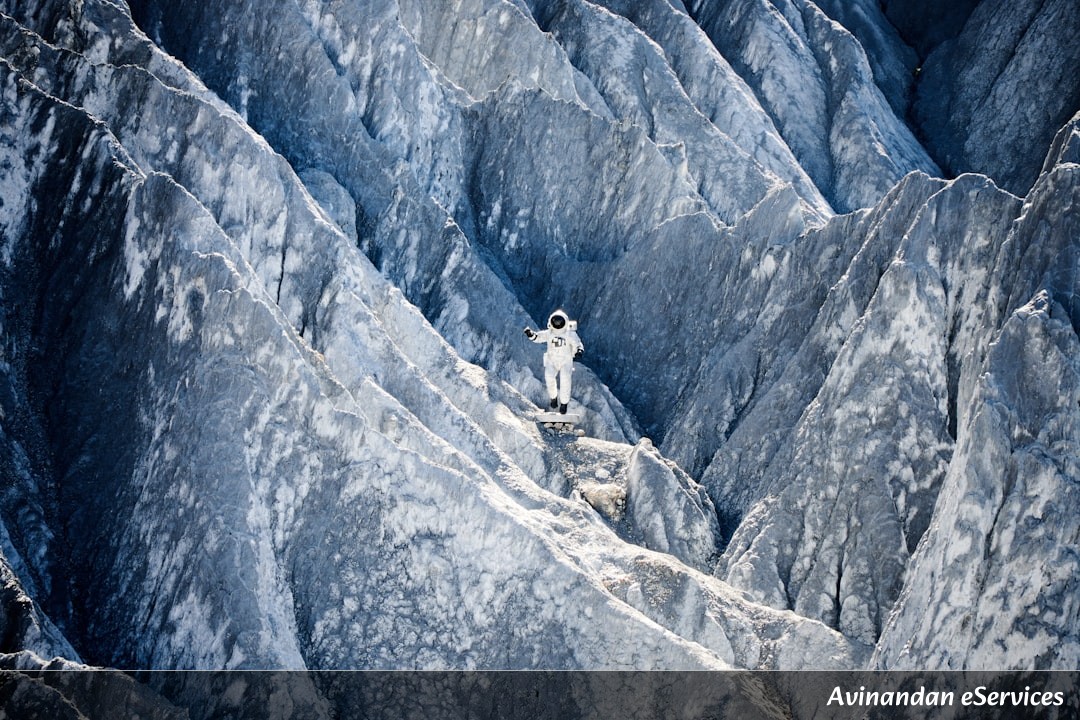
Arjun: Hey Priya! Yesterday I was watching a science-fiction movie where a superhero survived in the deep vacuum of outer space without a spacesuit! But that’s just movie magic, right? No real living animal on Earth could ever survive boiling heat, freezing space, and intense radiation without dying, could they?
Priya: You might be surprised, Arjun! What if I told you there is a real-life creature—living right now in our garden moss—that can survive all of those \textreme environments? And it does it by turning the inside of its body into solid glass!
Arjun: Wait, what?! Turning its insides into glass? Are you pulling my leg, Priya? What kind of wild creature is this?
Priya: I am completely serious! They are called tardigrades, though many people affectionately call them "water bears" or "moss piglets." They are tiny microscopic animals, usually measuring only about $0.5\text{ mm}$ long. That is roughly the size of a single tiny dot made by your pencil!
Arjun: A water bear? That sounds cute! But if they are so tiny and soft, how on Earth do they turn into glass?
Priya: It all happens through a fascinating survival process called anhydrobiosis, which literally means "life without water." Normally, a tardigrade's body is mostly made of liquid water, just like ours. But when their surrounding environment dries up completely, they don't give up and die. Instead, they pull in their eight little legs, squeeze out almost all the water from their bodies, and curl up into a tiny, shriveled ball called a tun.
Arjun: Okay, so they dry out like a raisin. But where does the glass come in?
Priya: That is the most incredible scientific discovery! Usually, when normal biological cells dry out, their fragile inner machinery collapses and shatters into pieces. But as a tardigrade loses water, its cells start producing special protective proteins called Tardigrade Intrinsically Disordered Proteins, or $TDPs$ for short.
Arjun: $TDPs$? What makes those proteins so special?
Priya: Unlike most proteins in our body that have rigid three-dimensional structures, $TDPs$ are flexible and shapeless while wet. But as water evaporates, these $TDPs$ rapidly assemble into a clear, solid, non-crystalline matrix. This process is known in physics as vitrification—which literally means turning a liquid into glass! This microscopic bio-glass wraps around delicate proteins, DNA strands, and cell membranes, locking everything securely in place like objects encased in solid ice or amber.
Arjun: Mind blown! So their entire internal cellular structure gets frozen in time inside tiny glass shields! Do they stay alive while turned into glass?
Priya: They enter a state of true suspended animation! Their metabolic activity drops to less than $0.01\%$ of normal—which means life literally pauses. They don't eat, breathe, age, or move. They can remain in this glassy state for decades!
Arjun: That sounds like real cryo-sleep from starships! How tough are they while in this glass tun state?
Priya: Unbelievably tough, Arjun! Scientists have tested these glassy tardigrades under conditions that would instantly destroy any other life form. They can survive temperatures as low as $-272^\circ\text{C}$—which is almost absolute zero, the coldest temperature possible in the universe! They can also survive heat up to $150^\circ\text{C}$, which is way above the boiling point of water.
Arjun: Woah! What about pressure or radiation? Could they survive in space?
Priya: They actually have! In 2007, European scientists loaded dried tardigrades onto a space research mission called FOTON-M3. They exposed the tardigrades directly to the freezing vacuum of outer space and lethal cosmic ultraviolet radiation for ten days. When the spacecraft returned to Earth, scientists added a single drop of water to the dried tardigrades. Within minutes, the bio-glass dissolved, their cellular machinery unlocked, and the tardigrades stretched their eight legs and walked away happy and healthy!
Arjun: That is astonishing! Who first discovered that water bears had this resurrection superpower?
Priya: An Italian scientist named Lazzaro Spallanzani back in 1776! He took dry dust from a roof gutter, added water, and watched under a microscope as completely lifeless particles rehydrated into moving creatures. He was amazed and called the process "resurrection." But it wasn't until 2017 that modern scientists uncovered the exact chemical secret of their $TDP$ glass-forming proteins.
Arjun: Why are scientists studying tardigrade glass today? Can this secret help humans?
Priya: Yes, in big ways! Many important medical vaccines and medicines currently have to be kept super cold in special fridges, which makes transporting them to remote villages or hot countries very difficult. Researchers are now learning how to use tardigrade $TDP$ proteins to glassify human vaccines so they can be stored safely at room temperature without spoiling! It could save millions of human lives around the globe.
Arjun: Wow, a microscopic creature using biological glass armor could help doctors transport life-saving medicines anywhere! Nature really is the ultimate scientist.
Priya: It certainly is, Arjun! Sometimes the grandest superpowers are hidden in the smallest living things around us.
So, What Did We Learn Today?
- Tardigrades are Super-Survivors: These tiny $0.5\text{ mm}$ animals, also known as water bears, can survive \textreme freezing, boiling heat, crushing pressures, and outer space.
- Vitrification via TDPs: When drying out, tardigrades produce special proteins ($TDPs$) that transform their cell liquids into a protective biological glass.
- Suspended Animation: Inside their glassy