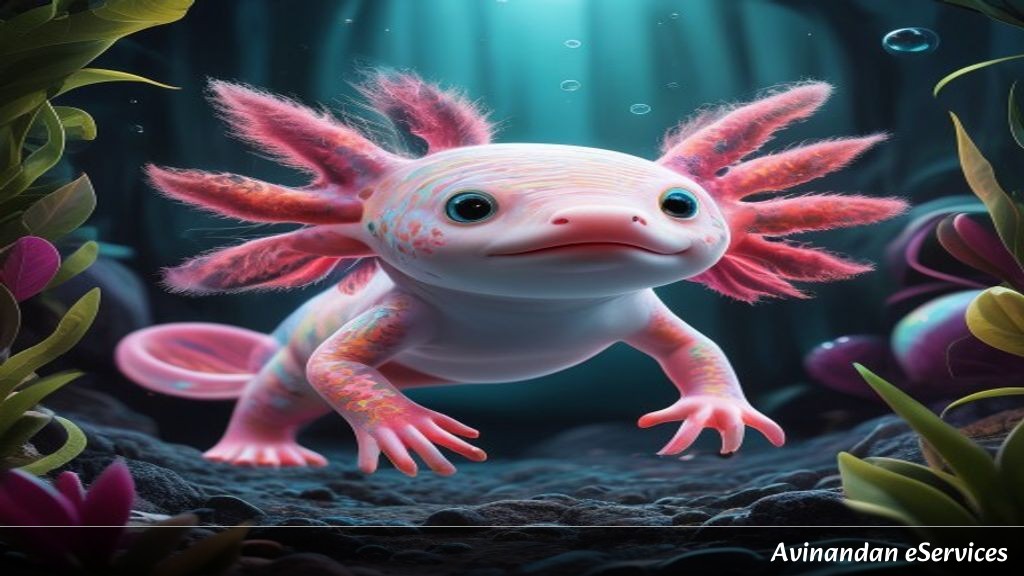
Rohan: Isha, look at this cute photo on my tablet! It looks like a smiling pink dragon with fluffy pink feathers on the side of its head! My friend said it's called an axolotl. Is it real, or is it a mythical creature?
Isha: Oh, it is 100% real, Rohan! That cute creature is an axolotl, pronounced ACK-suh-lah-tul. They are a species of salamander native to the ancient Xochimilco lake complex near Mexico City. But what makes them truly mind-blowing isn't just their adorable smile—it's their biological superpowers!
Rohan: Superpowers? Can they fly or shoot lasers out of those tiny eyes?
Isha: Haha, no, not quite! But their real power is almost like a comic book superhero: unbelievable tissue regeneration! If an axolotl loses a leg, a tail, part of its heart, or even parts of its brain, it can completely regrow them without leaving a single scar!
Rohan: Wait, hold on! Did you just say it can regrow its brain? If a lizard loses its tail, it grows back a stubby replacement. But regrowing a whole limb or a brain sounds impossible! How can an animal regrow complex body parts like that?
Isha: It sounds like science fiction, doesn't it? When a human gets a deep cut, our body hurries to close the wound as quickly as possible. It builds tough scar tissue made of collagen. Scar tissue acts like a quick emergency patch, but it stops the original organs or muscle tissues from growing back.
Rohan: Ah, so scarring prevents real regeneration! What does the axolotl do differently when it gets injured?
Isha: When an axolotl gets hurt, special immune cells called macrophages rush to the site to clean up damaged cells and prevent infections. But instead of forming scar tissue, the cells at the edge of the wound do something magical called dedifferentiation.
Rohan: Whoa, dedifferentiation? That is a gigantic word! What does it actually mean?
Isha: Think of it like taking a finished Lego castle, breaking the bricks back down into basic building blocks, and then reassembling them into something brand new! Normally, an adult skin cell can only make skin cells, and a muscle cell can only make muscle cells. But during dedifferentiation, those cells revert back into unspecialized stem-like cells.
Rohan: That's amazing! So they turn back into blank-canvas cells that can become anything?
Isha: Exactly! These special cells gather together at the tip of the wound to form a tiny bump called a blastema. This blastema is like a mini-construction hub filled with master-builder cells. They start multiplying and receiving chemical signals that whisper instructions like: 'You become a bone cell, you become a blood vessel, and you become a nerve cell!'
Rohan: Wow, it's like their body remembers the exact blueprint of how they were built when they were just an egg!
Isha: That is a great way to put it! Within a few weeks, the blastema reshapes itself into a brand new, perfectly functional leg or tail, complete with joints, toes, nerves, and blood vessels. And when it comes to their brain, scientists discovered that after a brain injury, axolotls can generate new neurons and reconnect complex neural circuits, restoring full brain function!
Rohan: That is unbelievable. Imagine if humans could do that! Why can't we perform regeneration tricks like the axolotl?
Isha: Scientists are working hard to answer that exact question! Humans actually have some of these regenerative genes, but over millions of years of evolution, mammal bodies chose fast scar formation over slow regeneration to prevent us from bleeding out or getting deadly infections in the wild. But by studying axolotls, genetic scientists hope to unlock ways to help humans heal damaged organs, repair spinal cord injuries, or prevent scarring!
Rohan: That would transform medicine forever! Oh, and what about those fluffy pink feather-like things on their heads? What are those for?
Isha: Those are actually their \texternal gills! Axolotls exhibit a rare biological trait called neoteny. Most salamanders hatch in water with gills, undergo metamorphosis, lose their gills, and move onto land as adult amphibians. But axolotls decide to stay in their aquatic juvenile stage forever, keeping their swimming tails and feathery gills while growing into full adults!
Rohan: So they are basically underwater Peter Pans that never grow up and can heal like Wolverine! That makes them one of the absolute coolest creatures on Planet Earth!
Isha: Absolutely! They are true living biological wonders!
So, What Did We Learn Today?
- Axolotls are Salamanders: Despite being called 'Mexican walking fish', axolotls are aquatic salamanders native to Lake Xochimilco in Mexico.
- Master of Regeneration: Axolotls can completely regrow lost limbs, tails, heart tissue, spinal cords, and even parts of their brains without forming scars.
- The Magic of Blastema: Injured tissue turns back into stem-like cells that form a construction zone called a blastema to rebuild body parts.
- Forever Young: Axolotls experience neoteny, keeping their juvenile traits like \texternal feathery gills throughout their adult lives.
- Medical Hope: Studying axolotl genetics helps scientists research ways to heal human organ damage and severe spinal injuries in the future.
Rohan: I am definitely going to draw an axolotl in my science notebook today. Nature really is full of incredible surprises!