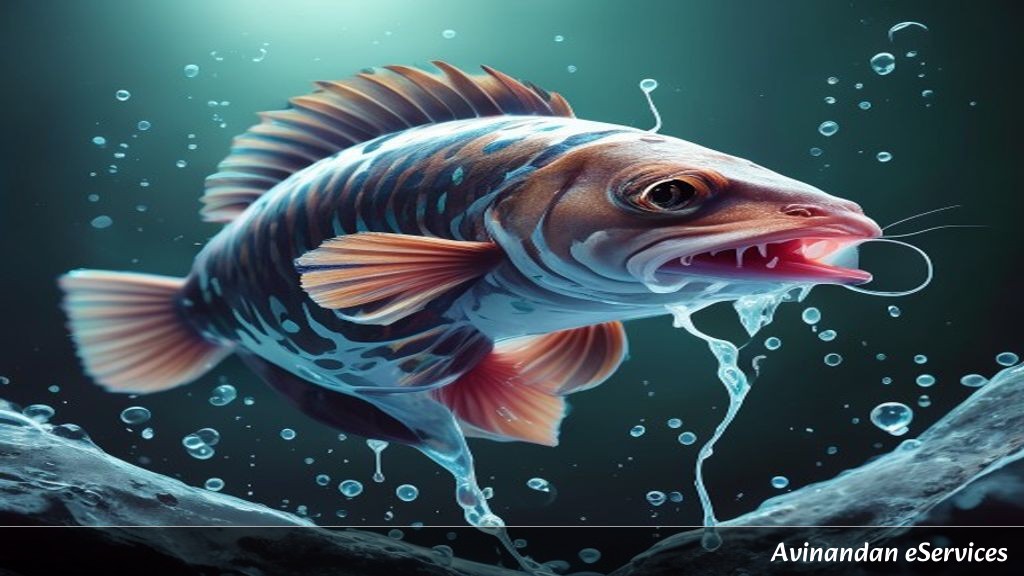
Vikram: Mira! I was reading a book about weird ocean animals today, and I saw a picture of a long creature that looks like a giant pink worm. It claimed this thing can turn a whole bucket of water into thick goo in less than a second! Is that actually real, or was it just a movie magic effect?
Mira: Oh, it is 100 percent real, Vikram! You are talking about the incredible hagfish. They are ancient, jawless deep-sea creatures, and they possess one of the most unbelievable defense mechanisms in the entire animal kingdom: instant slime armor!
Vikram: Yuck! Instant slime? That sounds gross, but super cool at the same time! How can a single small animal produce so much slime so fast? Does it keep gallons of liquid goo stored inside its stomach?
Mira: That is the coolest part—it doesn't store ready-made slime at all! If a hagfish kept buckets of slime stored inside its body, it wouldn't be able to move or swim. Instead, it carries roughly 100 tiny slime glands along the sides of its body. Inside those glands, it keeps a concentrated mixture of two special microscopic ingredients: coiled protein threads and tiny mucus-making packets called mucins.
Vikram: Wait, so it carries ingredients to make slime on the spot? Like an instant recipe?
Mira: Exactly! Think of it like a secret biological chemical formula. When a hungry predator, like a shark or a large fish, bites down on the hagfish, the hagfish senses the pressure and squirts a tiny droplet of this concentrated fluid—less than a single teaspoon—into the surrounding ocean water.
Vikram: A single teaspoon? How does a single teaspoon turn into an entire ocean cloud of snot?
Mira: Chemistry and physics work together in an instant! As soon as those droplets hit seawater, two things happen simultaneously. First, the mucin molecules rapidly absorb water and swell up. Second, the coiled protein threads—which are rolled up like tiny, spring-loaded thread spools inside individual cells—uncoil instantly.
Vikram: Uncoil? Like popping open a tiny spring-loaded umbrella?
Mira: Yes! Microscopic threads up to 15 centimeters long spring open and uncoil in a fraction of a second. These long, flexible threads tangle together, trapping the water molecules that are being expanded by the mucins. In less than one-tenth of a second—faster than you can blink your eye—that tiny teaspoon of fluid expands by more than 10,000 times its original volume!
Vikram: Whoa! Ten thousand times?! That is mind-blowing! That’s like taking a tiny cup of juice and suddenly having enough jelly to fill a whole swimming pool!
Mira: Exactly! The result is a thick, gelatinous web of sticky slime surrounding the attacker. When a shark tries to bite a hagfish, its mouth and breathing gills immediately get choked up with gelatinous goo. The shark panics, gags, and immediately spits the hagfish out so it can try to flush its gills and breathe again!
Vikram: Wow, that is the ultimate superhero escape trick! But wait a second, Mira... if the hagfish fills the water around itself with suffocating slime, doesn't the hagfish get trapped in its own gooey trap?
Mira: That is a brilliant question! The hagfish has evolved a clever acrobatic trick to deal with that exact problem. Because hagfish do not have a hard backbone, their bodies are \textremely soft and flexible. To escape its own slime, the hagfish ties its body into a tight knot!
Vikram: A knot? Like tying a shoelace?
Mira: Just like tying a knot! It forms a loop near its tail and slides the knot forward along the length of its body toward its head. As the knot moves forward, it acts like a squeegee, scraping all the sticky slime right off its skin. Then the hagfish swims away totally clean, leaving the hungry shark behind, struggling with a mouth full of goo!
Vikram: That is genius! Squeegeeing off your own slime by tying yourself into a knot! Are scientists studying this ocean slime for anything useful?
Mira: They certainly are! Materials scientists and engineers are fascinated by hagfish slime because those microscopic protein threads are incredibly strong and stretchy—almost like spider silk or Kevlar, which is used to make protective gear. Since most synthetic fabrics like polyester are made from petroleum, researchers are trying to grow hagfish slime proteins in laboratories to weave eco-friendly, biodegradable fabrics for clothes, medical bandages, and lightweight ropes.
Vikram: I never would have guessed that ocean slime could help us make eco-friendly clothes in the future! Science is full of wild surprises.
Mira: It really is! Nature has spent millions of years coming up with solutions to tough problems, and we are still learning from them every day.
So, What Did We Learn Today?
- Instant Defense Armor: The deep-sea hagfish defends itself against attacks by producing instant slime that clogs the mouth and gills of predators.
- Massive Expansion: A single teaspoon of hagfish gland fluid expands over 10,000 times in less than 0.1 seconds when mixed with seawater.
- Microscopic Springs: The slime forms because tightly coiled protein threads spring open instantly to trap water molecules alongside mucin proteins.
- The Knot Trick: To avoid getting stuck in its own gooey trap, the hagfish ties its body into a flexible knot and slides it down to scrape off the slime.
- Eco-Friendly Tech: Scientists are studying hagfish slime threads to create super-strong, biodegradable fabrics and materials for the future.
Vikram: I am definitely going to tell all my classmates about the knot-tying slime eel tomorrow! Thanks for explaining it, Mira!