Vikram: Ananya, look at my new fitness tracker! I’ve been walking in circles around the living room all morning just to reach my ten-thousand-step goal. It’s so cool how it knows exactly how many steps I take!
Ananya: That is pretty neat, Vikram. But you know, humans aren't the only ones who track their steps. There is a tiny creature in the middle of the Sahara Desert that has been using a built-in pedometer for thousands of years, and it doesn't even need a battery!
Vikram: Wait, an insect with a pedometer? Are you pulling my leg, Ananya? Ants don’t wear watches!
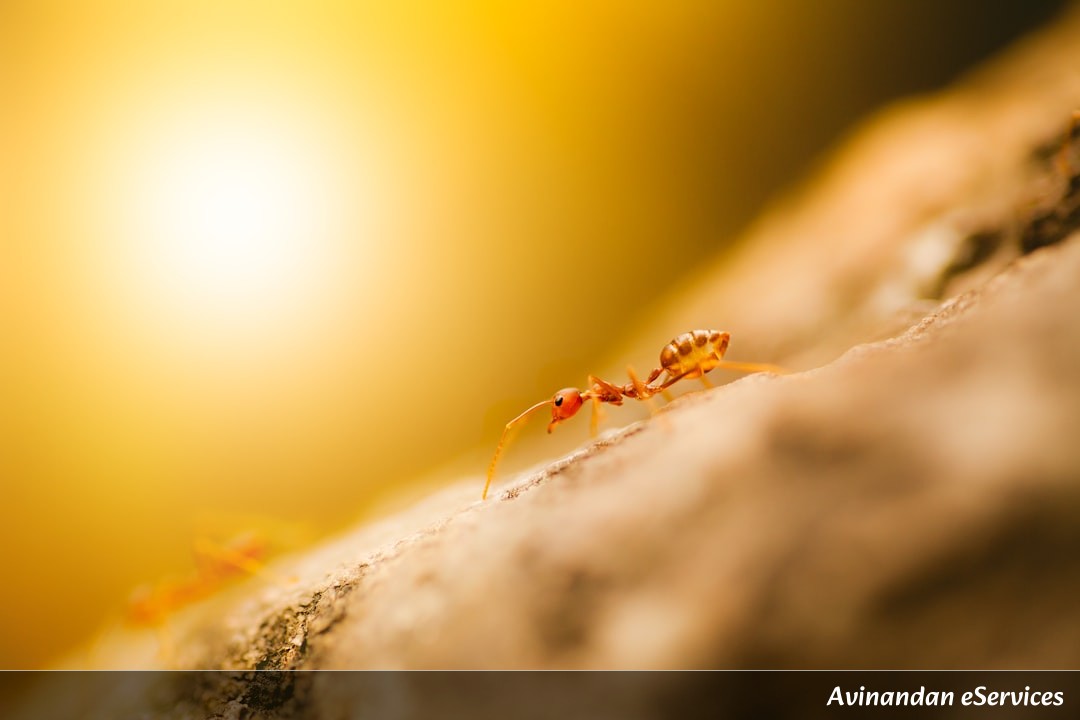
Ananya: It’s true! It’s called the Sahara Desert Ant, or Cataglyphis fortis. These ants live in one of the harshest, flattest, and most featureless places on Earth. Because the sand dunes look the same everywhere and the wind constantly shifts the landscape, they can’t use landmarks like trees or rocks to find their way back home.
Vikram: That sounds scary. If I were a tiny ant in a giant desert with no map, I’d be lost forever. So, how do they do it? Do they leave a trail of breadcrumbs like Hansel and Gretel?
Ananya: Great guess, but no. In the scorching heat of the Sahara, a chemical scent trail—which many other ants use—would evaporate almost instantly. Instead, these ants use a brilliant bit of math called 'path integration.' But specifically, they use a biological odometer to count their steps.
Vikram: An odometer? Like the thing in a car that shows how many kilometers it has driven? How do scientists even know that? Did they ask the ants?
Ananya: Not exactly! Scientists had to get very creative. In 2006, a team of researchers led by Matthias Wittlinger did one of the funniest-looking experiments in science history. They wanted to see if the ants were actually counting steps or just looking at the ground. So, they gave the ants 'stilts' and 'stumps.'
Vikram: Stilts and stumps? You mean they made tiny ant shoes?
Ananya: Sort of! First, they let the ants walk from their nest to a food source. Once the ants found the food, the scientists divided them into three groups. The first group was left alone as a control. For the second group, they glued tiny pig bristles to their legs to make them longer—those were the 'stilts.' For the third group, they carefully trimmed their legs to make them shorter—those were the 'stumps.'
Vikram: Whoa, wait! So the ants with stilts had longer strides, and the ants with stumps had shorter strides. What happened when they tried to go home?
Ananya: It was amazing! The ants with stilts—the ones with the long legs—walked right past their nest. They overshot it by about fifty percent because they thought they hadn't walked far enough yet. Their internal counter said '1,000 steps,' but because their legs were longer, those 1,000 steps took them much further than usual.
Vikram: And let me guess... the ants with the short 'stump' legs stopped way before they reached the nest?
Ananya: Exactly! They reached their step count much earlier and started looking for the nest entrance in the middle of nowhere. They were under-shooting their target. This proved that the ants weren't using their eyes to see the nest or smelling it; they were literally counting their strides to measure distance.
Vikram: That is unbelievable! But how do they know which *direction* to go? Counting steps only tells you how far you’ve gone, not which way is home.
Ananya: You're sharp, Vikram! To handle direction, they use a 'sky compass.' They can see patterns of polarized light in the sky that humans can’t see. This helps them know exactly where the sun is, even if it's cloudy. By combining the direction from the sky and the distance from their step-counter, they can calculate a direct bee-line—or ant-line—straight back to their hole.
Vikram: So, even if they wandered around in zig-zags looking for food, they can just do the math in their heads and walk back in a straight line?
Ananya: Precisely. It’s called 'vector navigation.' Their tiny brain, which is smaller than a grain of salt, is performing complex trigonometry every second they are out in the sun.
Vikram: I struggle with trigonometry in my homework, and I have a calculator! Does this mean the ants are actually counting 'one, two, three' in their heads?
Ananya: It’s probably not numbers like we think of them. It’s more likely a biological signal that builds up with every muscle movement. Think of it like a bucket filling with water—the more steps they take, the more the 'distance bucket' fills up. When it's time to go home, they just have to 'empty' the bucket by walking the other way.
Vikram: Science is so cool. I wonder if my fitness tracker works on the same principle? Maybe I should put it on an ant!
Ananya: Haha! I think your tracker is a bit too heavy for a Sahara ant, Vikram. But it just goes to show that nature often invents things millions of years before humans do. We think we're so smart with our GPS and satellites, but a tiny desert insect was navigating the world with math long before we even had wheels!
So, What Did We Learn Today?
- Sahara Desert Ants use a biological pedometer to navigate featureless terrain where landmarks don't exist.
- The Stilts and Stumps Experiment proved that ants count their strides to measure distance; longer legs made them overshoot their home, while shorter legs made them stop too early.
- Path Integration is the process where the ant's brain combines direction (using a sky compass) and distance (using step counting) to find the shortest way back.
- Animal Intelligence can be incredibly specialized; even a brain smaller than a pinhead can perform complex calculations to ensure survival in harsh environments.
Vikram: I guess the next time I’m counting my steps, I’ll have to remember I’m just trying to keep up with the ants! Thanks for the lesson, Ananya!