Introduction to the Topic
Welcome, young explorers! Have you ever wondered what makes our Earth so special? Unlike any other planet we know of in the solar system, Earth is the only one that sustains life. This is possible because of the unique interaction between three main components: land, water, and air. In Class VI Geography Chapter 5, 'Major Domains of the Earth,' we dive deep into these components to understand the delicate balance that allows plants, animals, and humans to thrive.
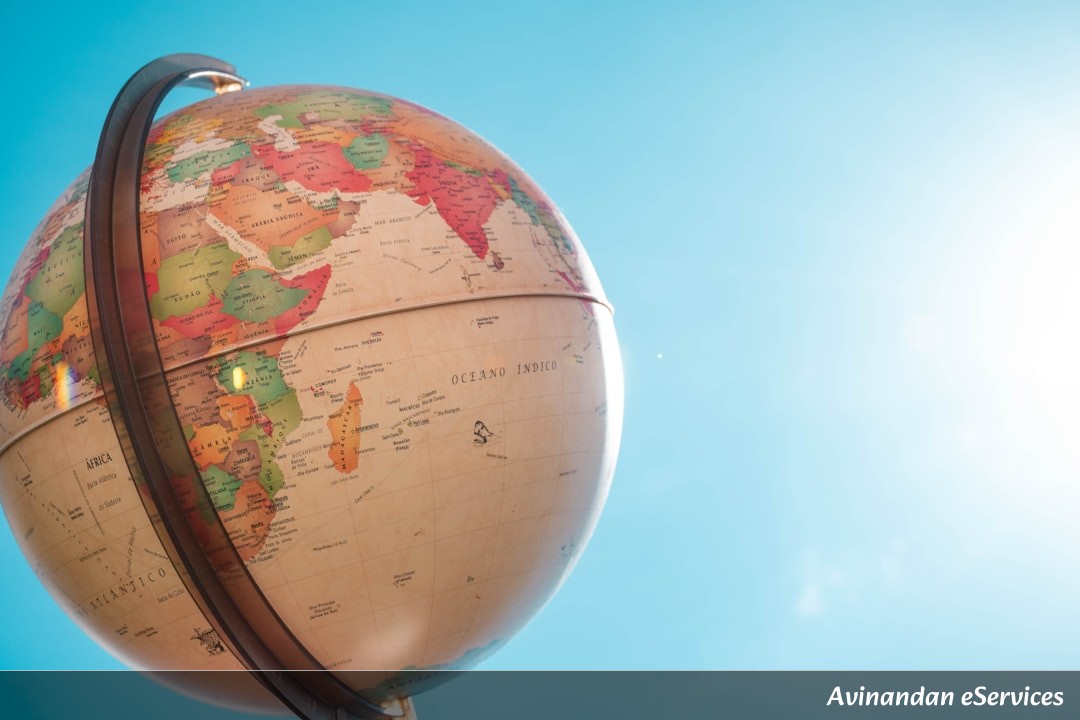
Earth consists of four main domains: the Lithosphere (land), the Hydrosphere (water), the Atmosphere (air), and the Biosphere (the narrow zone where life exists). Understanding these domains is fundamental to understanding how our planet works as a single, living system. Let’s explore each of these fascinating domains in detail.
Key Concepts Explained
1. The Lithosphere: The Solid Crust of the Earth
The term 'Lithosphere' comes from the Greek word Lithos, meaning stone. It refers to the solid portion of the Earth, consisting of the rocks of the earth’s crust and the thin layers of soil that contain nutrient elements which sustain organisms. There are two main divisions of the earth’s surface:
- The Continents: These are the large landmasses that rise above the sea level.
- The Ocean Basins: These are the huge depressions that hold the earth's oceans. All the oceans of the world are connected with one another, which is why the level of seawater remains the same everywhere. This level is called 'sea level,' and we measure the height of land from it (taking it as zero).
The Seven Continents:
- Asia: The largest continent, covering about one-third of the total land area of the earth. It lies in the Eastern Hemisphere and is separated from Europe by the Ural Mountains.
- Europe: Much smaller than Asia, it lies to the west of Asia. The Arctic Circle passes through it, and it is bound by water bodies on three sides.
- Africa: The second-largest continent. The Equator runs almost through the middle of it. A large part of Africa lies in the Northern Hemisphere. It is the only continent through which the Tropic of Cancer, the Equator, and the Tropic of Capricorn all pass. The Sahara Desert, the world’s largest hot desert, is located here.
- North America: The third-largest continent. It is linked to South America by a very narrow strip of land called the Isthmus of Panama.
- South America: Mostly located in the Southern Hemisphere. The Andes, the world’s longest mountain range, runs through its length from north to south. It is also home to the Amazon, the world’s largest river.
- Australia: The smallest continent that lies entirely in the Southern Hemisphere. Because it is surrounded on all sides by oceans and seas, it is called an 'island continent.'
- Antarctica: A huge continent in the Southern Hemisphere. The South Pole lies almost at its center. It is permanently covered with thick ice sheets, making it unsuitable for permanent human settlement, though many countries (including India with stations named Maitri and Bharti) have research stations there.
2. The Hydrosphere: The Realm of Water
Earth is often called the 'Blue Planet' because more than 71 percent of its surface is covered with water. The Hydrosphere consists of water in all its forms: running water in oceans and rivers, water in lakes, ice in glaciers, underground water, and water vapor in the atmosphere. However, despite having so much water, we face water shortages because 97 percent of Earth's water is found in the oceans and is too salty for human use. Only a tiny fraction (about 0.03%) is available as fresh water.
The Five Major Oceans:
- The Pacific Ocean: The largest ocean, spreading over one-third of the earth. The Mariana Trench, the deepest part of the earth, lies under this ocean. It is almost circular in shape.
- The Atlantic Ocean: The second-largest ocean. It is 'S' shaped and flanked by North and South America on the west and Europe and Africa on the east. Its highly indented coastline provides excellent locations for natural harbors.
- The Indian Ocean: The only ocean named after a country (India). The shape of the ocean is almost triangular.
- The Southern Ocean: It encircles the continent of Antarctica and \textends northward to 60 degrees south latitude.
- The Arctic Ocean: Located within the Arctic Circle and surrounds the North Pole. It is connected with the Pacific Ocean by a narrow stretch of shallow water known as Berring Strait.
3. The Atmosphere: The Gaseous Envelope
The Earth is surrounded by a layer of gas called the atmosphere. This thin blanket of air provides us with the air we breathe and protects us from the harmful effects of the sun’s rays. The atmosphere \textends up to a height of about 1,600 kilometers and is divided into five layers based on composition, temperature, and other properties:
- Troposphere: The lowest layer where we live and where weather occurs.
- Stratosphere: Above the troposphere, containing the ozone layer.
- Mesosphere: The third layer where meteors burn up.
- Thermosphere: Where temperatures rise rapidly with height.
- Exosphere: The outermost layer that merges with outer space.
The atmosphere is composed mainly of Nitrogen (78%) and Oxygen (21%). Other gases like Carbon dioxide, Argon, and others comprise 1% by volume. Oxygen is essential for breathing, while Nitrogen helps in the growth of living organisms. Carbon dioxide, though present in minute amounts, absorbs heat radiated by the earth, keeping the planet warm (the greenhouse effect).
4. The Biosphere: The Domain of Life
The Biosphere is the narrow zone where land, water, and air come into contact. It is in this zone that life exists. From tiny microbes and bacteria to huge mammals, all living organisms are linked to each other and to the biosphere for survival. The organisms in the biosphere are broadly divided into the plant kingdom and the animal kingdom.
These three domains interact with each other and affect each other in some way or another. For example, cutting forests for our needs may lead to fast removal of soil from slopes. Similarly, the earth's surface may be changed due to natural calamities like earthquakes. Today, there is a growing concern about the discharge of waste into lakes and rivers, making the water unsuitable for use, and the emission from industries and vehicles polluting the air. This leads to global warming, which threatens the balance of nature.
Summary & Key Takeaways
- Lithosphere: The solid part of the earth, including 7 continents: Asia, Europe, Africa, North America, South America, Australia, and Antarctica.
- Hydrosphere: Includes all water bodies. Oceans cover most of the earth, with the Pacific being the largest.
- Atmosphere: The layer of air around us, composed mostly of Nitrogen and Oxygen, divided into five layers.
- Biosphere: The zone where land, water, and air interact to support life.
- Sustainability: We must maintain a balance between these domains by limiting the use of resources and reducing pollution to protect our planet.
- Key Terms to Remember: Isthmus (narrow strip of land), Strait (narrow passage of water), and Global Warming (increase in global temperature due to CO2).