Introduction to Control and Coordination
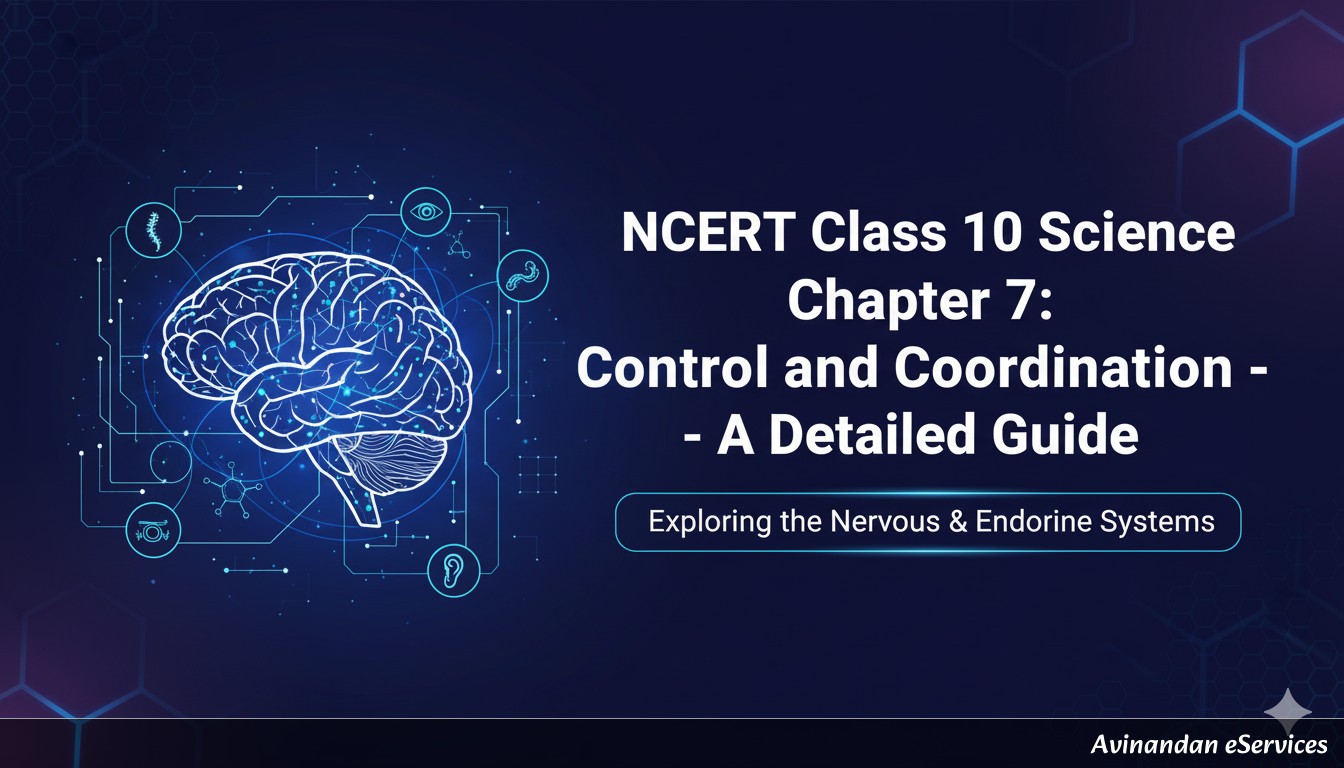
Welcome to our detailed guide on Chapter 7 of the NCERT Class 10 Science syllabus, 'Control and Coordination'. Have you ever wondered how you instantly pull your hand away from a hot object, or how a plant bends towards sunlight? These actions, and countless others that happen within living organisms every second, are not random. They are the result of a sophisticated system of control and coordination. In this chapter, we will explore the fascinating mechanisms that allow living things to respond to their environment in a controlled and appropriate manner.
All living organisms, from the simplest bacteria to complex animals like humans, must respond and react to changes in their environment. These changes, called stimuli, can be \texternal (like heat, light, sound, touch) or internal. The ability of an organism to detect these stimuli and react appropriately is crucial for its survival. This process of responding to stimuli involves two key components: control and coordination.
- Control: The power to regulate a process or action.
- Coordination: The orderly functioning of different but interrelated parts to perform a common function effectively.
In multicellular organisms, specialized tissues and cells work together. This requires a system to ensure that all these parts function in a synchronized manner. For instance, when you decide to run, your nervous system must command your muscles to move, your heart to pump faster, and your breathing rate to increase. All these actions must be coordinated. Animals have a complex nervous system and an endocrine (hormonal) system for this purpose. Plants, on the other hand, lack a nervous system but use chemical signals (hormones) to coordinate their growth and responses to environmental triggers. This chapter will delve into both these systems in detail.
Animals – Nervous System
In animals, control and coordination are primarily achieved by the nervous system and the endocrine system. The nervous system uses electrical impulses to transmit messages rapidly, making it ideal for quick responses. Let's explore its structure and function.
Structure and Function of a Neuron (Nerve Cell)
The nervous system is an intricate network composed of specialized cells called neurons or nerve cells. The neuron is the structural and functional unit of the nervous system. Its primary job is to detect, receive, and transmit different kinds of stimuli.
A typical neuron has three main parts:
- Dendrite: These are short, branched, tree-like \textensions from the cell body. Their primary function is to receive information (in the form of chemical signals) from other neurons and transmit it towards the cell body.
- Cell Body (or Cyton): This is the main part of the neuron, containing the nucleus and other organelles. It processes the information received from the dendrites.
- Axon: This is a single, long, cylindrical projection that carries electrical impulses away from the cell body to other neurons, muscles, or glands. The end of the axon is branched into several nerve endings.
Information travels through a neuron as an electrical impulse. When a dendrite receives a stimulus, a chemical reaction occurs, which generates an electrical impulse. This impulse travels from the dendrite to the cell body, and then down the axon to its endings. At the end of the axon, the electrical impulse triggers the release of chemicals called neurotransmitters. These chemicals cross a tiny gap, called a synapse, to reach the dendrites of the next neuron. This is how the signal is passed from one neuron to another, forming a chain of communication.
Reflex Action and Reflex Arc
Imagine touching a flame by accident. You would pull your hand away instantly, even before you consciously feel the pain. This \textremely fast, involuntary response to a stimulus is called a reflex action. These actions are crucial for survival as they protect us from harm without requiring time for conscious thought.
The neural pathway that mediates a reflex action is called the reflex arc. It is the shortest route that a nerve impulse can take. Let's trace the path of the impulse in the example of touching a hot object:
- Receptor: The stimulus (heat) is detected by thermoreceptors in the skin of your hand.
- Sensory Neuron: The receptor triggers a nerve impulse in a sensory neuron. This neuron transmits the signal from the receptor to the spinal cord.
- Relay Neuron (Interneuron): Within the spinal cord, the sensory neuron passes the signal to a relay neuron. The relay neuron processes the information and immediately passes it on to a motor neuron. The spinal cord acts as the processing center for most reflex actions.
- Motor Neuron: The motor neuron carries the command signal from the spinal cord to the effector.
- Effector: The effector is the part of the body that responds. In this case, it is the muscles (biceps) in your arm, which contract to pull your hand away from the flame.
This entire sequence happens in a fraction of a second. The message also travels to the brain, but by the time the brain processes the sensation of pain, the hand has already been moved to safety. This shows that thinking is a complex process and not suitable for situations requiring immediate action.
The Human Brain
While the spinal cord handles reflex actions, the brain is the main coordinating center of the body. It is the seat of consciousness, thought, memory, and emotion. It receives information from all parts of the body, processes it, and sends out instructions. The brain, along with the spinal cord, constitutes the Central Nervous System (CNS).
The human brain is a highly complex organ, protected within the bony box of the cranium (skull). It is further protected by three layers of membranes called meninges and is cushioned by cerebrospinal fluid, which absorbs mechanical shocks.
The brain is broadly divided into three main regions:
- Fore-brain: This is the largest and most complex part of the brain. Its main component is the cerebrum, which is the center of thinking, intelligence, memory, and voluntary actions. Different areas of the cerebrum are specialized for hearing, smell, sight, and more. The fore-brain also contains structures that control sensations like hunger and thirst.
- Mid-brain: This is a small region that connects the fore-brain to the hind-brain. It controls several involuntary actions and reflex movements of the head, neck, and trunk in response to visual and auditory stimuli. For example, it controls the change in the size of the pupil.
- Hind-brain: This region is located at the back of the brain and consists of three parts:
- Pons: It relays signals between the cerebellum, cerebrum, and spinal cord. It also plays a role in regulating respiration.
- Medulla Oblongata: This controls vital involuntary actions such as heartbeat, breathing, blood pressure, salivation, and vomiting.
- Cerebellum: Located behind the cerebrum, the cerebellum is responsible for maintaining posture and balance of the body. It also coordinates and fine-tunes voluntary movements, making them smooth and precise. For example, actions like riding a bicycle or picking up a pen are controlled by the cerebellum.
How are Tissues like Nerves and Muscles Protected?
The delicate tissues of the central nervous system require significant protection. The brain is housed inside the rigid, bony skull (cranium). Between the brain and the skull, there are layers of membranes called meninges, which enclose the cerebrospinal fluid. This fluid acts as a shock absorber, protecting the brain from mechanical shocks and injuries. Similarly, the spinal cord is protected by the flexible but strong vertebral column or backbone.
How does the Nervous Tissue Cause Action?
The ultimate goal of the nervous system is to cause an action, which is usually carried out by muscles or glands. How does a nerve impulse lead to muscle movement? When a motor neuron delivers an impulse to a muscle, it doesn't directly touch the muscle fiber. There is a specialized synapse called the neuromuscular junction. When the nerve impulse reaches the end of the axon, it releases chemical neurotransmitters. These chemicals diffuse across the junction and stimulate the muscle fiber. This stimulation causes a change in the arrangement of special proteins within the muscle cells. This change in protein shape leads to the contraction of the muscle, causing it to shorten and pull on a bone, resulting in movement.
Coordination in Plants
Plants, unlike animals, do not have a nervous system or muscles. Yet, they show remarkable coordination and respond to environmental stimuli like light, water, gravity, and touch. This coordination is achieved primarily through chemical signals called plant hormones or phytohormones. Plant movements can be categorized into two main types: those independent of growth and those dependent on growth.
Immediate Response to Stimulus (Nastic Movements)
Some plants respond to stimuli almost immediately, in a way that is independent of the direction of the stimulus. A classic example is the 'touch-me-not' plant (Mimosa pudica). When you touch its leaves, they rapidly fold up and droop. This movement is not a growth response. Instead, it is caused by a rapid change in the amount of water in specialized cells at the base of the leaf (pulvinus). When stimulated, these cells lose water, causing a loss of turgor pressure, which leads to the folding and drooping of the leaves. This is a form of nastic movement, specifically thigmonasty (response to touch).
Movement Due to Growth (Tropic Movements)
Most plant movements are slow and are a result of growth. These directional movements, where the plant part grows either towards or away from a stimulus, are called tropic movements or tropisms. The direction of the response is related to the direction of the stimulus.
Here are the major types of tropisms:
- Phototropism: This is the growth movement of a plant part in response to a light stimulus. Plant shoots are positively phototropic (they grow towards light), while roots are negatively phototropic (they grow away from light). This response is mediated by the plant hormone auxin. Auxin accumulates on the shaded side of the stem, promoting cell elongation there, which causes the stem to bend towards the light source.
- Geotropism: This is the growth movement in response to gravity. Roots are positively geotropic (they grow downwards, into the soil), which helps in anchoring the plant and absorbing water and nutrients. Shoots are negatively geotropic (they grow upwards, away from gravity) to reach sunlight for photosynthesis.
- Hydrotropism: This is the growth movement of a plant part, particularly roots, in response to water. Roots are positively hydrotropic, meaning they will grow towards areas with higher moisture content in the soil. This is a crucial survival mechanism.
- Chemotropism: This is the movement or growth of an organism or part of an organism in response to a chemical stimulus. A prime example in plants is the growth of the pollen tube from the stigma towards the ovule in the ovary during fertilization. The ovule secretes chemicals that guide the pollen tube's growth.
- Thigmotropism: This is the directional growth of a plant in response to touch or contact with a solid object. Climbing plants and vines, such as pea plants, have tendrils that are sensitive to touch. When a tendril comes into contact with a support, the side in contact grows slower than the side away from the contact. This differential growth causes the tendril to coil around the support, providing anchorage for the plant.
Hormones in Animals (Endocrine System)
While the nervous system provides rapid, short-lived responses, the endocrine system provides a slower, more sustained form of control and coordination using chemical messengers called hormones. Hormones are produced by endocrine glands, which are ductless glands that release their secretions directly into the bloodstream. The blood then carries these hormones to target cells or organs throughout the body, where they regulate various physiological processes like growth, metabolism, and development.
Major Endocrine Glands and Their Hormones
Let's look at some of the major endocrine glands in the human body and the hormones they produce.
| Gland | Hormone(s) | Location | Function(s) |
|---|---|---|---|
| Pituitary Gland | Growth Hormone (GH), and others | Base of the brain | Known as the 'master gland', it regulates growth and controls the functioning of other endocrine glands. Deficiency of GH in childhood leads to dwarfism, while its over-secretion leads to gigantism. |
| Thyroid Gland | Thyroxine | Neck/Throat region | Regulates the metabolism of carbohydrates, fats, and proteins. Iodine is essential for the synthesis of thyroxine. A deficiency of iodine in the diet can lead to a condition called goitre, characterized by a swollen neck. |
| Adrenal Glands | Adrenaline | On top of both kidneys | Secreted in response to stress or emergency situations. It prepares the body for 'fight or flight' by increasing heart rate, breathing rate, and blood flow to muscles, and diverting blood from the digestive system. |
| Pancreas | Insulin and Glucagon | Near the stomach | Regulates blood sugar (glucose) levels. Insulin helps to lower blood glucose by promoting its uptake by cells. If the pancreas does not produce enough insulin, it leads to high blood sugar levels, a condition called diabetes. |
| Testes (in males) | Testosterone | In the scrotum | Responsible for the development of male secondary sexual characteristics during puberty, such as deepening of the voice, growth of facial hair, and sperm production. |
| Ovaries (in females) | Estrogen and Progesterone | In the lower abdomen | Estrogen is responsible for the development of female secondary sexual characteristics, such as the development of breasts and the start of the menstrual cycle. Progesterone helps maintain pregnancy. |
The Importance of Timed and Regulated Hormone Secretion
It is crucial that hormones are secreted in precise quantities and at the right time. The body has sophisticated feedback mechanisms to regulate this. For example, if the sugar level in the blood rises (e.g., after a meal), this is detected by the cells of the pancreas, which respond by producing more insulin. As insulin helps lower the blood sugar level, the secretion of insulin decreases once the level returns to normal. This self-regulating mechanism ensures that blood sugar levels are maintained within a narrow range, which is vital for the proper functioning of the body.
Important Questions and Answers
Here are some solved questions from the NCERT chapter exercises to help you test your understanding.
Q1: What is the difference between a reflex action and walking?
Answer:
- Reflex Action: It is an involuntary, rapid response to a stimulus that is not under the conscious control of the brain. It is primarily controlled by the spinal cord. Its purpose is to protect the body from immediate harm. Example: Withdrawing your hand from a hot object.
- Walking: It is a voluntary action that is under the conscious control of the brain. It is a complex activity that requires thinking and coordination of many muscles. The cerebellum, a part of the hind-brain, helps in maintaining posture and balance during walking.
Q2: How does chemical coordination take place in animals?
Answer: Chemical coordination in animals is carried out by the endocrine system. This system consists of endocrine glands that produce chemical messengers called hormones. These hormones are released directly into the bloodstream. The blood circulates them throughout the body. Each hormone acts on specific target organs or tissues, binding to receptors on their cells and triggering a specific response. This system is slower than the nervous system but its effects are more widespread and longer-lasting. It controls processes like growth, development, metabolism, and reproduction.
Q3: Why is the use of iodised salt advisable?
Answer: The use of iodised salt is advisable because iodine is an essential mineral required by the thyroid gland to produce the hormone thyroxine. Thyroxine regulates the metabolism of carbohydrates, fats, and proteins in the body, which is crucial for overall growth and development. A deficiency of iodine in the diet can lead to insufficient production of thyroxine, a condition known as hypothyroidism. This can cause a disease called goitre, which is characterized by the swelling of the thyroid gland in the neck. In children, iodine deficiency can impair physical and mental development.
Q4: How do auxins promote the growth of a tendril around a support?
Answer: This is an example of thigmotropism. When a tendril of a climbing plant comes into contact with a support, the plant hormone auxin plays a key role. Auxin diffuses from the side of the tendril that is in contact with the support to the side that is not in contact. The higher concentration of auxin on the side away from the support stimulates faster cell division and elongation in that region. The side in contact with the support grows more slowly. This differential growth rate causes the tendril to bend and coil around the support, providing anchorage for the plant as it climbs.
Q5: Design an experiment to demonstrate hydrotropism.
Answer:
Aim: To demonstrate that roots grow towards water (positive hydrotropism).
Materials: A wire mesh sieve, a tray, moist sawdust, and some germinating bean seeds.
Procedure:
- Take the tray and fill it with moist sawdust.
- Place some germinating bean seeds in the sawdust.
- Allow the seeds to grow for a few days until the radicles (embryonic roots) grow downwards through the holes of the sieve, under the influence of gravity.
- Keep the sawdust in the tray moist.
- After a few days, observe the direction of the growth of the radicles that have emerged from the sieve.
Conclusion: This experiment shows that roots are positively hydrotropic. The stimulus of water is stronger than the stimulus of gravity, causing the roots to grow towards the source of moisture to ensure the plant's survival.
Chapter Summary
Here are the key takeaways from the chapter 'Control and Coordination':
- Control and coordination are essential for the survival of all living organisms, allowing them to respond to environmental stimuli.
- In animals, the nervous system provides rapid coordination through electrical impulses transmitted by specialized cells called neurons.
- A neuron consists of dendrites, a cell body, and an axon. Communication between neurons occurs across a synapse.
- A reflex arc is the neural pathway for a quick, involuntary reflex action, typically involving a sensory neuron, the spinal cord, and a motor neuron.
- The human brain is the main control center, divided into the fore-brain (thinking, voluntary actions), mid-brain (reflexes), and hind-brain (involuntary actions, balance).
- Plants lack a nervous system and coordinate their responses using hormones.
- Plant movements can be tropic (directional, growth-dependent) like phototropism, geotropism, hydrotropism, and chemotropism, or nastic (non-directional, growth-independent).
- The endocrine system in animals uses hormones for slower, long-term regulation of processes like growth, metabolism, and development.
- Key endocrine glands include the pituitary, thyroid, adrenal, pancreas, testes, and ovaries, each producing specific hormones with vital functions.
- Hormone secretion is tightly regulated by feedback mechanisms to maintain balance (homeostasis) in the body.