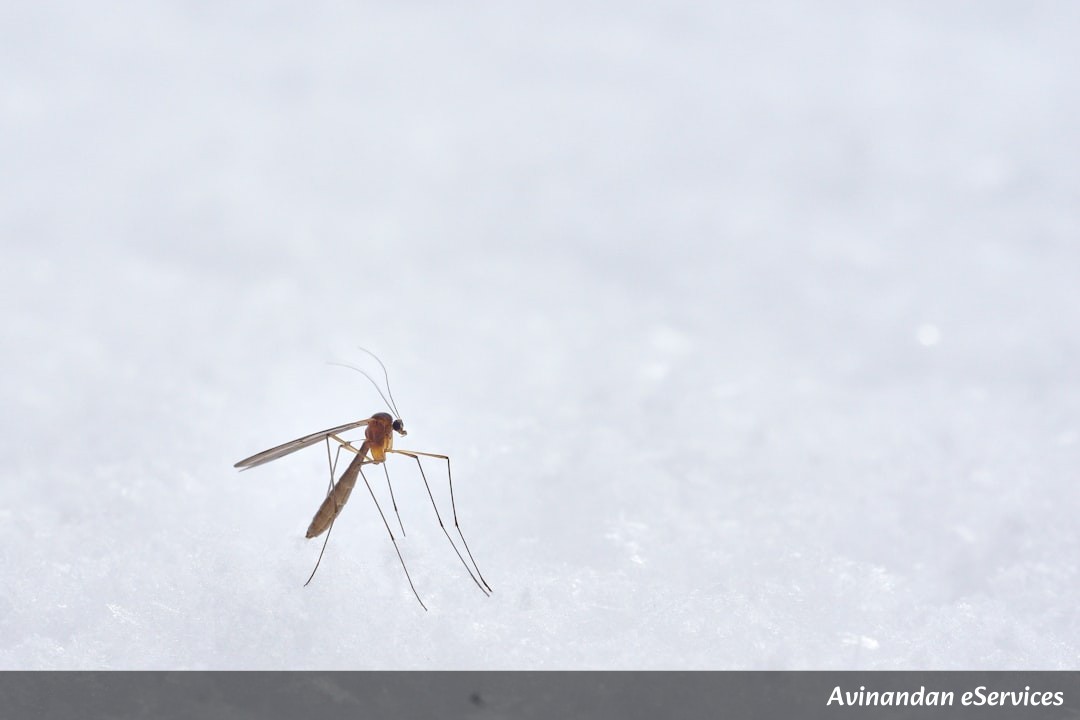
Rohan: Isha, stop the music for a second! Do you hear that? The crickets in the garden are absolutely going crazy tonight. It feels like they are chirping faster than they were yesterday.
Isha: That’s because they probably are, Rohan! It’s really warm this evening, isn't it? Believe it or not, those crickets are actually telling us exactly how hot it is outside. We don't even need a thermometer if we have a stopwatch and some crickets nearby.
Rohan: Wait, what? Are you saying crickets are like tiny, hopping weather stations? How can a bug know the temperature? They don't have apps or sensors!
Isha: They don't need them, Rohan. It’s all about biology and chemistry. This discovery is actually a scientific principle called Dolbear’s Law. It’s named after an American scientist, Amos Dolbear, who noticed this pattern back in 1897.
Rohan: 1897? That’s over a hundred years ago! So, did he just sit in his garden with a clock and listen to bugs all night? But seriously, how does the air temperature change how fast a cricket rubs its wings together?
Isha: Exactly! To understand it, you have to remember that crickets are cold-blooded, or what scientists call 'ectothermic.' Unlike us humans, who keep our body temperature at around 37 degrees Celsius no matter if it’s snowing or boiling outside, a cricket’s body temperature changes based on the environment around it.
Rohan: Okay, so if it’s hot outside, the cricket gets hot inside. But why does that make them chirp faster? When I get hot, I usually want to move slower and find a fan!
Isha: Haha, I feel the same way! But for a cricket, it’s the opposite. Inside their tiny bodies, every movement is powered by chemical reactions. These reactions are controlled by enzymes. Now, here is the cool part: these chemical reactions happen much faster when it’s warm and much slower when it’s cool. So, when the temperature rises, the cricket’s metabolism speeds up. This gives them more energy and makes their muscles contract much faster.
Rohan: So, because their muscles are moving faster, they can rub their wings together more often? I remember you telling me once that crickets don't actually 'shout' with their mouths, they use their wings.
Isha: Spot on! They use a process called stridulation. They have a special 'file' on one wing and a 'scraper' on the other. When they rub them together, it makes that 'chirp' sound. When it's warm, those muscle contractions happen rapidly, leading to more chirps per minute. When it’s a chilly night, the chemical reactions slow down, and the chirps become slow and low.
Rohan: That is wild! So, how do we actually calculate the temperature? Is there a secret code?
Isha: It’s actually a very simple math formula. If you want the temperature in Fahrenheit, you count the number of chirps a cricket makes in 15 seconds. Then, you just add 40 to that number. The total is the temperature outside!
Rohan: No way, let me try to do the mental math. If I count 30 chirps in 15 seconds... 30 plus 40 is 70. So it would be 70 degrees Fahrenheit?
Isha: Precisely! Amos Dolbear specifically studied the Snowy Tree Cricket for this. While different types of crickets have slightly different rhythms, the Snowy Tree Cricket is so accurate it’s often called the 'Thermometer Cricket.'
Rohan: Does it work for Celsius too? Because 70 degrees sounds like I’m being cooked if we used Celsius!
Isha: Haha, definitely don't use the Fahrenheit formula for Celsius! For Celsius, there’s a slightly different version. You count the number of chirps in 8 seconds and then add 5. Or, more accurately, you can count the chirps in a minute, subtract 40, divide by 7, and then add 10. It’s a bit more complex, but it works!
Rohan: Wow, so the crickets are basically living calculators. But Isha, what if it gets really, really cold? Do they just stop?
Isha: They do. If the temperature drops below a certain point—usually around 10 degrees Celsius—their chemical reactions slow down so much that they don't have the energy to chirp at all. And if it gets too hot, they stop chirping to conserve moisture and energy so they don't overheat.
Rohan: It’s amazing how nature has these built-in rules. It’s like the cricket’s whole body is tuned to the rhythm of the planet. I used to think they were just being noisy to annoy us while we sleep, but they’re actually responding to the energy of the heat around them.
Isha: It really shows how everything in science is connected. Physics affects the temperature, chemistry affects the cricket's cells, and biology creates the sound we hear. It’s all one big system.
Rohan: I’m going to go get my stopwatch and a notepad. I want to see if our garden crickets agree with the thermometer on Dad’s phone!
Isha: Go for it! Just make sure you listen to one specific cricket, or your count will be all over the place!
So, What Did We Learn Today?
- Ectothermic Animals: Crickets are cold-blooded, meaning their body temperature and energy levels are determined by the outside air.
- Chemical Reactions: Warmth speeds up the metabolism and muscle contractions in insects, allowing them to move (and chirp) faster.
- Dolbear’s Law: This scientific formula allows us to calculate the temperature by counting cricket chirps. (Chirps in 15 seconds + 40 = Fahrenheit).
- Stridulation: This is the term for the way crickets create sound by rubbing their wings together.
- Nature’s Precision: Even small insects follow strict mathematical and physical laws that we can observe in our own backyards.
Rohan: I guess next time I’m feeling slow on a cold morning, I’ll just tell my teacher my enzymes are waiting for some sunlight!