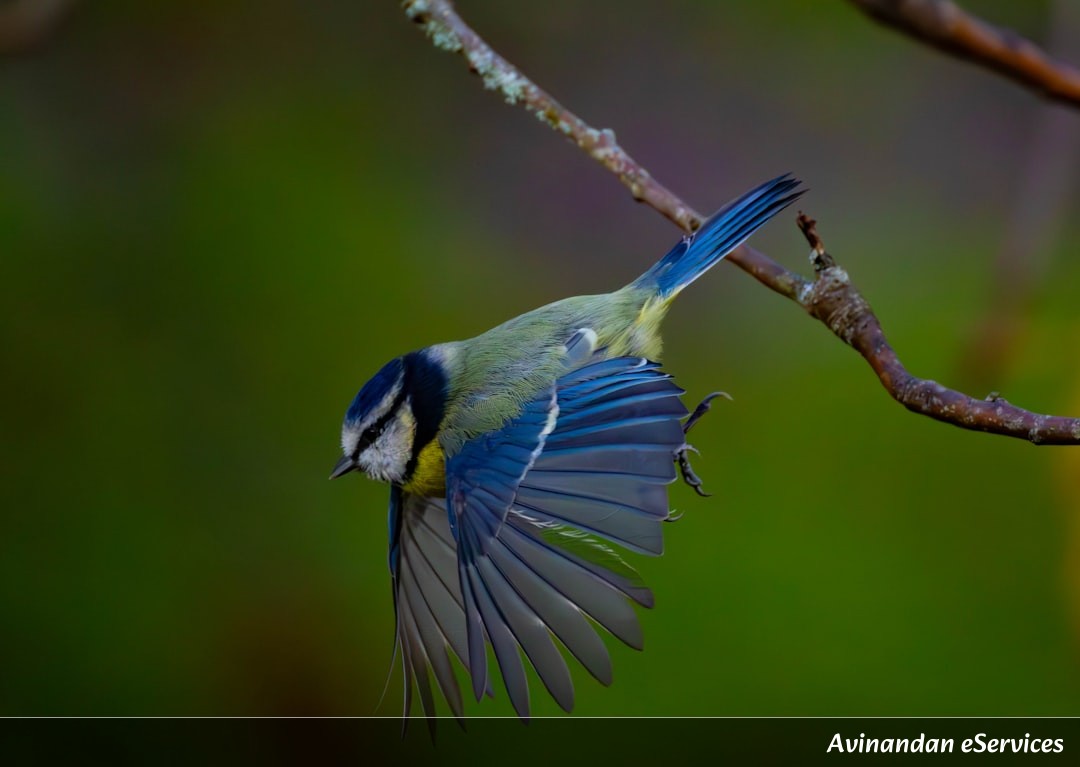
Rohan: Isha, look at those birds flying in that perfect 'V' shape! My teacher said they are starting their migration from the cold parts of the world all the way to India. But I was thinking... how do they not get lost? They don't have Google Maps or GPS!
Isha: That is a brilliant observation, Rohan! It is actually one of the coolest mysteries in biology. Scientists have discovered that many birds have a built-in biological compass. But it is even more amazing than a regular compass—they might actually be able to 'see' the Earth's magnetic field like an Augmented Reality game!
Rohan: Wait, wait, wait. See it? Like, with their eyes? I thought the magnetic field was invisible. I mean, I can’t see the magnets on our fridge doing anything unless they touch something metal!
Isha: You’re right, humans can't see it. But birds like the European Robin have a special protein in their eyes called Cryptochrome 4. This protein is sensitive to blue light, and when blue light hits the bird's eye, it triggers a very complex chemical reaction.
Rohan: A chemical reaction in their eyes just to find their way? How does that help them know which way is North?
Isha: This is where it gets really 'sci-fi.' This reaction involves something called quantum entanglement. Inside the Cryptochrome protein, there are pairs of electrons that are linked together. The Earth's magnetic field affects how these electrons behave. Depending on the angle of the magnetic field, the chemical signal sent to the bird's brain changes.
Rohan: Quantum what? That sounds like something out of an Avengers movie! Are you saying birds are basically tiny quantum computers?
Isha: In a way, yes! Because the magnetic field changes depending on where you are on Earth, the birds likely see a pattern of light or shadows overlaid on their normal vision. Imagine wearing a pair of glasses that shows a faint dark patch where the North Pole is. As you turn your head, the patch moves. That’s how they know their direction!
Rohan: Wow! So while I'm looking at a tree, a bird might be looking at the tree and a glowing map of the Earth’s energy? That’s like a superpower!
Isha: It really is. Scientists found this out by doing experiments. They noticed that if they put birds in a room with only red light, the birds got totally confused and couldn't find their way. But as soon as they turned on blue light, the birds knew exactly where to go. This proved that they need the blue light to activate the 'quantum' compass in their eyes.
Rohan: That explains why they migrate so well. But what happens if the magnetic field changes? I heard someone say the Earth's poles can flip!
Isha: That happens very, very slowly over thousands of years. But birds are very adaptable. They don't just use the magnetic field; they also use the position of the sun, the stars, and even landmarks like rivers and mountains. The magnetic 'vision' is just their most incredible secret weapon.
Rohan: I wish I had Cryptochrome eyes. I wouldn't even need a map to find the nearest ice cream shop!
Isha: Haha! Well, for now, we’ll have to stick to our phones. But just think—every time you see a tiny sparrow or a giant crane, it’s navigating the planet using the laws of quantum physics. Nature is way more advanced than our best technology!
So, What Did We Learn Today?
- Isha: Birds use a process called magnetoreception to sense the Earth's magnetic field for navigation.
- Isha: This happens thanks to a special protein in their eyes called Cryptochrome 4, which is activated by blue light.
- Rohan: This protein uses quantum entanglement to create a visual 'map' or overlay, allowing birds to literally 'see' the invisible magnetic field!
- Rohan: This is why some lights, like red light, can confuse migrating birds, because their quantum compass needs blue light to work!
- Isha: While they have this 'superpower,' birds also use the sun, stars, and landmarks to make sure they reach their destination safely.
Rohan: Science is so much cooler than I thought. I’ll never look at a bird the same way again!