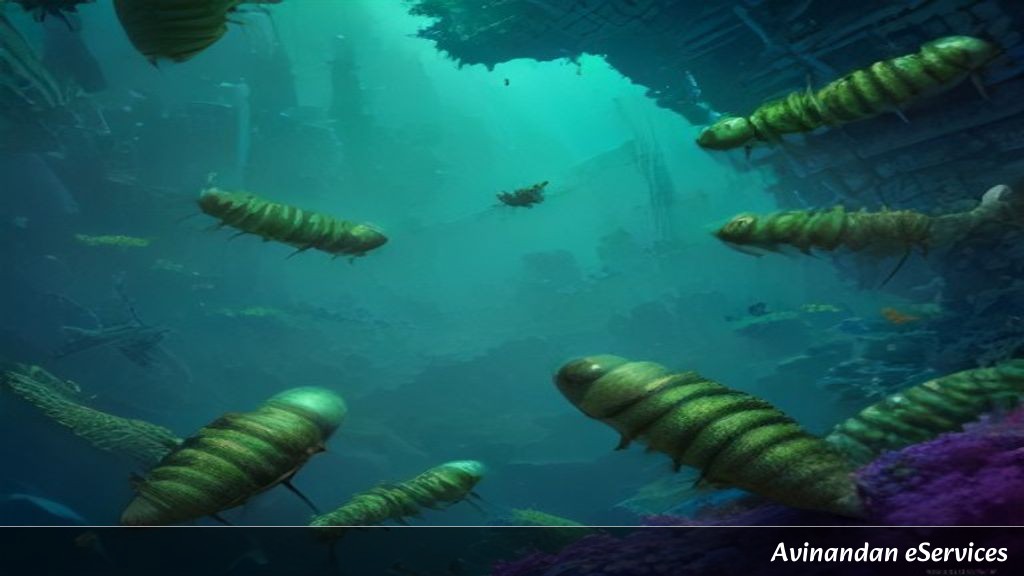
Samir: Hey Priya! I was reading about the deep sea today, and I saw something mind-boggling. Some animals down there can actually turn transparent! How do they just disappear?
Priya: You mean the glass squid or the larval eels? It’s not magic, Samir, it’s a brilliant survival strategy called transparency. In the open ocean, especially in the 'twilight zone' where there's nowhere to hide, being invisible is the ultimate superpower.
Samir: But how can they be invisible? Wouldn't their organs and bones still show up? I can see my own bones in an X-ray, so why don't predators see theirs?
Priya: That’s the genius part! These creatures have evolved bodies that have the exact same refractive index as seawater. Light passes through their bodies just as easily as it passes through water. If the light doesn't bounce off them or get absorbed, you basically can't see them.
Samir: So, it’s like they are wearing a cloak made of water? What about their eyes or their guts? Those are usually dark and full of food!
Priya: You’re very observant! They solve the gut problem by having translucent digestive tracts or by keeping their meals very small. As for their eyes, many deep-sea animals have evolved reflective mirrors on their eyeballs to blend into the surrounding light, or they make their bodies so skinny that they are essentially invisible to anything looking from the side.
Samir: That sounds like a tough life. Why go to all that trouble instead of just having scales or armor like a crab?
Priya: Armor makes you heavy and creates a shadow. In the deep ocean, creating a shadow is like waving a neon sign at a hungry predator saying, 'I'm right here!' By being transparent, they avoid casting a silhouette entirely. It’s the closest thing to real-life stealth technology that exists in nature.
Samir: I bet scientists are studying this for cool gadgets, right? Like invisibility cloaks for people?
Priya: Exactly! Engineers look at these animals to understand how to manipulate light and camouflage. We are even starting to create synthetic materials that mimic these 'transparent' structures for better sensors and lenses.
So, What Did We Learn Today?
Priya: We've covered a lot about the ocean's best hiders! Here is a summary:
- Transparency as Camouflage: Deep-sea animals use transparency to avoid detection in environments where they can't hide behind rocks or plants.
- Refractive Index: By matching their body tissues to the refractive index of water, light passes through them instead of reflecting off them.
- Avoiding Silhouettes: Transparency helps these creatures avoid casting shadows, which would otherwise give their position away to predators below.
- Scientific Inspiration: Humans are studying these natural designs to develop advanced stealth materials and optical technologies.
Samir: It’s amazing! Next time I look at a glass of water, I’ll remember that some of the coolest creatures on Earth are basically made of the same stuff. Nature is the best inventor!