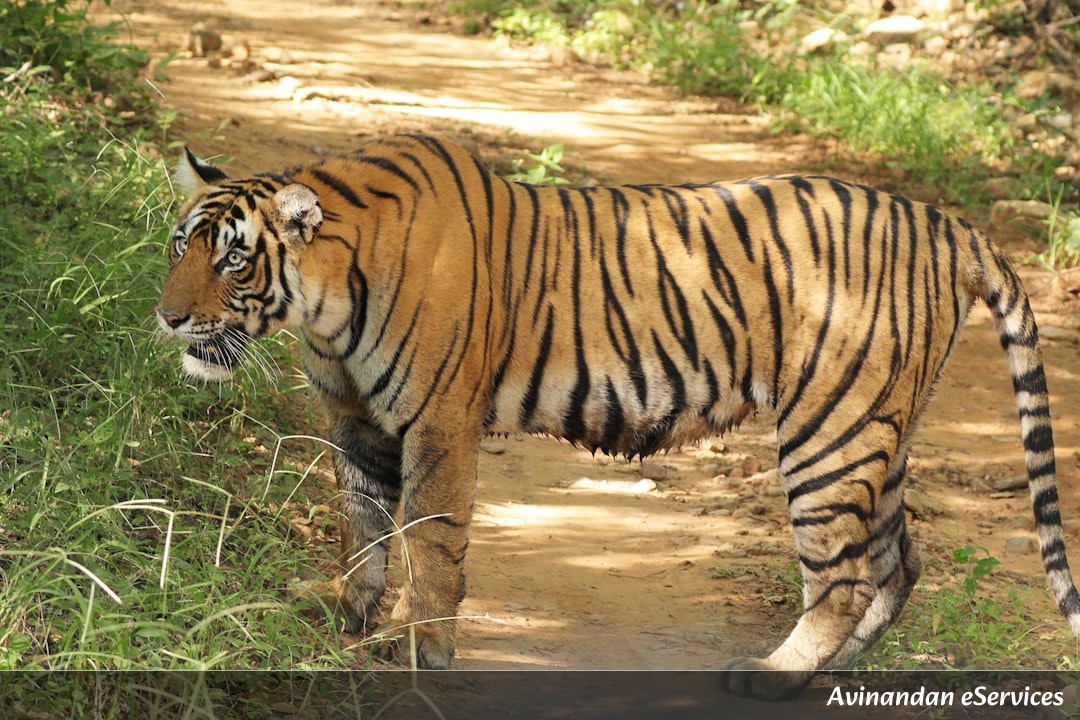
Introduction to National Parks & Wildlife Sanctuaries for RRB Exams
Welcome, future Railway professionals! In the vast syllabus of General Awareness for RRB NTPC and Group D exams, Static General Knowledge (GK) holds a special place. Among the most frequently tested Static GK topics are India's National Parks and Wildlife Sanctuaries. These protected areas are not just vital for conserving our country's rich biodiversity but are also a treasure trove of questions for competitive exams. Understanding this topic means you can easily score those crucial \textra marks that can make all the difference in your final selection. This comprehensive guide is designed to walk you through everything you need to know, from the basic definitions to a state-wise list of important parks, memory tricks, and practice questions, ensuring you are fully prepared to tackle any question on this topic.
Topic Weightage and Importance in RRB Exams
In the General Awareness section of RRB NTPC (CBT-1 & CBT-2) and RRB Group D exams, you can expect at least 1 to 3 questions directly from National Parks, Wildlife Sanctuaries, Tiger Reserves, or Biosphere Reserves. While this might seem like a small number, remember that every single mark counts in these highly competitive exams. The beauty of this topic is that it is purely factual. There are no complex concepts to understand or formulas to apply. With systematic preparation and regular revision, you can guarantee 100% accuracy in these questions. This makes it a high-scoring, low-effort topic that no serious aspirant can afford to ignore.
Key Concepts: Understanding the Basics
Before diving into the list of parks, it's essential to understand the basic terminology. This not only helps in answering definition-based questions but also clears up common confusion.
What is a National Park?
A National Park is an area that is strictly reserved for the betterment of wildlife and biodiversity. Here, activities like developmental projects, forestry, poaching, hunting, and grazing on cultivation are not permitted. The boundaries are well-defined and marked. They are usually small reserves, ranging from 100 sq. km to 500 sq. km. No human activity is allowed inside a National Park except for the activities permitted by the Chief Wildlife Warden of the state.
What is a Wildlife Sanctuary?
A Wildlife Sanctuary is a protected area that is reserved for the conservation of animals only. Human activities like harvesting of timber, collecting minor forest products, and private ownership rights are allowed as long as they do not interfere with the well-being of the animals. The boundaries of sanctuaries are not as strictly defined, and tourism is permissible.
What is a Biosphere Reserve?
A Biosphere Reserve is a larger, multi-purpose protected area where the wildlife, traditional lifestyle of the inhabitants, and domesticated plants/animals are all protected. They are divided into three zones: Core, Buffer, and Transition. This concept is designed to conserve biodiversity and promote sustainable development.
| Feature | National Park | Wildlife Sanctuary |
|---|---|---|
| Focus | Conservation of entire ecosystem (flora, fauna, landscape) | Conservation of specific species (fauna) |
| Restrictions | Very high, no human activity allowed | Moderate, limited human activities are permitted |
| Boundaries | Fixed and well-defined | Not strictly defined |
State-wise List of Important National Parks and Wildlife Sanctuaries
Here is a curated list of the most important protected areas that are frequently asked in RRB exams. Focus on the park's name, state, and the key animal associated with it.
Key National Parks & Sanctuaries
- Jim Corbett National Park, Uttarakhand: India's first National Park, established in 1936. It was also the first park to come under the Project Tiger initiative in 1973.
- Kaziranga National Park, Assam: Famous for the world's largest population of One-Horned Rhinoceroses. It's a UNESCO World Heritage Site.
- Gir National Park, Gujarat: The only natural habitat of the Asiatic Lion in the world.
- Sunderbans National Park, West Bengal: A UNESCO World Heritage Site, famous for the Royal Bengal Tiger and its mangrove forests.
- Ranthambore National Park, Rajasthan: One of the largest and most famous national parks in Northern India, known for its significant tiger population.
- Kanha National Park, Madhya Pradesh: Known for its lush sal and bamboo forests and for saving the Barasingha (swamp deer) from near \textinction.
- Periyar National Park, Kerala: A notable elephant and tiger reserve. It is centered around a lake formed by the Mullaperiyar Dam.
- Bandipur National Park, Karnataka: Part of the Nilgiri Biosphere Reserve, it has the second-highest tiger population in India.
- Keoladeo Ghana National Park, Rajasthan: Formerly known as Bharatpur Bird Sanctuary, it's a famous avifauna sanctuary that hosts thousands of birds, especially during the winter season. A UNESCO World Heritage Site.
- Hemis National Park, Ladakh: The largest national park in India, located in the high altitudes of Ladakh. It is globally famous for its snow leopards.
- Keibul Lamjao National Park, Manipur: The only floating park in the world, located on Loktak Lake. It is the last natural habitat of the endangered Sangai (brow-antlered deer).
- Simlipal National Park, Odisha: A tiger reserve that also has a good population of elephants and is known for its beautiful waterfalls.
- Dachigam National Park, Jammu & Kashmir: The only area where the Kashmir Stag (Hangul) is found.
Tricks to Remember and Solved Examples
Memorizing so many names and locations can be challenging. Let's look at some memory techniques instead of traditional solved examples.
Example 1: The Mnemonic Technique
Question Type: Which of the following national parks is located in Assam?
Trick: Create a simple sentence or a story. For Assam, you can remember: "MANAS and KAZI went to ASSAM to see a RHINO."
- MANAS -> Manas National Park
- KAZI -> Kaziranga National Park
- ASSAM -> State
- RHINO -> Key animal (One-horned Rhino in Kaziranga)
This simple trick helps you associate two major parks with the state and a key animal, making it easier to recall during the exam.
Example 2: The Visual Association Technique
Question Type: Gir National Park is famous for which animal?
Trick: Associate the name with a visual. The word 'Gir' sounds like the Hindi word 'Girna' (to fall). Imagine a majestic lion ('Sher') standing on a cliff, about to fall. This strange visual sticks in your mind. Gir -> Girna -> Sher (Lion). Additionally, both 'Gir' and 'Gujarat' start with 'G', linking the park to its state.
Example 3: The Map-Based Learning Technique
Question Type: Arrange the following parks from North to South: Corbett, Bandipur, Ranthambore.
Trick: Instead of memorizing a list, visualize the map of India.
- Corbett: Place it in Uttarakhand (Top of India).
- Ranthambore: Place it below in Rajasthan (Middle-West).
- Bandipur: Place it further down in Karnataka (South).
Common Mistakes to Avoid
Aspirants often lose marks due to some common and avoidable errors. Be mindful of the following:
- Confusing Similar Names: Don't mix up Bandhavgarh (Madhya Pradesh) with Bandipur (Karnataka) or Nagarhole (Karnataka). Create specific mnemonics for them.
- Ignoring UNESCO Sites: Pay special attention to National Parks that are also UNESCO World Heritage Sites, as they are asked more frequently (e.g., Kaziranga, Sunderbans, Keoladeo).
- Outdated Information: The number of National Parks and Tiger Reserves changes. Always refer to the latest data from official sources like the Ministry of Environment, Forest and Climate Change.
- Focusing Only on Tigers: While tigers are important, RRB also asks about other unique species like the Hangul (Dachigam), Sangai deer (Keibul Lamjao), or Asiatic Lion (Gir).
- Neglecting Bird Sanctuaries: Sanctuaries like Keoladeo (Rajasthan) and Sultanpur (Haryana) are very important from an exam perspective.
Practice Questions with Solutions
Test your knowledge with these RRB-level practice questions. Try to answer them first before looking at the solutions.
Q1. Gir National Park, famous for Asiatic Lions, is located in which state?
(a) Rajasthan
(b) Madhya Pradesh
(c) Gujarat
(d) Maharashtra
Q2. The world's only floating national park, Keibul Lamjao National Park, is situated in which Indian state?
(a) Assam
(b) Manipur
(c) Mizoram
(d) Meghalaya
Q3. Which National Park in India is famous for its large population of one-horned rhinoceroses?
(a) Jim Corbett National Park
(b) Ranthambore National Park
(c) Bandipur National Park
(d) Kaziranga National Park
Q4. Sunderbans National Park in West Bengal is a reserve for which of the following animals?
(a) Snow Leopard
(b) Royal Bengal Tiger
(c) Asiatic Lion
(d) Elephant
Q5. Hemis National Park, the largest national park in India, is located in:
(a) Himachal Pradesh
(b) Uttarakhand
(c) Ladakh
(d) Sikkim
Q6. Dachigam National Park is primarily known for the conservation of which animal?
(a) Musk Deer
(b) Golden Langur
(c) Kashmir Stag (Hangul)
(d) Red Panda
Q7. Which was the first National Park established in India?
(a) Kanha National Park
(b) Hailey National Park
(c) Periyar National Park
(d) Bandipur National Park
Solutions to Practice Questions
Ans 1: (c) Gujarat
Explanation: Gir National Park is located in Gujarat and is the sole natural habitat for Asiatic Lions.
Ans 2: (b) Manipur
Explanation: Keibul Lamjao is a unique floating park located on the Loktak Lake in Manipur.
Ans 3: (d) Kaziranga National Park
Explanation: Kaziranga in Assam is a UNESCO World Heritage Site renowned for hosting two-thirds of the world's one-horned rhinoceroses.
Ans 4: (b) Royal Bengal Tiger
Explanation: The Sunderbans mangrove forest is one of the largest reserves for the Bengal tiger.
Ans 5: (c) Ladakh
Explanation: After the reorganization of Jammu & Kashmir, Hemis National Park is now located in the union territory of Ladakh.
Ans 6: (c) Kashmir Stag (Hangul)
Explanation: Dachigam National Park in Jammu & Kashmir is the last refuge of the critically endangered Kashmir Stag, also known as Hangul.
Ans 7: (b) Hailey National Park
Explanation: India's first national park was established in 1936 as Hailey National Park, which is now known as Jim Corbett National Park.
Frequently Asked Questions (FAQs)
Q1. What is the difference between a National Park and a Wildlife Sanctuary?
A. A National Park protects the entire ecosystem (plants, animals, landscape), has strict boundaries, and allows almost no human activity. A Wildlife Sanctuary primarily protects animal species, has less rigid boundaries, and permits certain human activities that don't harm wildlife.
Q2. Which state in India has the highest number of National Parks?
A. As of the latest data, Madhya Pradesh has the highest number of National Parks in India, earning it the nickname "Tiger State of India".
Q3. How should I effectively prepare this topic for RRB exams?
A. The best strategy is a combination of methods. First, make a state-wise list. Then, use mnemonics and visual aids like maps. Finally, solve previous year questions and take mock tests regularly to revise and test your memory.
Q4. Are Biosphere Reserves also asked in the exams?
A. Yes, questions about Biosphere Reserves are also asked. It's good to know the names and locations of major reserves like Nilgiri Biosphere Reserve (the first in India), Nanda Devi, and Sunderbans.
Conclusion and Final Tips
Mastering the topic of National Parks and Wildlife Sanctuaries is a smart move for any RRB aspirant. It is a predictable and high-scoring part of the General Awareness syllabus. By dedicating a few hours to systematically studying and revising this topic, you can confidently secure valuable marks. Remember to use active recall methods like quizzing yourself and using maps rather than passively reading lists. Keep a small notebook for Static GK facts and review it daily. Stay consistent, and you will surely see the results on your exam day. Best of luck with your preparation!


