Introduction: A Moment in Time
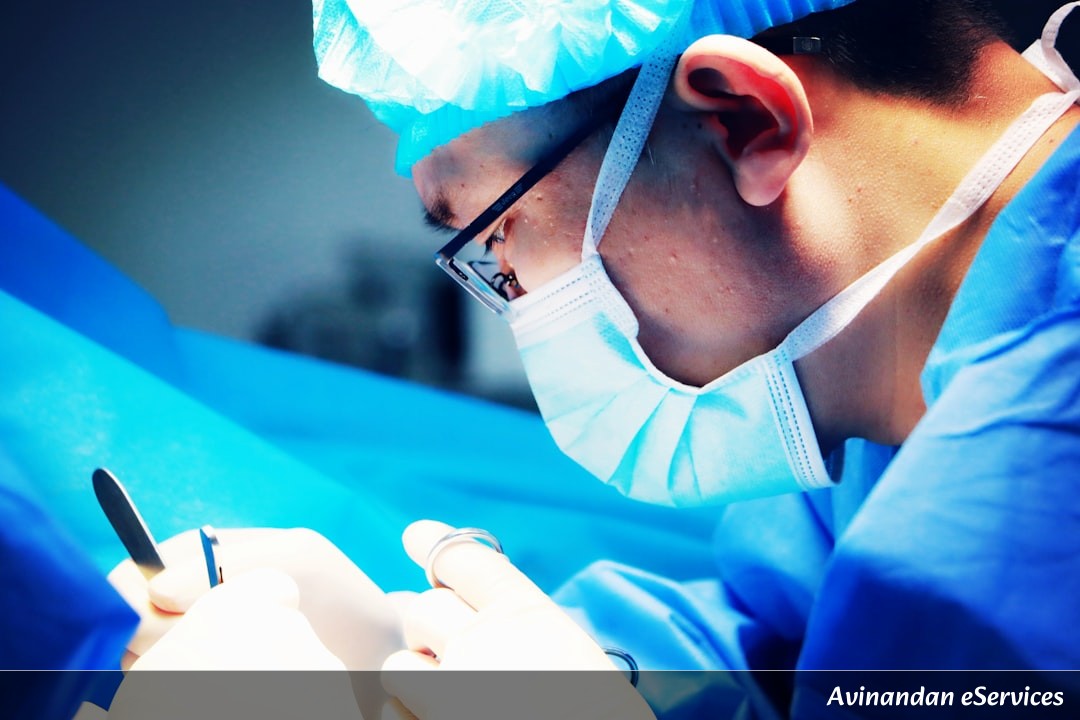
In the early hours of Sunday, December 3, 1967, inside the sterile confines of the Charles Saint Theatre at Groote Schuur Hospital in Cape Town, South Africa, history was made. [3] A team of thirty surgeons, led by the charismatic and ambitious Dr. Christiaan Barnard, stood on the precipice of a medical frontier that had, until that moment, existed only in the realm of theory and experimentation. [3, 8] The air was thick with anticipation and the unspoken weight of what they were about to attempt: the world's first human-to-human heart transplant. This single event would not only capture the global imagination like few medical procedures before or since but would also ignite fierce ethical debates and forever alter our understanding of the boundaries between life and death. [11] The story of that day is one of courage, tragedy, and a relentless pursuit of the impossible.
The Build-Up: What Led to This Day?
The journey to that operating theater on December 3rd was a long and arduous one, built on decades of research by pioneers across the globe. By the 1960s, the concept of organ transplantation was no longer science fiction. Surgeons had successfully transplanted kidneys, but the heart remained the ultimate challenge—not just medically, but symbolically. It was seen as the very seat of life. In the United States, surgeons like Norman Shumway at Stanford University had been meticulously perfecting the surgical technique in dogs for years, achieving long-term survival and patiently waiting for the right moment to proceed with a human patient. [6, 7] Shumway's team was widely considered the frontrunner in this unofficial race. [7]
Thousands of miles away, Christiaan Barnard was also pushing the boundaries of cardiac surgery. [23] Having trained in the United States, he returned to South Africa and established a robust open-heart surgery program. [23] He was a surgeon of immense skill and confidence, driven by a desire to conquer the unconquerable. [5] While Shumway's team was focused on overcoming the immunological challenges of rejection, Barnard, having perfected the surgical technique in his own animal lab, believed the primary obstacle was finding the courage to proceed. [5, 7] The world of medicine was holding its breath, and by late 1967, it was clear that a human heart transplant was imminent. The only questions were who would be first, and when.
The answer required the convergence of three separate lives. First, there was Louis Washkansky, a 53-year-old grocer from Cape Town. [4] A once-active man who had served in World War II, Washkansky's health had deteriorated significantly due to diabetes and incurable heart disease. [13, 16] He had suffered multiple heart attacks, leaving his heart severely damaged and his body failing. [4, 22] Confined to a hospital bed at Groote Schuur, he knew he was living on borrowed time. When approached by Barnard about the radical, untried procedure, Washkansky readily agreed, seeing it as his only chance for survival. [5, 16]
The second life was that of Denise Darvall, a vibrant 25-year-old bank clerk. [2, 9] On the afternoon of December 2nd, a day before the historic operation, tragedy struck. While crossing a street with her mother, both were hit by a car. Her mother was killed instantly, and Denise sustained catastrophic head injuries. [4, 12] She was rushed to Groote Schuur Hospital, where doctors quickly determined her brain was irreparably damaged and she could not breathe on her own. [2, 12]
This tragic event set the stage for a heart-wrenching decision. Barnard and his team approached Denise's grieving father, Edward Darvall, who had just lost his wife and was now faced with the imminent death of his daughter. [4] In a moment of \textraordinary grace and foresight, Edward Darvall gave his consent to donate Denise's heart and kidneys. [4] He later stated that his daughter's tragic death would not be meaningless but would benefit humanity. [2] With a recipient waiting and a donor heart available, the final piece was in place. The race was on, and Barnard was determined to win it.
The Event Itself
The intricate operation began shortly after midnight on December 3, 1967. [3] The atmosphere in the Charles Saint Theatre was a mixture of intense focus and palpable tension. Dr. Barnard led the team, which included his brother, Marius Barnard, who would remove the donor heart. [2] In one operating room, the surgical team stood by Denise Darvall. At the time, the legal and medical definitions of death were still evolving; the concept of "brain death" had not yet been formally established in law. [5, 11] To ensure there were no legal repercussions, Barnard waited until Denise's heart stopped beating before making the incision. [5] Her heart was then carefully removed and placed in a preservation solution.
In the adjacent theater, another team had prepared Louis Washkansky. They opened his chest and connected him to a heart-lung machine, which would keep his blood circulating while his own diseased heart was removed. The moment of truth arrived as Marius Barnard carried Denise's heart into Washkansky's operating room. Dr. Barnard later recalled the profound impact of seeing the empty space in Washkansky's chest, ready to receive the new organ. It was a sight no surgeon had ever witnessed in a human patient who was intended to survive.
With painstaking precision, Barnard and his team began the delicate process of suturing the donor heart into place. The nine-hour operation was a masterclass in surgical skill. [3] They connected the major blood vessels—the superior and inferior vena cava, the pulmonary artery, the aorta, and the pulmonary veins. The final, and most critical, moment came when they were ready to restart the heart. Just before 6 a.m., an electric shock was delivered to the newly implanted organ. [3, 4] The team watched, breathless. The heart quivered, and then, miraculously, it began to beat—a steady, strong rhythm filling the silent operating room. Denise Darvall's heart was now beating inside Louis Washkansky's chest. The impossible had been achieved.
The Aftermath and Legacy
When Louis Washkansky awoke, he was able to talk and, for a brief time, felt a renewed sense of life. [3] The news of the successful surgery spread like wildfire, making Christiaan Barnard an international celebrity overnight and putting Groote Schuur Hospital on the world map. [5, 11] The world was captivated by the story. For 18 days, media from around the globe provided almost hourly updates on Washkansky's condition. [5] However, the biggest challenge in transplantation—the body's own immune system attacking the foreign organ—remained. To prevent his body from rejecting the new heart, Washkansky was given powerful immunosuppressant drugs. [6] While these drugs suppressed the rejection, they also crippled his ability to fight off infection. [24] Tragically, after 18 days, Louis Washkansky died from double pneumonia. [6, 19]
Despite Washkansky's death, the operation was not considered a failure. His new heart had functioned normally until the very end, proving that the procedure was surgically viable. [6, 24] The event sparked a global flurry of heart transplant attempts, with many surgeons, often ill-prepared, rushing to replicate Barnard's feat. [19] The results were initially poor, leading to a period of disillusionment. However, the groundwork had been laid. The first transplant forced the medical and legal communities to formally define brain death, a crucial step for the future of organ donation. [11, 19]
Barnard himself continued to perform transplants with increasing success. His second patient, Philip Blaiberg, lived for 19 months, and later patients would live for many years. [7, 23] The true breakthrough in long-term survival came in the 1980s with the discovery of the immunosuppressant drug cyclosporine, which dramatically reduced the risk of organ rejection. [6] Today, heart transplantation is a relatively routine procedure that has saved thousands of lives worldwide. [6] It all began on that historic day, December 3, 1967—a day when a tragedy gave rise to a medical miracle, and a daring surgeon gave hope to those for whom there was none.
References
[1] South African History Online. (2011). Dr Chris Barnard performs the world's first human heart transplant. Retrieved from sahistory.org.za.
[2] Heart of Cape Town Museum. (n.d.). Denise Darvall | First Heart transplant donor. Retrieved from heartofcapetown.co.za.
[3] Cooper, D. K. C. (2017). Christiaan Barnard—The surgeon who dared: The story of the first human-to-human heart transplant. *Global Cardiology Science & Practice*.
[4] University of Cape Town. (n.d.). World's First Human Heart Transplant. Chris Barnard Division of Cardiothoracic Surgery. Retrieved from health.uct.ac.za.
[5] Brink, J. G., & Pennel, T. (2017). The world's first human-to-human heart transplant at Groote Schuur Hospital: 50 years later. *South African Medical Journal*.
[6] Organ Procurement and Transplantation Network. (2002). First heart transplant performed 35 years ago. Retrieved from optn.transplant.hrsa.gov.
[7] Hoffenberg, R. (2001). Christiaan Barnard: his first transplants and their impact on concepts of death. *BMJ (Clinical research ed.)*.