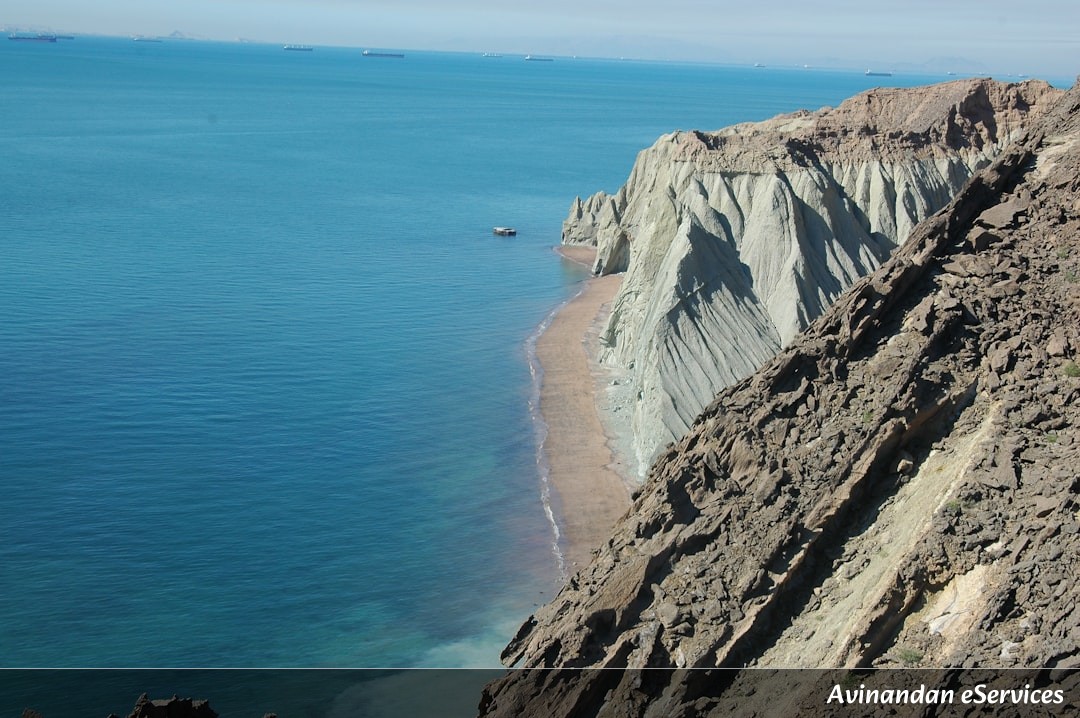
Vikram: Priya, check out this photo I found online! It's of the White Cliffs of Dover in England. They're huge! Are they made of the same chalk we use on the blackboard at school? They look so bright and white.
Priya: Great question, Vikram! They are made of chalk, but it’s a special kind of chalk with an incredible story. It wasn't made in a factory. Those giant cliffs were built by trillions and trillions of the tiniest living things you can imagine!
Vikram: No way! Tiny living things? You mean like ants or something? How could tiny creatures build something so massive? The cliffs are over 100 meters high!
Priya: Even smaller than ants! We're talking about microscopic organisms that lived in the ocean millions of years ago. They’re a type of phytoplankton called coccolithophores.
Vikram: Cocco…litho…what? That’s a mouthful! Can you spell that for me?
Priya: Of course! It’s C-O-C-C-O-L-I-T-H-O-P-H-O-R-E. Let’s break it down. ‘Coccos’ is Greek for a berry, ‘lithos’ means stone, and ‘phore’ means to carry. So, it’s a ‘berry-stone-carrier’!
Vikram: A berry-stone-carrier! I like that. So what do these little guys do? How did they build cliffs? Did they work together like a construction crew?
Priya: Haha, not exactly! It’s more of an accidental masterpiece. You see, each tiny coccolithophore surrounds itself with amazing, intricate plates made of calcium carbonate. That’s the same mineral that makes up seashells and limestone. These tiny plates are called coccoliths.
Vikram: So they wear little suits of armor made of stone? That’s so cool!
Priya: It is! Think of them as tiny, floating artists, each creating a unique set of microscopic shields. Now, these coccolithophores only live for a short time. When they die, their soft parts rot away, but their stony coccolith plates are left behind. What do you think happens to these tiny plates in the ocean?
Vikram: Well, they’re stones, so they must sink, right?
Priya: Exactly! They sink down, down, down to the ocean floor. Now imagine this happening not just once, but trillions and trillions of times every single day. For millions of years. It’s like a slow, steady snowfall of tiny stone plates piling up on the seabed.
Vikram: A snowfall of stone plates! That's a cool image. So the cliffs are just a giant pile of these cocco-thingy plates?
Priya: You got it. Over millions of years, the weight of the water and the new layers piling on top pressed down on the older layers. This pressure squeezed them together, turning the huge pile of tiny plates into a soft, white rock: chalk. This all happened during a time period that scientists actually named after this process!
Vikram: They did? What’s it called?
Priya: The Cretaceous Period. The word ‘Cretaceous’ comes from the Latin word ‘creta,’ which means chalk! The seas were full of these creatures back then, and so much chalk was formed all over the world. The White Cliffs of Dover are just one of the most famous examples.
Vikram: Wow, that’s mind-blowing. So every time I see a piece of chalk, I could be holding the fossils of millions of tiny ancient sea creatures?
Priya: That’s right! It’s history you can hold in your hand. And here’s something even cooler: these little organisms aren't just ancient history. Coccolithophores are still alive and incredibly important in our oceans today.
Vikram: They are?! So are they still building cliffs at the bottom of the sea?
Priya: They are! They’re still making their coccoliths and sinking to the bottom, forming sediment. But they also do something else that’s vital for our planet. Since they are phytoplankton, they are like tiny sea plants. What do plants do?
Vikram: They use sunlight to make food! Photosynthesis! And they take in carbon dioxide and release oxygen.
Priya: Perfect! Coccolithophores do that too. They are a huge part of the ocean’s food web and produce a lot of the oxygen we breathe. They also play a big role in controlling our climate by taking carbon dioxide from the atmosphere and locking it away in their coccoliths. When they sink, that carbon gets stored on the ocean floor for millions of years.
Vikram: So these tiny creatures help us breathe AND fight climate change? That’s a huge job for something so small.
Priya: It really is. Sometimes they grow in such massive numbers that they create what’s called a ‘bloom.’ When this happens, the water becomes a beautiful, milky turquoise colour because of the light reflecting off their calcium carbonate plates. These blooms can be so enormous they can be seen from space! Astronauts can look down and see these giant swirls of colour in the ocean, all made by microscopic life.
Vikram: From space! I'm definitely going to look up pictures of that. It's crazy to think that the same little things that colour the oceans today also built those giant white cliffs I saw. Science is so weird and wonderful.
Priya: It really is. It shows how even the smallest things, when given enough time, can create some of the biggest and most beautiful features on our planet.
So, What Did We Learn Today?
Priya: Okay, let's quickly recap what we discovered about the White Cliffs of Dover.
- The famous cliffs are made of chalk, a soft white rock.
- This chalk isn't just a normal rock; it's made of the fossilized remains of trillions of microscopic sea organisms called coccolithophores.
- These tiny algae create protective plates, called coccoliths, from calcium carbonate. When they died, these plates sank and piled up on the ocean floor for millions of years.
- The immense pressure from the layers above turned this thick sediment into the chalk rock we see today.
- Coccolithophores are still alive and are vital to our planet, producing oxygen and helping to regulate the climate.
Vikram: And we learned that sometimes the biggest things on Earth, like giant cliffs, are made by the smallest living creatures! It’s amazing.