Introduction to the Topic
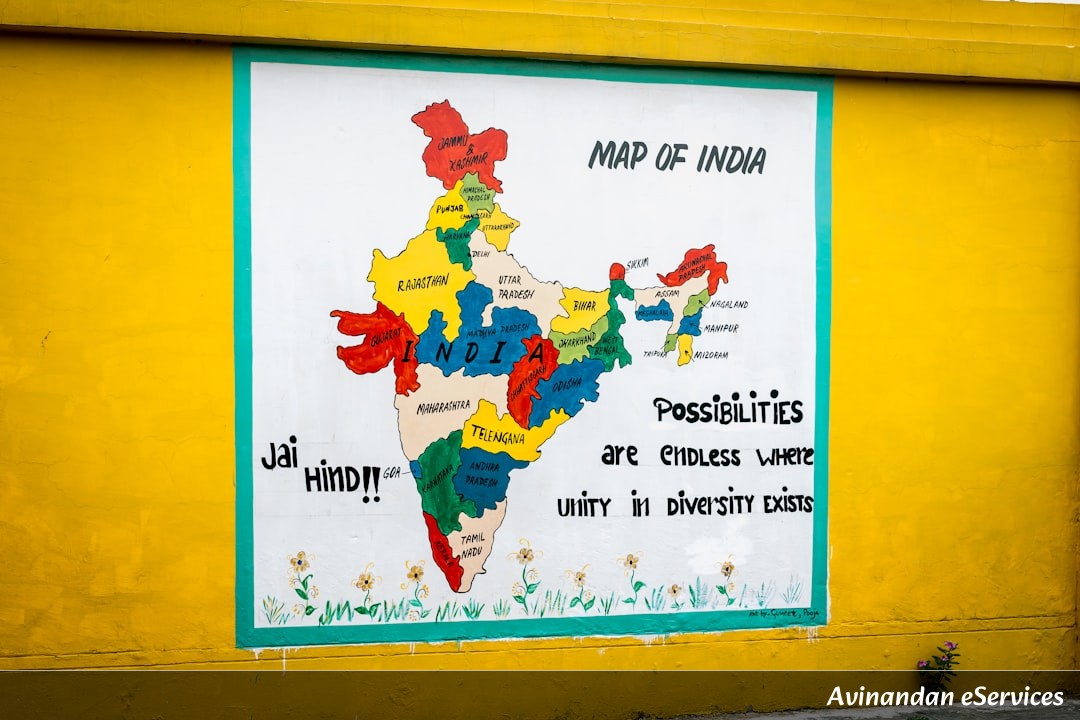
Have you ever looked at a map of India and marvelled at the intricate web of blue lines crisscrossing the landscape? These lines are not just random squiggles; they are the lifelines of our nation—the rivers. The term ‘drainage’ describes the river system of an area. It’s like the circulatory system of the human body, but for the land, carrying water from its source to a final destination, like an ocean or a large lake. A single river system, including the main river and its tributaries, drains a specific area known as a ‘drainage basin’. Imagine a large bowl; any water poured inside it will collect at the bottom. A drainage basin works similarly, collecting all the rainfall and meltwater from a region and channeling it into one main river.
Any elevated area, such as a mountain or an upland, that separates two drainage basins is known as a water divide. Think of it as the rim of the bowl. The water on one side of the divide flows into one basin, while the water on the other side flows into another.
India's diverse geography, with the towering Himalayas in the north and the ancient plateau in the south, has given rise to two major groups of river systems: the Himalayan Rivers and the Peninsular Rivers. These two systems are vastly different in their origin, nature, and flow. In this chapter, we will embark on a fascinating journey along these mighty rivers, understanding their paths, their features, and their profound impact on the life, economy, and culture of India.
Key Concepts Explained
Understanding Drainage Patterns
Rivers don't just flow randomly; they create specific patterns as their streams and tributaries arrange themselves. These drainage patterns are determined by the slope of the land, the underlying rock structure, and the climatic conditions of the area. It's like an artist's signature, unique to each region. The main types of drainage patterns are:
- Dendritic Pattern: This is the most common pattern and looks like the branching pattern of a tree's roots. The word ‘dendritic’ comes from the Greek word ‘dendron’, meaning tree. It develops where the river channel follows the slope of the terrain. The tributaries join the main river at acute angles. The Ganga river system is a prime example of this pattern.
- Trellis Pattern: A trellis is a framework used to support climbing plants. In a trellis drainage pattern, the primary tributaries flow parallel to each other, and secondary tributaries join them at right angles. This pattern develops in regions of folded mountains, where hard and soft rocks exist parallel to each other.
- Rectangular Pattern: This pattern develops on a strongly jointed or faulted rocky terrain. The streams follow the path of least resistance, carving their channels along the faults or joints, creating a network of streams that meet at right angles, resembling a rectangular grid.
- Radial Pattern: Imagine the spokes of a wheel. In a radial pattern, rivers originate from a central high point, like a volcano or a dome, and flow outwards in all directions. The rivers originating from the Amarkantak range in Central India are a great example of a radial drainage pattern.
The Himalayan Rivers: Mighty and Perennial
The Himalayan rivers are the giants of the Indian subcontinent. The three main systems—the Indus, the Ganga, and the Brahmaputra—originate from the snow-capped peaks and glaciers of the mighty Himalayas. Their most defining characteristic is that they are perennial, meaning they have water throughout the year. This is because their flow is fed not only by rainfall during the monsoon but also by the melting of snow and glaciers during the dry summer months, ensuring a continuous supply of water.
These rivers have carved out spectacular landscapes on their long journey from the mountains to the sea. In their upper course, high in the mountains, they are young and energetic, performing intensive erosional activity. They cut through the mountains to form deep gorges and steep-sided V-shaped valleys. As they descend to the plains, their energy decreases. In their middle and lower courses, they carry a massive load of silt and sand, which they deposit along their banks, forming fertile floodplains. Here, they also create depositional features like meanders (S-shaped bends), ox-bow lakes (crescent-shaped lakes formed when a meander is cut off), and vast deltas at their mouths.
The Indus River System
The Indus is one of the longest rivers in the world. It originates in Tibet, near the serene Lake Mansarovar. Flowing west, it enters India in the Ladakh region, where it forms a picturesque gorge. Several tributaries like the Zaskar, the Nubra, the Shyok, and the Hunza join it in the Kashmir region. The Indus then flows through Baltistan and Gilgit and emerges from the mountains at Attock. The five famous rivers of Punjab—the Satluj, the Beas, the Ravi, the Chenab, and the Jhelum—join together to enter the Indus near Mithankot in Pakistan. From there, the Indus flows southwards, eventually draining into the Arabian Sea, east of Karachi. With a total length of 2900 km, the Indus River has a vast basin, though only a little over a third of it lies in India (in the states of Jammu and Kashmir, Himachal Pradesh, and Punjab). As per the regulations of the Indus Waters Treaty (1960), India can use only 20 percent of the total water carried by the Indus river system.
The Ganga River System
The Ganga is not just a river; it is a cultural and spiritual lifeline for millions of Indians. The headwaters of the Ganga, called the ‘Bhagirathi’, are fed by the Gangotri Glacier. It is joined by the Alaknanda at Devprayag in Uttarakhand, and from this confluence, the river is known as the Ganga. The Ganga emerges from the mountains onto the plains at Haridwar. From there, it is joined by numerous tributaries. The Yamuna, rising from the Yamunotri Glacier, flows parallel to the Ganga and joins it at the sacred confluence in Prayagraj (Allahabad). Other major Himalayan tributaries include the Ghaghara, the Gandak, and the Kosi.
The Ganga is also fed by rivers from the peninsular uplands, such as the Chambal, the Betwa, and the Son. Enlarged with waters from its right and left bank tributaries, the Ganga flows eastwards till Farakka in West Bengal. This is the northernmost point of the Ganga delta. Here, the river bifurcates. The main stream, known as the Padma, flows southwards into Bangladesh and is joined by the Brahmaputra. The other branch, the Hooghly, flows through West Bengal to the Bay of Bengal. The delta formed by the Ganga and the Brahmaputra is known as the Sundarban Delta, the largest and fastest-growing delta in the world, home to the Royal Bengal Tiger.
The Brahmaputra River System
The Brahmaputra river rises in Tibet, east of Mansarovar lake, very close to the sources of the Indus and the Satluj. It is slightly longer than the Indus, and most of its course lies outside India. In Tibet, where it is known as the Tsangpo (meaning ‘the Purifier’), it carries a smaller volume of water and less silt as it flows through a cold and dry region. It flows eastwards, parallel to the Himalayas. On reaching the towering peak of Namcha Barwa, it takes a dramatic ‘U’ turn and enters India in Arunachal Pradesh through a deep gorge. Here, it is called the Dihang and is joined by the Dibang, the Lohit, and many other tributaries to form the Brahmaputra in Assam.
In India, the Brahmaputra passes through a region of high rainfall. As a result, the river carries a considerable volume of water and a significant amount of silt. This leads to the formation of many riverine islands and a braided channel in its entire length in Assam. Every year during the rainy season, the river overflows its banks, causing widespread devastation due to floods in Assam and Bangladesh. Unlike other north Indian rivers, the Brahmaputra is marked by huge deposits of silt on its bed, causing the riverbed to rise. The river also shifts its channel frequently. Finally, it enters Bangladesh, where it is known as the Jamuna before merging with the Ganga (Padma).
The Peninsular Rivers: Ancient and Seasonal
The rivers of Peninsular India are much older than their Himalayan counterparts. Their flow is seasonal as they are dependent on rainfall. During the dry season, even the large rivers have a reduced flow of water. They have shorter and shallower courses compared to the Himalayan rivers. Most of these rivers originate in the Western Ghats, a mountain range that acts as a major water divide, and flow eastwards to drain into the Bay of Bengal. However, a few major rivers, like the Narmada and the Tapti, are exceptions and flow westwards into the Arabian Sea.
East-Flowing Rivers (forming deltas)
- The Mahanadi Basin: The Mahanadi rises in the highlands of Chhattisgarh. It flows through Odisha to reach the Bay of Bengal. Its drainage basin is shared by Maharashtra, Chhattisgarh, Jharkhand, and Odisha.
- The Godavari Basin: This is the largest Peninsular river system. Due to its size and \textent, it is also known as the ‘Dakshin Ganga’ (the Ganga of the South). It rises from the slopes of the Western Ghats in the Nashik district of Maharashtra and flows for about 1500 km. Its vast basin covers parts of Maharashtra, Madhya Pradesh, Odisha, and Andhra Pradesh. The Godavari is joined by a number of tributaries such as the Purna, the Wardha, the Pranhita, the Manjra, the Wainganga, and the Penganga.
- The Krishna Basin: Rising from a spring near Mahabaleshwar in the Western Ghats, the Krishna flows for about 1400 km and reaches the Bay of Bengal. The Tungabhadra, the Koyana, the Ghatprabha, the Musi, and the Bhima are some of its important tributaries. Its drainage basin is shared by Maharashtra, Karnataka, and Andhra Pradesh.
- The Kaveri Basin: The Kaveri rises in the Brahmagiri range of the Western Ghats and it reaches the Bay of Bengal in Tamil Nadu. Its basin drains parts of Karnataka, Kerala, and Tamil Nadu. Since the upper catchment area receives rainfall during the summer monsoon and the lower part receives rainfall during the winter monsoon, the river has a more consistent flow throughout the year compared to other peninsular rivers. It forms the second biggest waterfall in India, known as Sivasamudram Falls.
West-Flowing Rivers (forming estuaries)
There are only two major long rivers in the Peninsular region that flow west and drain into the Arabian Sea. They don't form deltas; instead, they form estuaries—the tidal mouth of a large river, where the tide meets the stream. This is because they flow through hard, rocky terrain and do not carry much silt. Their journey is short and swift, preventing the formation of deltas at their mouths.
- The Narmada Basin: The Narmada rises in the Amarkantak hills in Madhya Pradesh. It flows towards the west in a rift valley formed due to faulting, between the Satpura range in the south and the Vindhyan range in the north. On its way to the sea, the Narmada creates many picturesque locations. The ‘Marble Rocks’, near Jabalpur, where the Narmada flows through a deep gorge, and the ‘Dhuandhar falls’, where the river plunges over steep rocks, are notable ones. All the tributaries of the Narmada are very short and most of these join the main stream at right angles.
- The Tapti Basin: The Tapti (or Tapi) rises in the Satpura ranges, in the Betul district of Madhya Pradesh. It also flows in a rift valley parallel to the Narmada but it is much shorter in length. Its basin covers parts of Madhya Pradesh, Gujarat, and Maharashtra.
Lakes: Nature's Reservoirs
Besides the rivers, India is also home to many lakes. Lakes are large bodies of water surrounded by land. They differ from each other in size and other characteristics. Most lakes are permanent; some contain water only during the rainy season. Lakes are of great value to human beings. They help to regulate the flow of a river, prevent flooding during heavy rains, and help maintain an even flow of water during the dry season. They can also be used for developing hydro-power, moderating the climate of the surroundings, maintaining the aquatic ecosystem, enhancing natural beauty, and providing recreation.
Some famous lakes in India include the freshwater Wular Lake in Jammu and Kashmir (the largest in India, resulting from tectonic activity), the scenic Dal Lake, and the saltwater Sambhar Lake in Rajasthan, which is used for producing salt. Coastal regions have lagoons like the Chilika Lake in Odisha, the Pulicat Lake, and the Kolleru Lake. Apart from natural lakes, the damming of the rivers for the generation of hydel power has also led to the formation of man-made lakes, such as Guru Gobind Sagar (Bhakra Nangal Project).
The Role of Rivers in the Economy and the Problem of Pollution
Rivers have been of fundamental importance throughout human history. The earliest civilizations, like the Indus Valley Civilization, flourished on river banks. Even today, rivers are the backbone of the country's economy. They provide water for irrigation, which is crucial for agriculture. They support navigation, facilitating trade and transport. They are also tapped for generating hydro-electricity, powering our homes and industries.
However, this invaluable resource is facing a grave threat: pollution. The growing domestic, municipal, industrial, and agricultural demand for water from rivers naturally affects its quality. An increasing amount of untreated sewage and industrial effluents are being emptied into the rivers. This not only affects the quality of water but also the self-cleansing capacity of the river. For example, given adequate streamflow, the Ganga is able to dilute and assimilate pollution loads within 20 km of large cities. But the increasing urbanization and industrialization do not allow it to happen and the pollution level of many rivers has been rising.
Concern over rising pollution in our rivers led to the launching of various action plans to clean the rivers. The National River Conservation Plan (NRCP) and its flagship Namami Gange Programme are steps in this direction. However, the health of our rivers depends on the collective consciousness and efforts of all citizens to prevent pollution and conserve this precious natural resource for future generations.
Summary & Key Takeaways
Understanding India's drainage system is key to understanding its geography, economy, and culture. The intricate network of rivers and lakes shapes the land and sustains life across the subcontinent.
- Drainage System: Refers to the river system of an area. India has two major systems: the Himalayan and the Peninsular.
- Himalayan Rivers (Indus, Ganga, Brahmaputra): They are perennial, fed by both glaciers and rain. They have long courses, perform intense erosion in the mountains, and form large deltas at their mouths.
- Peninsular Rivers (Godavari, Krishna, Kaveri, Narmada, Tapti): They are seasonal, dependent on rainfall. They have shorter, shallower courses.
- East vs. West Flowing Peninsular Rivers: Most Peninsular rivers flow east into the Bay of Bengal and form deltas (e.g., Godavari, Mahanadi). The Narmada and Tapti are major exceptions that flow west through rift valleys into the Arabian Sea and form estuaries.
- Economic and Cultural Importance: Rivers are vital for irrigation, hydro-power, navigation, and hold immense cultural significance.
- Conservation is Key: Growing pollution from industrial, agricultural, and domestic sources poses a severe threat to our rivers, making conservation efforts critically important for our future.