Introduction: A Moment in Time
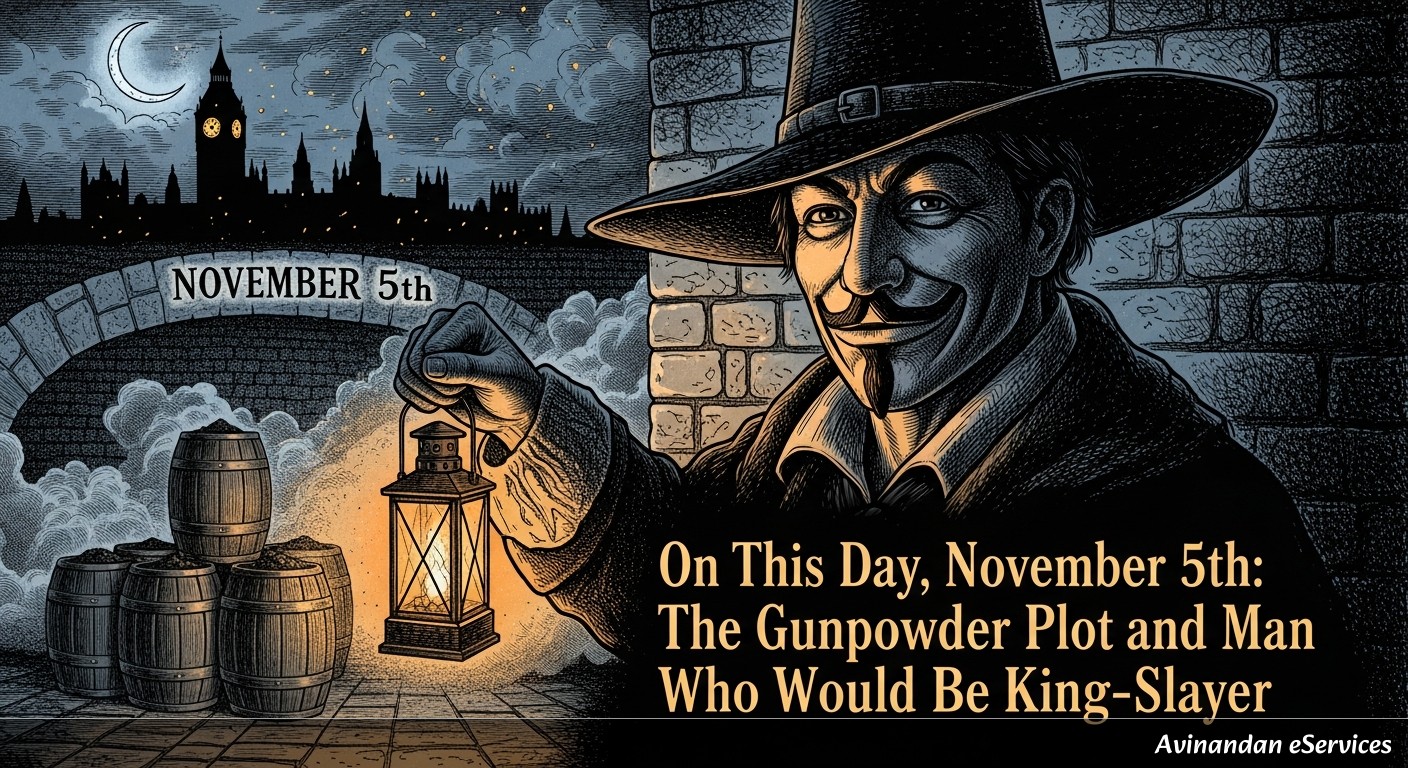
The air in the cellar was thick with the smells of damp earth, coal dust, and something more sinister: gunpowder. It was just past midnight, the dawn of November 5th, 1605. In the flickering light of a lantern sat a man named Guy Fawkes, guarding a terrifying secret. Piled high under firewood and coal were no less than 36 barrels of gunpowder, a quantity more than sufficient to obliterate the building above him—the House of Lords. In a few short hours, King James I of England, along with the entire Protestant aristocracy and leadership, would assemble for the State Opening of Parliament. Fawkes, a devout Catholic and seasoned soldier, was the triggerman for a plot so audacious it would have plunged the nation into chaos, reshaped the monarchy, and altered the course of British history forever. This is the story of the Gunpowder Plot, an event that has echoed through centuries, remembered in fire, verse, and the iconic mask of its most famous conspirator.
The Build-Up: What Led to This Day?
The roots of the Gunpowder Plot were deeply embedded in the soil of religious strife that had plagued England for decades. The Protestant Reformation had torn the country from its Catholic past. Under Queen Elizabeth I, Catholics faced severe persecution. They were forbidden from practicing their faith, fined for not attending Anglican services, and priests were hunted, tortured, and executed as traitors. When Elizabeth died in 1603, King James VI of Scotland ascended to the English throne as James I. Initially, many Catholics were hopeful. James's wife, Anne of Denmark, was a Catholic, and his mother, Mary, Queen of Scots, was a Catholic martyr. Surely, they thought, he would usher in an era of greater tolerance.
These hopes were quickly and brutally dashed. James, wary of Catholic plots and eager to consolidate his power with the Protestant establishment, continued the persecution. He publicly declared his "utter detestation" of Catholicism and reinforced the anti-Catholic laws. For a small group of provincial English Catholic gentry, this was the final betrayal. Their patience had run out; their desire for peaceful resolution had curdled into a desperate, violent fanaticism.
The Conspirators Assemble
The architect of the plot was not Guy Fawkes, but a charismatic and wealthy gentleman named Robert Catesby. Catesby was a man of intense piety and conviction, who had seen his family suffer for their faith. He began to gather a small, tight-knit group of co-conspirators, including his cousin Thomas Wintour, John Wright, and Thomas Percy. They were united by their shared faith and their belief that only a catastrophic act of violence could restore a Catholic monarch to the throne and save their souls. They believed that by killing the King and his heirs and wiping out the Protestant ruling class in one fell swoop, they could incite a popular uprising in the Midlands and install James's young daughter, Princess Elizabeth, as a Catholic puppet queen.
To execute their plan, they needed a military expert, someone with experience in explosives who was not well-known in London. Thomas Wintour traveled to Flanders and was introduced to Guy Fawkes. Fawkes was a committed English Catholic who had spent years fighting for Catholic Spain against the Protestant Dutch. He was a man of action, not words, with nerves of steel and a fierce dedication to the cause. He was, in short, the perfect man to light the fuse.
The Event Itself
In March 1605, the conspirators leased a cellar that conveniently \textended directly beneath the House of Lords. Over the following months, they painstakingly moved 36 barrels of gunpowder into the space, concealing them under a pile of firewood. The plan was set for the State Opening of Parliament, originally scheduled for February, then delayed several times until Tuesday, November 5th.
As the day drew near, however, cracks began to appear in the conspiracy's secrecy. Some of the plotters grew uneasy about the collateral damage; many innocent people, including fellow Catholics who would be attending Parliament, would be killed in the blast. This concern led to the plot's undoing. In the dead of night on October 26th, an anonymous letter was delivered to the Catholic Lord Monteagle, a relative of one of the conspirators. The letter was cryptic but stark, urging him to devise an "excuse to shift of your attendance at this parliament... for though there be no appearance of any stir, yet I say they shall receive a terrible blow this parliament and yet they shall not see who hurts them."
The Unraveling of a Treasonous Plot
Monteagle, rightly alarmed, delivered the letter to Robert Cecil, the Earl of Salisbury and the King's chief minister. The King's security forces were put on alert. Despite learning of the letter, Catesby and the others made the fateful decision to proceed, believing the warning was too vague to be taken seriously. Guy Fawkes, who had been guarding the gunpowder, confirmed that nothing seemed to have been disturbed.
In the late hours of November 4th, a search party led by the Keeper of the Palace of Westminster, Sir Thomas Knyvet, descended into the cellars. There they found a tall, cloaked man who identified himself as John Johnson, a servant. He was standing guard over a large pile of wood. The initial search revealed nothing, but suspicion was aroused. A second search was ordered. This time, they looked beneath the firewood. They found the barrels of gunpowder and, on Fawkes's person, they discovered a pocket watch, slow matches, and touchpaper—everything needed to ignite the massive bomb.
Guy Fawkes was arrested on the spot in the early morning of November 5th. The plot was foiled. At first, Fawkes was defiant, even under interrogation. He expressed regret only for the plot's failure. However, after days of intense torture in the Tower of London, authorized by King James himself, his resolve was broken. He confessed his real name and revealed the identities of his co-conspirators, who had already fled London upon hearing of his capture.
The Aftermath and Legacy
The foiling of the Gunpowder Plot was met with a wave of national relief and celebration. Londoners were encouraged to light bonfires to celebrate the King's survival, a tradition that continues to this day as Bonfire Night or Guy Fawkes Night. The immediate consequences for English Catholics, however, were catastrophic. The plot confirmed the worst Protestant fears of Catholic treachery, leading to the enforcement of even more draconian laws that barred Catholics from voting, practicing law, or serving in the military for centuries to come.
The manhunt for the other conspirators was swift. Robert Catesby and several others were cornered at Holbeche House in Staffordshire. In a final, desperate shootout, Catesby was killed. The surviving plotters, including the tortured and broken Guy Fawkes, were subjected to a show trial. On January 31, 1606, they were publicly hanged, drawn, and quartered—a gruesome and symbolic execution reserved for the worst traitors.
From Villain to Symbol
For centuries, Guy Fawkes was burned in effigy as a villain, a symbol of Catholic treason. The annual celebration of November 5th was a powerful piece of anti-Catholic propaganda. However, over time, the figure of Guy Fawkes has undergone a remarkable transformation. He has evolved from a simple traitor into a complex, anti-establishment icon. This is most famously embodied in the stylized Guy Fawkes mask, drawn from the graphic novel and film "V for Vendetta." Today, that mask has been adopted by protestors and activist groups worldwide, such as Anonymous, as a symbol of rebellion against tyranny and state control. It is a strange and ironic legacy for a man whose goal was not to establish a free society, but to impose a rigid theocracy. The story of November 5th is a potent reminder of how the echoes of a single historical event can reverberate for centuries, its meaning shifting and changing, but its memory never quite fading away.
References
- Britannica.com: What Happened on November 5
- On-This-Day.com: History for November 5
- Jagran Josh: This Day in History - 5 November
- WBIW.com: November 5th: A day of historical significance
- The Fact Site: November 5: Facts & Historical Events On This Day