Introduction to the Topic
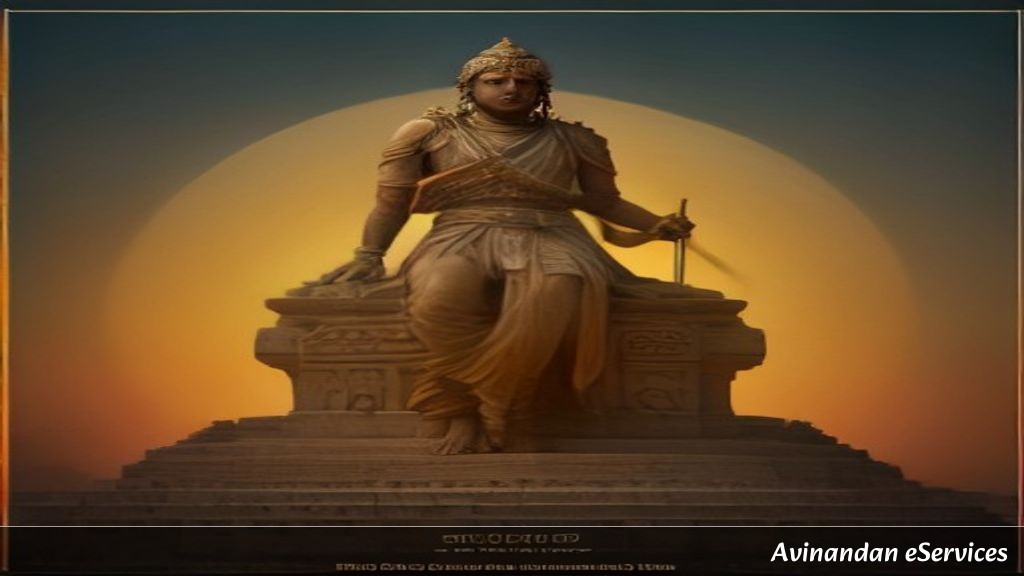
Welcome to an exciting journey back in time! In this chapter from Class VI History, we explore the life and times of one of the greatest rulers in Indian history: Emperor Ashoka. Have you ever wondered what makes a king truly great? Is it the number of battles won, or something entirely different? This chapter takes us deep into the Mauryan Empire, founded by Chandragupta Maurya, and focuses on his grandson, Ashoka, who changed the course of history through a profound transformation of heart.
Understanding Ashoka helps us realize how ancient India was governed, how trade and commerce flourished, and how ideas of peace and morality spread across vast distances. Let us dive into the fascinating details of the Mauryan Empire, the turning point of the Kalinga war, and the revolutionary concept of Ashoka's Dhamma.
Key Concepts Explained
1. The Grand Mauryan Empire and Its Capital Cities
The Mauryan Empire was a massive political entity established over 2,300 years ago. Its founder, Chandragupta Maurya, was supported by a wise man named Chanakya (or Kautilya), whose ideas were written down in a book called the Arthashastra. The empire was so vast that different parts were ruled differently.
At the center was the capital city of Pataliputra (modern-day Patna). Other important administrative centers included Taxila (a gateway to the northwest) and Ujjain (on the route from north to south India). The empire included a mix of heavily populated farming regions, forested areas where people gathered forest produce and hunted animals, and the northwest region known for blankets and precious stones.
2. How the Empire was Administered
Ruling such a massive empire required systematic organization.
- The Emperor's Rule: The emperor had direct control over the region around Pataliputra. Officials were appointed to collect taxes from farmers, herders, crafts persons, and traders.
- Provinces: Provinces were ruled by princes from the royal family or governors who acted as local representatives.
- Messengers and Spies: The emperor maintained a vast network of spies to keep an eye on officials and report on unrest or rebellion.
- Messenger Service: Royal messengers traveled constantly across the empire to relay important updates and royal decrees.
3. The Turning Point: The War in Kalinga
Kalinga is the ancient name of coastal Orissa. Ashoka fought a brutal war to conquer Kalinga, around 261 BCE. Although he won the war and annexed the territory, the horrific violence left a deep emotional scar on him. Hundreds of thousands of people were killed, and countless families were displaced.
When Ashoka went out to inspect the conquered region, he saw the suffering of orphans, widows, and wounded soldiers. Deeply remorseful, he declared that he would never fight another war. He is perhaps the only king in world history who gave up conquest after victory. Instead of physical conquest, he chose the path of conquering people's hearts through Dhamma.
4. What was Ashoka's Dhamma?
Dhamma is the Prakrit word for the Sanskrit term Dharma, meaning duty, moral conduct, or righteousness. Ashoka felt it was his duty to instruct his subjects. He did not worship a specific god, nor did he perform animal sacrifices. Instead, his Dhamma was a code of ethics based on the teachings of the Buddha.
Key principles of Ashoka's Dhamma included:
- Respecting elders and treating teachers with gentleness.
- Being kind to slaves, servants, animals, and the poor.
- Practicing ahimsa (non-violence) toward all living creatures.
- Religious tolerance: respecting other religions and not criticizing them.
- Living a life of truth, charity, and purity of heart.
5. Spreading the Message: Edicts and Officials
To ensure people understood and followed Dhamma, Ashoka carved his messages on rocks and polished stone pillars throughout his empire. These are known as Ashokan Edicts. They were written in the Brahmi script and Prakrit language so that common people could read and understand them easily.
He also appointed special officers called Dhamma-mahamatta who traveled from place to place teaching people about Dhamma. Furthermore, Ashoka sent messengers to distant lands such as Syria, Egypt, Greece, and Sri Lanka to spread the message of peace and morality.
Summary & Key Takeaways
As we conclude this chapter, let us review the most important points that every student should remember for exams and general knowledge:
- The Mauryan Dynasty: Founded by Chandragupta Maurya, with Pataliputra as its imperial capital.
- Ashoka's Transformation: The bloodshed during the Kalinga war led Ashoka to abandon violence forever.
- Dhamma: A universal code of moral conduct focused on non-violence, respect for all beings, and religious harmony.
- Ashokan Edicts: Rock and pillar inscriptions written in Brahmi script that communicated the king's ideals to the public.
- Global Reach: Ashoka promoted peace not just within India, but also shared these values with neighboring kingdoms across Asia and Europe.