Introduction to the Topic
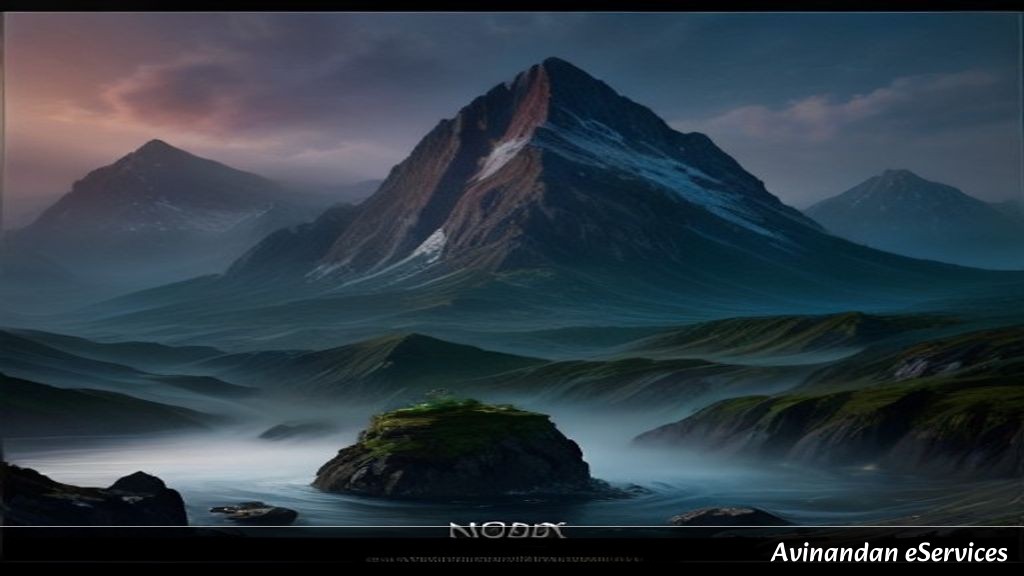
Welcome to NCERT Explained: Class XI Geography, Chapter 6 - Geomorphic Processes! Have you ever looked at a majestic mountain range, a deep valley, or a sweeping desert and wondered how these incredible landforms came to be? The Earth is not a static, motionless sphere; it is dynamic and constantly changing. The forces that build up, wear down, and reshape the surface of our planet are known as geomorphic processes. Understanding these processes helps us decode the history of the Earth and appreciate the physical environment around us.
In this chapter, we explore the dual forces acting upon the Earth's crust: internal forces coming from deep within the Earth, and \texternal forces powered by the sun and atmospheric agents operating on the surface. Let us break down these fascinating concepts step by step.
Key Concepts Explained
Geomorphic processes are broadly divided into two main categories based on the source of their energy: Endogenic Processes and Exogenic Processes.
1. Endogenic Processes (Internal Forces)
Endogenic processes derive their energy from the interior of the Earth. Driven by thermal heat and radioactive decay within the core and mantle, these forces are responsible for building up relief features on the Earth's surface (often called crustal building).
- Diastrophism: All processes that move, elevate, or build portions of the Earth's crust come under diastrophism. This includes orogenic processes (mountain building through folding and faulting), epeirogenic processes (continental uplift or subsidence), earthquakes, and plate tectonics. Mathematically, crustal strain can be modeled under elasticity limits, where stress $\sigma$ is related to strain $\epsilon$ by Hooke's Law: $\sigma = E \epsilon$, though geological deformations often involve complex plastic flow over long timescales.
- Volcanism: This involves the movement of molten rock (magma) onto or toward the Earth's surface, creating intrusive landforms (like batholiths and sills) and \textrusive landforms (like volcanic cones and lava plateaus).
2. Exogenic Processes (External Forces)
Exogenic processes derive their energy from sources originating above the Earth's surface, primarily radiation from the sun and the gradients created by gravity. These forces act as wearing-down forces (denudation), attempting to smooth out the irregularities of the Earth's surface.
- Weathering: The mechanical breakdown and chemical alteration of rocks at or near the Earth's surface in situ (without much movement). It is categorized into physical weathering (frost wedging, thermal expansion), chemical weathering (oxidation, carbonation, solution), and biological weathering (plant roots, burrowing animals).
- Mass Wovements: The downslope movement of rock, debris, and soil under the direct influence of gravity. Examples include landslides, rockfalls, slumps, and creep. The shear stress $\tau$ must exceed the shear strength $\tau_f$ of the material for failure to occur, often expressed via the Coulomb equation: $\tau_f = c + \sigma_n \tan\phi$.
- Erosion and Deposition: Agents like running water (rivers), groundwater, glaciers, wind, and waves pick up and transport weathered material (erosion) and eventually drop them in lower areas (deposition), creating landforms like deltas, sand dunes, and moraines.
Summary & Key Takeaways
To wrap up our understanding of geomorphic processes, keep the following core points in mind for your exams and conceptual clarity:
- Dynamic Earth: The Earth's surface is shaped by a constant tug-of-war between internal building forces and \texternal wearing-down forces.
- Endogenic Origin: Driven by internal heat, causing diastrophism and volcanism to create relief.
- Exogenic Origin: Driven by solar energy and gravity, causing weathering, mass wasting, erosion, and deposition.
- Denudation: The umbrella term for all exogenic processes that strip away and level the Earth's surface over geological time.