Aarav: Ananya, look at my art shirt! I tried to carry water in my cloth handkerchief to wash my paintbrushes, but it leaked everywhere and soaked my entire school bag!
Ananya: Oh dear, Aarav! Cloth just absorbs water randomly and drips everywhere when you move. But did you know there is a real bird in the desert that carries water in its belly feathers like a living sponge?
Aarav: Wait, really? A bird carrying water in its feathers? Wouldn't the water just splash out as soon as it flies through the air?
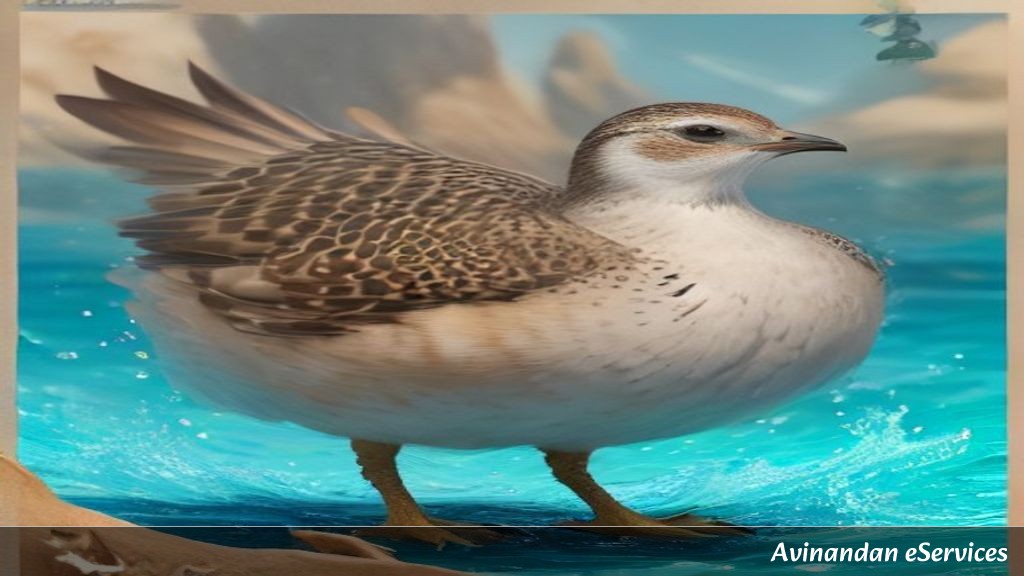
Ananya: You would think so! Most birds actually have waterproof feathers covered in special oils to stay dry. But the male Namaqua Sandgrouse, a bird that lives in the hot deserts of southern Africa, has super special belly feathers designed specifically to hold water like a high-tech sponge.
Aarav: That is amazing! How does a feather hold onto water during a fast, bumpy flight?
Ananya: It all comes down to microscopic engineering done by nature! Standard feathers have tiny branches called barbs and even tinier hooks called barbules that lock together to keep wind and rain out. But the belly feathers of the sandgrouse have barbules with a unique shape. When they are dry, these barbules are coiled up like tiny metallic springs.
Aarav: So what happens when the bird takes a dip in a watering hole?
Ananya: When the male sandgrouse wades into a waterhole, those coiled barbules absorb the liquid and uncoil into straight, flexible threads. They spread out and trap water droplets tightly through surface tension and capillary action. The feathers actually swell up to hold a huge amount of liquid without dripping!
Aarav: How much water can one little bird actually hold? Is it just a few small drops?
Ananya: Much more than that! A single male sandgrouse can soak up about 25 milliliters of water in his belly feathers. That is nearly two whole tablespoonfuls of water! For a bird that size, it is about fifteen percent of its total body weight. Imagine carrying a backpack that weighs fifteen percent of your body weight, but it is made entirely of liquid stored inside your t-shirt!
Aarav: Wow, that sounds heavy! And then he just flies home with all that water?
Ananya: Exactly! And here is the hard part: the nearest watering hole might be twenty or thirty kilometers away from his nest! He has to fly through hot desert winds for up to thirty minutes while carrying all that liquid. Yet, thanks to the special structure of the feathers, he loses only a small portion to evaporation during the long flight.
Aarav: That is like flying an open bucket of water through a hot desert without spilling a single drop! Why does the dad bird have to do this? Can't the mother bird or the babies just walk to the waterhole?
Ananya: Desert waterholes are dangerous places full of predators like hawks and jackals. The tiny chick babies are far too small and slow to make that long journey across the scorching sand. So, the parents nest in safer, hidden desert areas. The mother guards the nest while the father flies across the desert to get water for the family!
Aarav: So when the dad bird flies back to the nest, how do the baby chicks drink the water? Do they squeeze the feathers with their beaks?
Ananya: You guessed it! When the dad lands at the nest, he stands proudly and raises his chest. The hungry little chicks run over and use their beaks like tiny straws or squeegees. They press their beaks against his chest feathers and drink the fresh water right out of them! It takes them about ten minutes to drink every last drop.
Aarav: That must be the coolest drink of water in the entire animal kingdom! It is like having a juice box built right into your dad's sweater!
Ananya: Haha, exactly! And scientists are actually studying these feathers under powerful electron microscopes to learn how to invent better human technology.
Aarav: Really? How can bird feathers help human inventors?
Ananya: Engineers are using the design of sandgrouse feathers to invent new water-harvesting fabrics for dry desert regions. They want to create materials that can draw moisture out of morning fog and store it without leaking. Other scientists are trying to build better medical sponges that hold liquids without dripping during operations, or specialized athletic clothing that absorbs sweat fast and dries quickly.
Aarav: Nature really is the ultimate inventor! Next time my paints spill, I wish I had a shirt made out of sandgrouse feathers!
Ananya: Me too, Aarav! Nature always finds clever solutions to tough problems, like surviving in a hot, dry desert.
So, What Did We Learn Today?
- Living Sponges: The male Namaqua Sandgrouse has specialized belly feathers that act like natural sponges to soak up water.
- Microscopic Springs: The feather barbules are coiled like springs when dry and uncoil in water to trap liquid tight using surface tension.
- Desert Delivery: Male sandgrouse can carry up to 25 milliliters of water—about 15% of their body weight—over 20 miles across the desert to their chicks.
- Feather Juicebox: Baby chicks drink directly from their father's chest feathers using their beaks like straws.
- Human Biomimicry: Scientists are studying these feathers to create water-harvesting fabrics, better surgical sponges, and high-tech athletic gear.
Aarav: I learned that science is everywhere—even in the belly feathers of a desert bird! Next time I see a feather, I will definitely take a closer look!