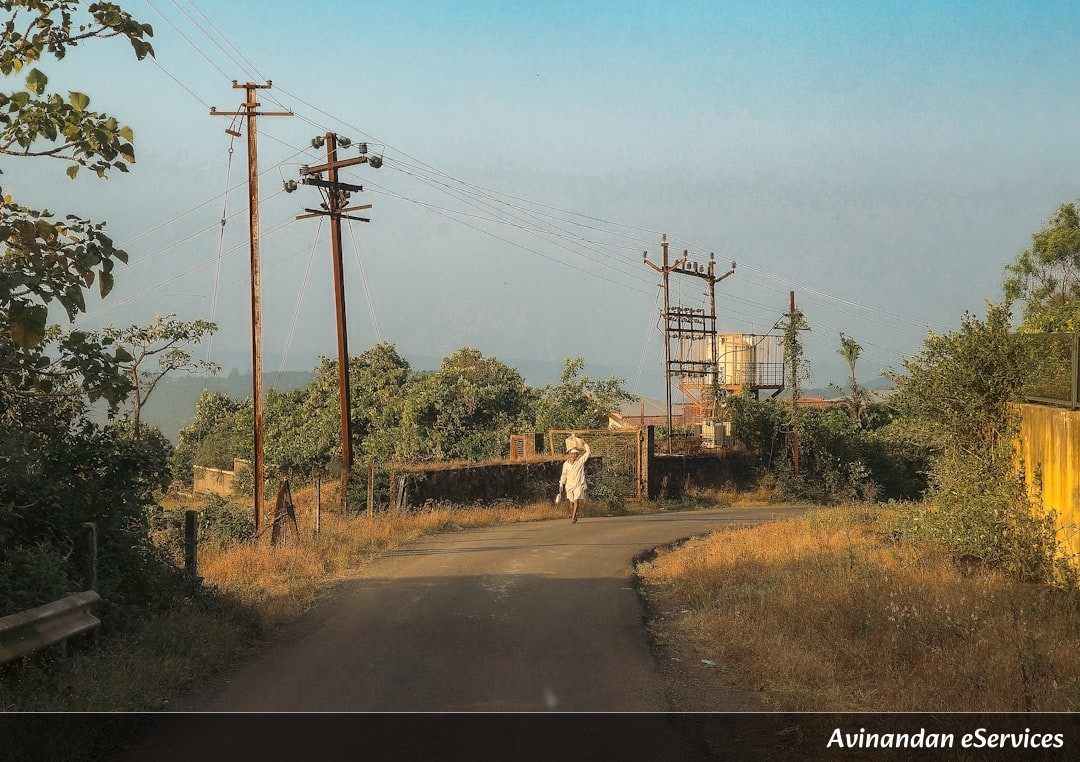
The Panchayati Raj System is one of the most high-yielding and frequently tested topics under the General Awareness / Indian Polity section of various Railway Recruitment Board (RRB) exams, including RRB NTPC, RRB Group D, RRB Technician Grade I, and Grade III. A thorough understanding of local self-government, constitutional amendments, key committees, and relevant constitutional articles is essential to secure full marks in this segment.
This comprehensive guide breaks down the Panchayati Raj System into easy-to-understand concepts, historical timelines, constitutional frameworks, solved examples, and practice questions tailored specifically for Indian railway exam aspirants.
Introduction to Panchayati Raj System for RRB Exams
Panchayati Raj is a system of rural local self-government in India. It aims to build democracy at the grass-roots level by decentralizing administrative powers and entrusting rural communities with the responsibility of managing their own local affairs. The term Panchayat literally translates to an assembly ('ayat') of five ('panch') wise elders.
In the context of the Indian Constitution, local government is a state subject included in the Seventh Schedule (State List). Mahatma Gandhi was a strong advocate of Gram Swaraj (village self-rule), which served as the philosophical foundation for incorporating Directive Principles of State Policy under Article 40, mandating the state to organize village panchayats.
Topic Weightage and Importance
In competitive exams conducted by the Railway Recruitment Board (RRB), Indian Polity accounts for approximately 15% to 20% of the General Awareness section. Within Polity, questions related to Local Self-Government (Panchayati Raj & Municipalities) appear consistently across CBT-1 and CBT-2 stages.
- RRB NTPC (CBT 1 & CBT 2): 1 to 3 direct questions from constitutional amendments, committees, or articles related to Panchayati Raj.
- RRB Group D: 1 to 2 direct questions focusing on committees, implementation dates, and basic features.
- RRB Technician (Grade I & Grade III): 1 to 2 questions on polity basics and constitutional provisions.
Key Concepts and Constitutional Provisions
1. Evolution & Key Committees
Before the Panchayati Raj System was constitutionalized, several expert committees were formed by the Government of India to recommend mechanisms for local governance:
| Committee Name | Year | Key Recommendation |
|---|---|---|
| Balwant Rai Mehta Committee | 1957 | Recommended a 3-tier Panchayati Raj system (Gram Panchayat, Panchayat Samiti, Zilla Parishad). Known as the 'Father of Panchayati Raj in India'. |
| Ashok Mehta Committee | 1977 | Recommended replacing the 3-tier system with a 2-tier system (Zilla Parishad & Mandal Panchayat). |
| G.V.K. Rao Committee | 1985 | Emphasized making Zilla Parishad the pivotal entity for development planning (termed bureaucracy without roots as 'grass without roots'). |
| L.M. Singhvi Committee | 1986 | Recommended constitutional status and protection for Panchayati Raj institutions. |
| Thungon Committee | 1988 | Reiterated constitutional recognition and a 3-tier system with fixed 5-year terms. |
2. Historical Milestones
- 2nd October 1959: Rajasthan became the first state in India to inaugurate the Panchayati Raj system in Nagaur district, launched by Prime Minister Jawaharlal Nehru.
- 1959 (Later in October): Andhra Pradesh became the second state to adopt the system.
- 24th April 1993: The 73rd Constitutional Amendment Act, 1992 came into force, giving constitutional status to Panchayati Raj institutions. Hence, 24th April is celebrated as National Panchayati Raj Day in India.
3. Features of the 73rd Constitutional Amendment Act, 1992
- Part Added: Added Part IX to the Constitution titled 'The Panchayats'.
- Articles Added: Articles 243 to 243O.
- Schedule Added: Eleventh Schedule containing 29 functional items (e.g., agriculture, health, sanitation, rural housing, roads).
- Three-Tier Structure:
- Gram Panchayat (Village level)
- Panchayat Samiti / Block Samiti (Intermediate/Block level)
- Zilla Parishad (District level)
- Note: States with a population under 20 lakhs may choose not to constitute the intermediate level.
- Duration & Tenure: Fixed tenure of 5 years. If dissolved earlier, elections must be conducted within 6 months.
- Reservations:
- Not less than 1/3rd (33.3%) of total seats reserved for women.
- Reservations for SCs and STs proportional to their population in the panchayat area.
- Minimum Age to Contest: 21 years (whereas voting age is 18 years under Article 326).
4. Summary Table of Articles (Article 243 to 243O)
| Article | Subject Matter |
|---|---|
| 243 | Definitions |
| 243A | Gram Sabha (foundation of Panchayati Raj) |
| 243B | Constitution of Panchayats (3-tier structure) |
| 243C | Composition of Panchayats |
| 243D | Reservation of Seats (Women, SC/ST) |
| 243E | Duration of Panchayats (5 years) |
| 243F | Disqualifications for Membership |
| 243G | Powers, Authority, and Responsibilities (29 subjects) |
| 243H | Powers to impose Taxes and Funds |
| 243I | State Finance Commission (to review financial position) |
| 243J | Audit of Accounts of Panchayats |
| 243K | State Election Commission (conducts local elections) |
| 243L | Application to Union Territories |
| 243M | Part not to apply to certain areas (e.g., Nagaland, Meghalaya, Mizoram) |
| 243N | Continuance of existing laws and Panchayats |
| 243O | Bar to interference by courts in electoral matters |
Solved Examples (Step-by-Step)
Let us look at standard questions asked in RRB NTPC and Group D exams along with detailed explanations.
Example 1:
Question: Which constitutional amendment added Part IX and the 11th Schedule to the Constitution of India?
Solution & Explanation:
- Step 1: Recall the amendment related to rural local bodies.
- Step 2: The 73rd Constitutional Amendment Act, 1992 inserted Part IX titled 'The Panchayats' and introduced the 11th Schedule containing 29 subjects.
- Answer: 73rd Constitutional Amendment Act, 1992.
Example 2:
Question: What is the minimum age required for a citizen to contest Panchayati Raj elections in India?
Solution & Explanation:
- Step 1: Identify voting age vs contesting age for local bodies.
- Step 2: Voting age is 18 years (as per the 61st Amendment).
- Step 3: As per Article 243F, the minimum age required to contest local Panchayat elections is 21 years (unlike 25 years for Lok Sabha/Legislative Assembly).
- Answer: 21 years.
Example 3:
Question: Which committee for the first time recommended constitutional recognition for Panchayati Raj Institutions?
Solution & Explanation:
- Step 1: Check committee recommendations timeline.
- Step 2: Balwant Rai Mehta recommended a 3-tier system (1957). Ashok Mehta recommended a 2-tier system (1977).
- Step 3: The L.M. Singhvi Committee (1986) recommended for the first time that Panchayati Raj institutions should be constitutionally recognized, protected, and preserved.
- Answer: L.M. Singhvi Committee.
Common Mistakes to Avoid
- Confusing 73rd and 74th Amendments: Remember that the 73rd Amendment deals with Rural Local Governance (Panchayati Raj), while the 74th Amendment deals with Urban Local Bodies (Municipalities).
- Confusing Schedules: The 11th Schedule (29 subjects) corresponds to Panchayats, while the 12th Schedule (18 subjects) corresponds to Municipalities.
- Minimum Age Confusion: Candidates frequently confuse the minimum age for Lok Sabha (25 years) with Panchayat elections (21 years).
- State vs Central Election Commission: Panchayat elections are conducted by the State Election Commission (Article 243K), NOT the Election Commission of India (Article 324).
- Financial Allocation Body: Financial positions of Panchayats are reviewed by the State Finance Commission (Article 243I) constituted by the Governor every 5 years, not the Finance Commission of India (Article 280).
Practice Questions with Solutions
Test your knowledge with these representative questions formatted for RRB exams:
Q1. Which state was the first to establish the Panchayati Raj system in India?
A) Gujarat
B) Rajasthan
C) Andhra Pradesh
D) Punjab
Q2. National Panchayati Raj Day is celebrated every year in India on which date?
A) 15th August
B) 2nd October
C) 24th April
D) 26th January
Q3. Under which Article of the Indian Constitution is the State Election Commission mandated to conduct Panchayat elections?
A) Article 243K
B) Article 243I
C) Article 243D
D) Article 243A
Q4. How many functional items are listed in the Eleventh Schedule of the Indian Constitution?
A) 18
B) 21
C) 29
D) 33
Q5. What percentage of total seats in Panchayati Raj institutions is reserved for women as per Article 243D?
A) 25%
B) 33.3% (1/3rd)
C) 50%
D) 10%
Q6. Which article in the Directive Principles of State Policy (DPSP) directs the state to organize Village Panchayats?
A) Article 39
B) Article 40
C) Article 44
D) Article 48
Solutions to Practice Questions
1. Answer: B (Rajasthan)
Explanation: Rajasthan's Nagaur district was the first place where the Panchayati Raj system was launched on 2nd October 1959 by PM Jawaharlal Nehru.
2. Answer: C (24th April)
Explanation: The 73rd Constitutional Amendment Act came into effect on 24th April 1993. Therefore, 24th April is observed annually as National Panchayati Raj Day.
3. Answer: A (Article 243K)
Explanation: Article 243K provides for the establishment of a State Election Commission responsible for the superintendence, direction, and control of electoral rolls and conducting elections to Panchayats.
4. Answer: C (29)
Explanation: The 11th Schedule contains 29 functional matters under the jurisdiction of Panchayati Raj Institutions.
5. Answer: B (33.3% / 1/3rd)
Explanation: Article 243D guarantees not less than one-third (33.3%) reservation of seats for women (including SC/ST women). Note that several states have increased this to 50% through local laws, but the constitutional minimum is 1/3rd.
6. Answer: B (Article 40)
Explanation: Article 40 of Part IV (Directive Principles of State Policy) directs the State to organize village panchayats and endow them with necessary powers.
Frequently Asked Questions (FAQs)
1. What is Gram Sabha in Panchayati Raj?
Gram Sabha is the foundational body of the Panchayati Raj System under Article 243A. It consists of all registered voters living within the village area of a Gram Panchayat. It acts as the primary organ of direct democracy.
2. Are all states in India mandated to have a 3-tier Panchayati Raj System?
Yes, as per Article 243B, states must have a 3-tier structure (Gram, Intermediate/Block, and District level). However, states having a population of less than 20 lakhs have the option of not constituting the intermediate (Block) level.
3. Which areas are exempted from the application of Part IX of the Constitution?
As per Article 243M, Part IX does not apply to the states of Nagaland, Meghalaya, and Mizoram, as well as certain tribal areas specified under the Fifth Schedule and hill areas in Manipur and West Bengal (Darjeeling).
Conclusion and Final Tips
Mastering the Panchayati Raj System is a quick and effective way to secure crucial marks in your upcoming RRB NTPC, Group D, or Technician exams. Focus on memorizing key committee names, implementation dates, mandatory provisions like reservation and age limits, and important articles (243A, 243D, 243I, 243K). Revisit this guide frequently, solve past question papers, and keep your revision quick and targeted for optimum results!