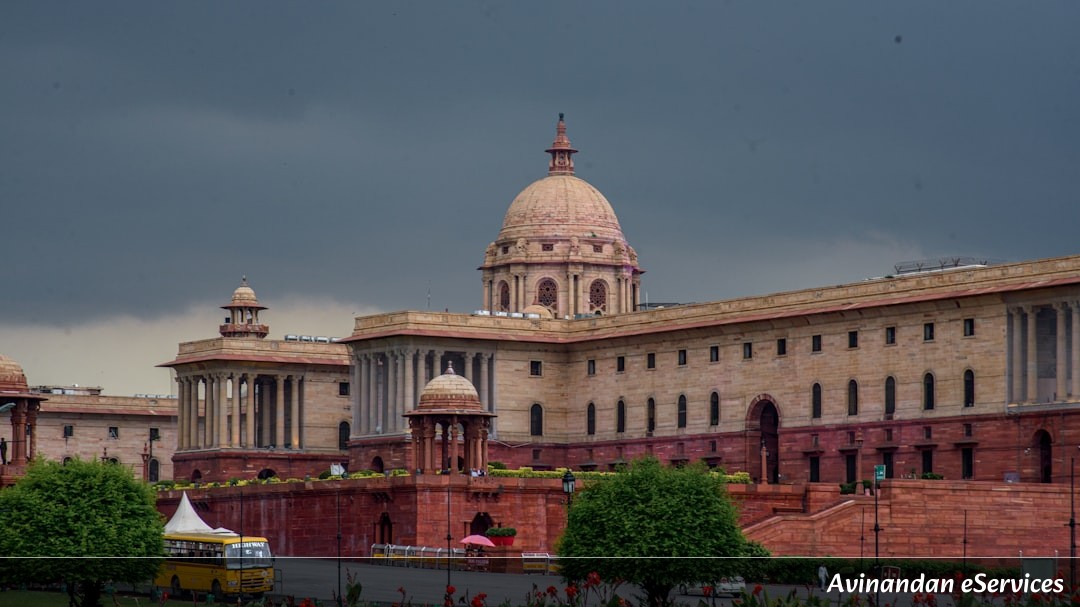
Introduction to the Indian Vice President for RRB Exams
In the General Awareness section of Indian Railways recruitment exams like RRB NTPC and Group D, the Indian Polity section holds significant importance. The office of the Vice President of India, being the second-highest constitutional office in the country, is a recurring theme in competitive examinations. Understanding the powers, functions, and election process of the Vice President is essential for scoring high marks.
Topic Weightage and Importance
In the RRB NTPC and Group D examinations, you can expect at least 1 to 2 questions directly related to the Union Executive, including the President, Vice President, and Prime Minister. Questions typically revolve around eligibility criteria, the election process, the removal procedure, and the dual role played by the Vice President as the ex-officio Chairman of the Rajya Sabha. Mastering this topic ensures you secure these high-yield marks.
Key Concepts and Formulas
The office of the Vice President is covered under Articles 63 to 71 of the Indian Constitution. Key points to remember include:
- Article 63: There shall be a Vice President of India.
- Article 64: The Vice President shall be the ex-officio Chairman of the Rajya Sabha.
- Eligibility: Citizen of India, age 35+ years, must be qualified for election as a member of the Rajya Sabha, and should hold no office of profit.
- Election: Elected by members of both Houses of Parliament (Lok Sabha and Rajya Sabha) through a system of proportional representation by means of a single transferable vote (secret ballot).
- Term: Holds office for a term of 5 years.
- Removal: Can be removed by a resolution of the Rajya Sabha passed by a majority of all the then members of the House and agreed to by the Lok Sabha.
Solved Examples (Step-by-Step)
Example 1: Who participates in the election of the Vice President?
Solution: The Electoral College consists of members of both Houses of Parliament (Lok Sabha and Rajya Sabha). Unlike the Presidential election, the State Legislative Assemblies do not participate.
Example 2: What is the primary role of the Vice President regarding the Rajya Sabha?
Solution: The Vice President acts as the ex-officio Chairman of the Rajya Sabha, meaning they preside over its sessions and maintain order.
Common Mistakes to Avoid
- Confusing the Electoral College of the President with that of the Vice President. Remember, states are excluded for the Vice President.
- Forgetting the minimum age requirement (35 years) versus 25 for Lok Sabha.
- Misinterpreting the removal process; it requires a Rajya Sabha majority first.
Practice Questions with Solutions
1. Which Article deals with the election of the Vice President?
2. Who was the first Vice President of India?
3. Can the Vice President act as the President of India?
4. Does the Vice President have a casting vote in the Rajya Sabha?
Answers: 1. Article 66, 2. Dr. Sarvepalli Radhakrishnan, 3. Yes, in case of a vacancy, 4. Yes, in case of a tie.
Frequently Asked Questions (FAQs)
Q: Is the Vice President a member of the Parliament?
A: No, the Vice President is not a member of either House of Parliament or a House of the Legislature of any State.
Q: What happens if the Vice President's post falls vacant?
A: An election to fill the vacancy must be held as soon as possible, and the person elected remains for the full five-year term.
Conclusion and Final Tips
Mastering the Indian Vice President topic is about memorizing specific Articles and understanding the unique constitutional duties. Use tables to compare the President and Vice President to simplify your revision. Stay focused, practice regularly, and keep your notes updated with current affairs related to the office.