Introduction to the Topic
In our previous studies of European history, we saw how nationalism led to the formation of nation-states. In India, like many other colonies, the growth of modern nationalism is intimately connected to the anti-colonial movement. People began discovering their unity in the process of their struggle with colonialism. The sense of being oppressed under colonial rule provided a shared bond that tied many different groups together. However, each class and group felt the effects of colonialism differently, and their experiences were varied. In this chapter, we explore how the Congress under Mahatma Gandhi tried to forge these groups together within one movement.
Understanding Nationalism in India is crucial because it helps us appreciate the sacrifices of our ancestors and the complex socio-political landscape that shaped our modern democratic republic. We will look at the period from the 1920s onwards, studying the Non-Cooperation and Civil Disobedience Movements, and how different social groups participated in them.
Key Concepts Explained
1. The First World War, Khilafat, and Non-Cooperation
The First World War (1914-1918) created a new economic and political situation in India. To finance the war, the British government increased taxes, introduced income tax, and raised custom duties. Prices of essential commodities doubled between 1913 and 1918, leading to \textreme hardship for the common people. Forced recruitment in rural areas for the army caused widespread anger. This was further compounded by crop failures in 1918-19 and 1920-21, leading to acute food shortages and an influenza epidemic that killed millions.
The Idea of Satyagraha: Mahatma Gandhi returned to India in January 1915 from South Africa, where he had successfully fought the racist regime with a novel method of mass agitation, which he called Satyagraha. Satyagraha emphasized the power of truth and the need to search for truth. Gandhi believed that if the cause was true and the struggle was against injustice, then physical force was not necessary to fight the oppressor. A satyagrahi could win the battle through non-violence by appealing to the conscience of the oppressor.
Gandhi organized early satyagraha movements in:
- Champaran (Bihar) in 1917: To inspire peasants to struggle against the oppressive plantation system.
- Kheda (Gujarat) in 1917: To support peasants who could not pay revenue due to crop failure.
- Ahmedabad (Gujarat) in 1918: To support cotton mill workers.
2. The Rowlatt Act and Jallianwala Bagh
Emboldened by these successes, Gandhi decided to launch a nationwide satyagraha against the proposed Rowlatt Act (1919). This act gave the government enormous powers to repress political activities and allowed detention of political prisoners without trial for two years. Gandhi wanted non-violent civil disobedience against such unjust laws.
On April 13, 1919, the infamous Jallianwala Bagh massacre took place. A large crowd gathered in the enclosed ground of Jallianwala Bagh in Amritsar. Some came to protest against the government's repressive measures, while others came to attend the annual Baisakhi fair. General Dyer entered the area, blocked the exit points, and opened fire on the crowd, killing hundreds. This incident sparked massive strikes and clashes with the police across North India.
3. The Khilafat Movement and Non-Cooperation
To bring Hindus and Muslims together for a unified national movement, Gandhi took up the Khilafat issue. The First World War had ended with the defeat of Ottoman Turkey, and there were rumors of a harsh peace treaty on the Ottoman emperor—the spiritual head of the Islamic world (the Khalifa). A Khilafat Committee was formed in Bombay in 1919 by leaders like Muhammad Ali and Shaukat Ali. Gandhi saw this as an opportunity to unify the two communities.
At the Calcutta session of the Congress in September 1920, he convinced other leaders of the need to start a Non-Cooperation Movement in support of Khilafat as well as for Swaraj (self-rule). Gandhi argued that British rule was established in India with the cooperation of Indians; if Indians refused to cooperate, British rule in India would collapse within a year.
4. Differing Strands within the Movement
The Non-Cooperation-Khilafat Movement began in January 1921. Various social groups participated, but each had its own specific aspirations:
- In the Towns: Thousands of students left government-controlled schools, teachers resigned, and lawyers gave up their practices. Foreign goods were boycotted, liquor shops picketed, and foreign cloth burnt in huge bonfires.
- In the Countryside: In Awadh, Baba Ramchandra led peasants against talukdars and landlords who demanded high rents. The movement here was for reduction of revenue, abolition of begar (forced labor), and social boycott of oppressive landlords.
- In the Plantations: For plantation workers in Assam, freedom meant the right to move freely in and out of the confined spaces in which they were enclosed. Under the Inland Emigration Act of 1859, they were rarely permitted to leave the tea gardens.
The movement was called off in February 1922 after the Chauri Chaura incident, where a peaceful demonstration turned violent and participants burnt a police station, killing 22 policemen. Gandhi felt the movement was turning violent and satyagrahis needed proper training.
5. Towards Civil Disobedience
In the late 1920s, Indian politics was again shaped by two factors. First, the worldwide economic depression caused agricultural prices to fall, hurting peasants. Second, the British government appointed the Simon Commission to look into the constitutional system in India. Since the commission had no Indian members, it was greeted with the slogan "Go back, Simon" upon its arrival in 1928.
In December 1929, under the presidency of Jawaharlal Nehru, the Lahore Congress formalized the demand for 'Purna Swaraj' or full independence. It was declared that 26 January 1930 would be celebrated as Independence Day.
6. The Salt March and the Civil Disobedience Movement
Mahatma Gandhi found in salt a powerful symbol that could unite the nation. Salt was something consumed by the rich and the poor alike, and the tax on salt was seen as the most oppressive face of British rule. Gandhi sent a letter to Viceroy Irwin stating eleven demands. When the demands were ignored, he started his famous Salt March.
Accompanied by 78 of his trusted volunteers, Gandhi walked over 240 miles from Sabarmati to the coastal town of Dandi. On 6 April, he reached Dandi and ceremonially violated the law by manufacturing salt from seawater. This marked the beginning of the Civil Disobedience Movement.
Unlike the Non-Cooperation Movement, people were now asked not only to refuse cooperation but also to break colonial laws. Thousands in different parts of the country broke the salt law, manufactured salt, and demonstrated in front of government salt factories.
7. The Sense of Collective Belonging
Nationalism spreads when people begin to believe that they are all part of the same nation. This sense of collective belonging came partly through the experience of united struggles. But it was also through a variety of cultural processes—history and fiction, folklore and songs, popular prints and symbols—that nationalism captured people’s imagination.
- Identity of the Nation: The identity of India came to be visually associated with the image of Bharat Mata, first created by Bankim Chandra Chattopadhyay, who also wrote 'Vande Mataram'.
- Indian Folklore: Nationalists began recording folk tales sung by bards and they toured villages to gather folk songs and legends to give a true picture of traditional culture.
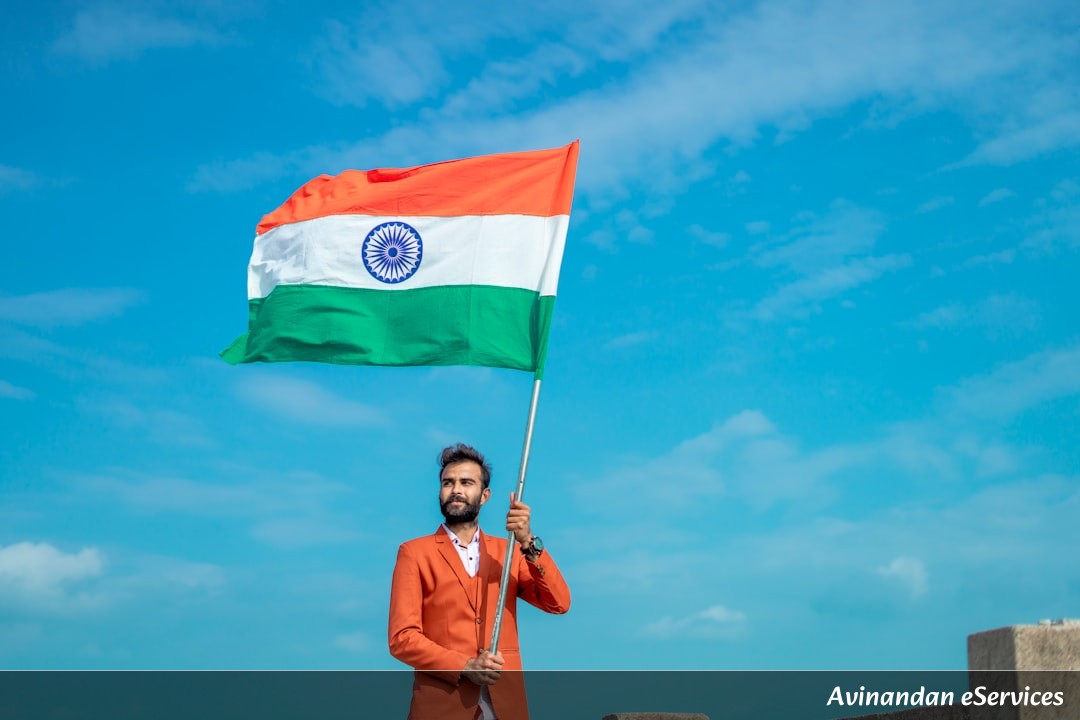
- Icons and Symbols: During the Swadeshi movement, a tricolor flag (red, green, and yellow) was designed. Gandhi later designed the Swaraj flag (red, green, and white) with a spinning wheel in the center, representing the Gandhian ideal of self-help.
Summary & Key Takeaways
- Satyagraha: A non-violent method of mass agitation based on the power of truth.
- Non-Cooperation Movement (1921): Aimed to surrender government titles, boycott schools, courts, and foreign goods to protest the Rowlatt Act and Khilafat issue.
- Civil Disobedience Movement (1930): Started with the Dandi March; aimed at breaking colonial laws, specifically the salt tax.
- Purna Swaraj: The demand for full independence adopted at the Lahore Session in 1929.
- Unity in Diversity: Despite different grievances (peasants, workers, business class, Dalits), the Congress under Gandhi tried to unite these groups under the banner of nationalism.
- Cultural Identity: Figures like Bharat Mata and symbols like the flag played a huge role in creating a sense of belonging among Indians.