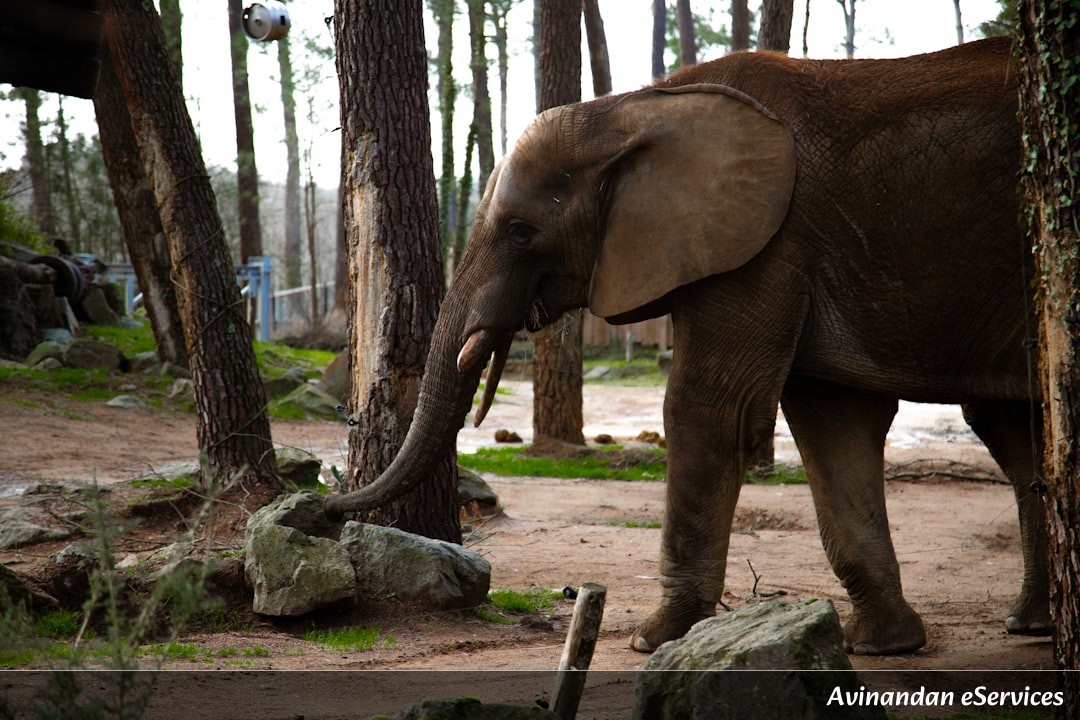
Kabir: Saanvi, I was watching a nature documentary yesterday about the African savannah, and I saw something so strange! This massive matriarch elephant was walking, and then she suddenly stopped mid-stride. She lifted one front foot, leaned forward, and stood perfectly still for almost five minutes. Was she just daydreaming or maybe taking a very short nap?
Saanvi: That is such a cool observation, Kabir! Believe it or not, she wasn't daydreaming at all. In fact, she was probably paying very close attention. She was 'listening' to a conversation happening many miles away.
Kabir: Listening? But her ears weren't flapping, and she wasn't even facing a specific direction. Plus, the narrator said it was completely silent on the plains. How can you listen to silence?
Saanvi: That’s the secret! She wasn't just using the big ears on her head. She was using the 'ears' in her feet. Scientists call this seismic communication. It’s the ability to detect vibrations traveling through the ground rather than through the air.
Kabir: Wait, feet don't have ears! That sounds like something out of a science fiction movie. How can a foot possibly pick up a sound?
Saanvi: Well, think about what sound actually is. Sound is just a vibration. When I speak, I’m vibrating the air. But vibrations can travel through solid things too, like the ground. Elephants produce these very deep, low-frequency sounds called infrasound. These sounds are so low that humans can't even hear them!
Kabir: Oh, I’ve heard of infrasound! It’s like the bass in a loud song that you feel in your chest even if you can't hear the melody clearly, right?
Saanvi: Exactly! Now, when an elephant rumbles or stomps, those low-frequency vibrations travel through the earth. Because the ground is solid and dense, these 'seismic waves' can actually travel much further than sound waves traveling through the air, which get scattered by wind and trees. Those vibrations can travel up to 20 miles through the dirt!
Kabir: 20 miles?! That’s like me being able to hear you from the next city! But how does the vibration get from the dirt into the elephant's brain?
Saanvi: This is where the biology gets really amazing. Elephants have very specialized skin on the soles of their feet. It's packed with something called Pacinian corpuscles. These are super-sensitive nerve endings designed specifically to detect tiny changes in pressure and vibrations. When the ground vibrates, these sensors send a signal straight to the elephant's brain.
Kabir: So their feet are basically like giant microphones pressed against the Earth?
Saanvi: That’s a perfect way to put it! And it’s not just their feet. They often press their trunks against the ground too. The trunk has thousands of these sensors as well. By using both their feet and their trunk, they can even figure out exactly which direction the vibration is coming from. It's like having a built-in GPS and a long-distance radio at the same time.
Kabir: Wow, nature is so high-tech! But why do they need to listen to the ground? What are they talking about from 20 miles away?
Saanvi: It’s all about survival, Kabir. They use it to keep track of other family groups. If a mother elephant finds a great water hole, she might rumble a message to let her friends know. They also use it for danger. If a herd of elephants is running away from predators, their heavy footsteps create a 'seismic alarm' that warns other herds nearby to be on the lookout.
Kabir: That explains why the elephant I saw was standing so still. If she was moving, her own footsteps would be too loud and drown out the messages from the ground!
Saanvi: Precisely! She was 'silencing' her own noise so she could pick up the faint signals from the earth. It’s also how they can sense distant thunderstorms. They can feel the vibration of heavy rain and thunder hitting the ground from miles away, which helps them navigate toward water during the dry season.
Kabir: I'll never look at an elephant's foot the same way again. I used to think they were just big, heavy stumps, but they’re actually delicate sensors.
Saanvi: It’s a great reminder that just because we can't see or hear something doesn't mean the world is quiet. There's a whole world of conversation happening right under our feet!
So, What Did We Learn Today?
- Saanvi: We learned that elephants use seismic communication to 'hear' through the ground using vibrations.
- Kabir: I learned that they have special sensors called Pacinian corpuscles in their feet and trunks that act like microphones!
- Saanvi: We also discovered that low-frequency infrasound can travel much further through the ground than through the air—up to 20 miles!
- Kabir: And most importantly, elephants stand still to 'listen' so they can find water, avoid predators, and talk to their friends from far away.