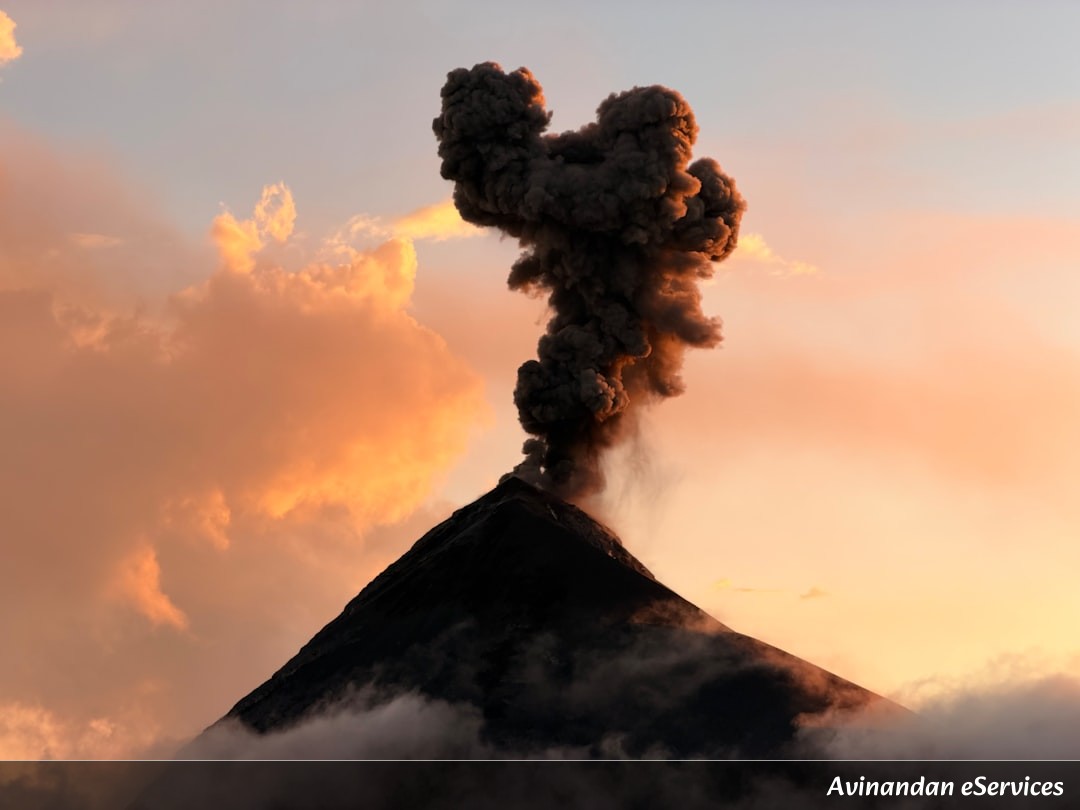
Aarav: Isha, you have to see this photo I found online! It looks like something straight out of a superhero movie. It’s a volcano erupting, but instead of just fire and smoke, there are massive bolts of purple and blue lightning shooting right out of the ash cloud!
Isha: Oh, I know exactly what you’re looking at, Aarav! That’s a phenomenon called volcanic lightning. Some scientists even call it a 'dirty thunderstorm.' Isn’t it absolutely breathtaking?
Aarav: It really is! But wait, how does that even happen? I thought lightning only came from rain clouds. Does the volcano have its own weather system, or is the lava just that angry?
Isha: Haha, the lava isn’t 'angry,' though it certainly is powerful! You’re right that we usually see lightning in regular thunderstorms, but the basic science behind both is actually very similar. It all comes down to static electricity. You know how you get a shock when you rub your socks on a carpet and then touch a metal doorknob?
Aarav: Yeah! It makes a little 'zap' sound. Are you saying the volcano is doing the same thing but on a giant scale?
Isha: Exactly! In a normal thunderstorm, pieces of ice and drops of water inside a cloud bump into each other. This rubbing creates a buildup of electrical charge. Eventually, the charge becomes so big that it needs to escape, and—BOOM—you get a lightning bolt. In a volcanic eruption, instead of ice and water, you have billions of tiny particles of ash, rock, and volcanic glass being blasted into the air at incredible speeds.
Aarav: So, the ash particles are rubbing together? That must be a lot of friction!
Isha: It’s an immense amount of friction! This is called the 'triboelectric effect.' As the volcano erupts, the magma is blown apart into tiny shards. These shards rub against each other as they are forced up the volcanic vent. This friction strips electrons away from some particles and gives them to others. This creates areas of positive and negative charge. When the difference between these charges becomes too great, the air can no longer keep them apart, and the electricity jumps through the ash cloud as lightning.
Aarav: Wow! So the 'dirty' part of the 'dirty thunderstorm' is just all that ash and dust? But why does some of the lightning look like it’s right at the mouth of the volcano, while other bolts are way up high in the smoke?
Isha: That’s a great observation! Scientists actually divide volcanic lightning into two main types. The first type happens right at the 'vent' or the opening of the volcano. This is usually caused by the rocks and ash fragmenting and rubbing together as they are squeezed out of the earth. The second type happens much higher up in the 'plume,' which is the giant cloud of smoke and ash rising into the sky.
Aarav: What’s different about the lightning way up there in the plume?
Isha: Up there, it’s a bit more like a traditional storm. As the hot volcanic gas rises, it meets the cold air high in the atmosphere. The water vapor in the plume freezes into ice crystals. So, in the upper parts of the cloud, you have a mix of volcanic ash and ice crystals all bumping into each other. This creates even more static electricity, leading to those massive, spectacular bolts you saw in the photo.
Aarav: That is so cool! Does this happen with every volcano? I don’t remember seeing lightning when we looked at pictures of the volcanoes in Hawaii.
Isha: That’s because not all eruptions are the same. Volcanoes like the ones in Hawaii usually have 'effusive' eruptions, where the lava flows out like a thick, hot river. Volcanic lightning usually happens in 'explosive' eruptions. You need a lot of ash and a very tall plume to generate enough friction for lightning. Volcanoes like Mount St. Helens or Taal in the Philippines are much more likely to put on a light show!
Aarav: I imagine it would be pretty scary to be there in person. Can you hear the thunder, or is the volcano too loud?
Isha: People who have been nearby say it’s a terrifying mix of sounds. You have the deep, earth-shaking roar of the volcano erupting, and on top of that, you have the sharp cracks of the thunder from the lightning. It’s like nature’s loudest orchestra!
Aarav: Why do scientists study this, Isha? Is it just because it looks cool, or is there a bigger reason?
Isha: It’s actually very important for safety! Volcanic ash is \textremely dangerous for airplanes because it can melt inside jet engines and cause them to fail. Sometimes, volcanoes erupt in remote places or in the middle of the night when we can't see the ash cloud. By using special sensors to detect the radio waves produced by volcanic lightning, scientists can tell immediately when an eruption has started, even if it’s cloudy or dark. This helps them warn pilots to stay away.
Aarav: So, the lightning is like a giant, flashing alarm bell! Is this something that only happens on Earth?
Isha: Probably not! Scientists think that lightning could happen anywhere there is dust and friction. They’ve seen evidence of lightning in the massive dust storms on Mars, and they suspect that volcanoes on other moons and planets, like Jupiter’s moon Io, might have their own versions of volcanic lightning too!
Aarav: I never thought of ash as being 'electric.' I’m going to look up more photos of this now. It’s like the Earth is doing its own science experiment with static electricity!
So, What Did We Learn Today?
- Volcanic Lightning: Also known as a 'dirty thunderstorm,' this occurs when an explosive volcanic eruption creates its own electrical storm.
- The Triboelectric Effect: This is the fancy name for the friction created when billions of ash particles and rock fragments rub together, creating static electricity.
- Two Lightning Zones: Lightning can happen right at the volcano's vent (due to rock fragmentation) or high in the plume (where ash and ice crystals collide).
- Explosive vs. Effusive: Lightning is most common in explosive eruptions that blast thick clouds of ash high into the atmosphere.
- Safety Tool: Scientists use lightning detection to spot eruptions in remote areas, helping to keep airplanes safe from dangerous ash clouds.
Aarav: It’s amazing how something so beautiful can also be a warning system for the planet. Science is full of surprises!