Introduction
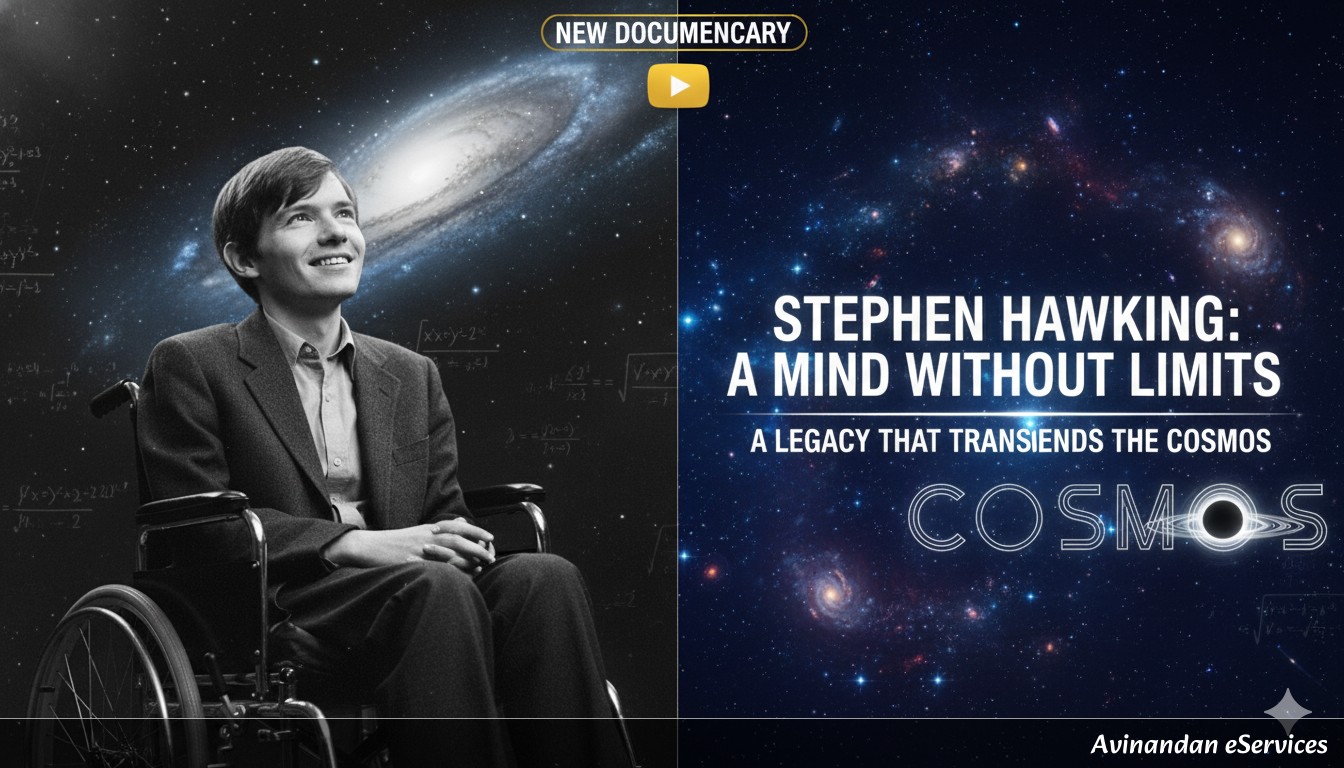
Stephen William Hawking was a name that became synonymous with genius in the late 20th and early 21st centuries. A theoretical physicist, cosmologist, and author, he was a man whose mind roamed the vastness of the cosmos, grappling with the most profound questions of existence, all while his physical body was confined to a wheelchair. His work on black holes and the origins of the universe transformed the landscape of modern physics. Yet, it was his indomitable spirit in the face of a devastating illness, amyotrophic lateral sclerosis (ALS), that captured the hearts and minds of millions worldwide, making him a global icon of intellectual curiosity and human resilience. His life story, a compelling narrative of a brilliant mind breaking free from physical constraints, continues to inspire awe and admiration.
Early Life and Education
Stephen William Hawking was born on January 8, 1942, in Oxford, England, a date that poignantly marked the 300th anniversary of the death of another revolutionary astronomer, Galileo Galilei. His parents, Frank and Isobel Hawking, were both intellectually inclined Oxford University graduates. Frank was a medical researcher specializing in tropical diseases, and Isobel was one of the first women to graduate from Oxford. This environment of intellectual curiosity undoubtedly nurtured young Stephen's inquisitive mind. The family moved to St Albans, a town north of London, where Stephen began his formal education. Contrary to what many might assume, Hawking was not an exceptional student in his early years. In fact, at the age of nine, his grades were among the worst in his class. However, his innate brilliance did not go unnoticed by his peers, who affectionately nicknamed him "Einstein." Even as a teenager, his passion for understanding how things work was evident; he and his friends constructed a rudimentary computer from recycled parts to solve mathematical equations.
At the age of 17, Hawking won a scholarship to study Natural Sciences at his father's alma mater, University College, Oxford. Initially, he found the academic work "ridiculously easy" and was reportedly bored and lonely during his first eighteen months. He later estimated that he averaged only about an hour of study per day. Despite his casual approach to his studies, he graduated with a first-class honors degree in physics in 1962. His sights were then set on the University of Cambridge, where he intended to pursue his Ph.D. in cosmology, the study of the universe as a whole. It was during his time at Cambridge that his life would take a dramatic and unforeseen turn. At the age of 21, he was diagnosed with a rare, early-onset, slow-progressing form of motor neuron disease, more commonly known as ALS or Lou Gehrig's disease. The prognosis was grim; doctors gave him just two and a half years to live. This devastating diagnosis, however, did not \textinguish his intellectual fire. In fact, it ignited a renewed sense of purpose. He would go on to live for more than half a century, defying medical expectations and reshaping our understanding of the cosmos.
Major Accomplishments and Career
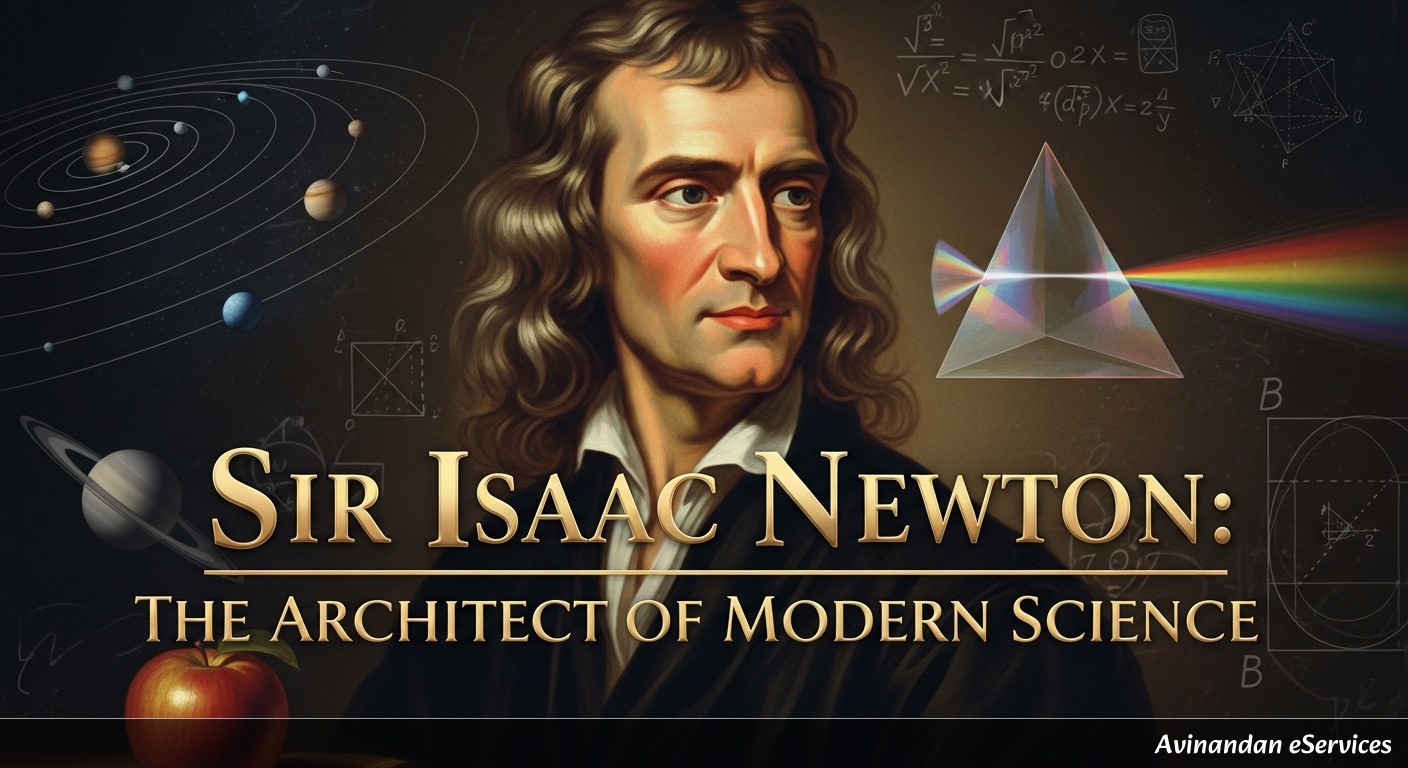
Despite the grim prognosis, Hawking plunged into his work with renewed vigor. His doctoral thesis, "Properties of Expanding Universes," laid the groundwork for his future groundbreaking research. His career was a testament to the power of the human mind to transcend physical limitations. He held the prestigious position of Lucasian Professor of Mathematics at the University of Cambridge from 1979 to 2009, a chair once occupied by Sir Isaac Newton.
The Singularity Theorems and Black Holes
In the late 1960s and early 1970s, Hawking collaborated with fellow physicist Roger Penrose on a series of revolutionary theorems about singularities in spacetime. Building on Penrose's work, which showed that a singularity must form within a black hole, Hawking applied this logic to the entire universe in reverse. Their work demonstrated that if Einstein's theory of general relativity is correct, the universe must have originated from an infinitely dense and hot point—a singularity. This provided powerful mathematical support for the Big Bang theory. Following this, Hawking turned his attention to black holes, the cosmic enigmas from which not even light can escape. In 1970, he postulated the second law of black hole dynamics, which states that the surface area of a black hole's event horizon can never decrease.
Hawking Radiation
Perhaps Hawking's most celebrated and startling discovery came in 1974 when he proposed that black holes are not entirely black after all. By applying the principles of quantum mechanics to the vicinity of a black hole's event horizon, he theorized that black holes could emit radiation. This phenomenon, now known as "Hawking radiation," arises from the creation of virtual particle-antiparticle pairs near the event horizon. While one particle falls into the black hole, the other can escape, carrying away a tiny amount of the black hole's mass and energy. This implied that over immense timescales, black holes could slowly evaporate and eventually disappear in a final burst of radiation. This groundbreaking theory was the first to bridge the gap between general relativity (the theory of the very large) and quantum mechanics (the theory of the very small), a crucial step towards a unified "theory of everything."
A Brief History of Time
While his scientific papers were revolutionary, it was his 1988 book, "A Brief History of Time: From the Big Bang to Black Holes," that catapulted Hawking to international stardom. Written in accessible, non-technical language, the book explored profound cosmological questions about the origins, nature, and ultimate fate of the universe. It became a global bestseller, selling millions of copies and being translated into numerous languages, making complex scientific ideas accessible to a mass audience. The book's unprecedented success cemented Hawking's status as a cultural icon and a brilliant communicator of science.
Legacy and Impact
Stephen Hawking's legacy is multifaceted and profound. Scientifically, his work on singularities and black holes fundamentally changed our understanding of the universe. He posed deep questions about the nature of space, time, and information that continue to drive research in theoretical physics today. His quest for a unified theory that would reconcile general relativity and quantum mechanics remains a central goal of modern physics. Beyond his scientific contributions, Hawking's life had an immense cultural impact. He became a powerful symbol of the human spirit's ability to overcome adversity. Confined to a wheelchair and communicating through a speech-generating device, he continued to travel the world, deliver lectures, and engage with the public. His sharp wit and humor were evident in his popular science books and his numerous television appearances on shows like "The Simpsons" and "Star Trek: The Next Generation." He was a passionate advocate for science education and warned of the potential dangers of artificial intelligence and the necessity for humanity to expand into space. Stephen Hawking passed away on March 14, 2018, at the age of 76. His ashes were interred in Westminster Abbey in London, between the graves of Sir Isaac Newton and Charles Darwin, a fitting tribute to one of the greatest scientific minds in history.
Quick Facts
- Despite his intellect, Hawking was an average student in his early school years and didn't learn to read fluently until he was eight years old.
- As a young man at Oxford, he was a member of the university's rowing team, serving as a coxswain.
- He collaborated with his daughter, Lucy, to write a series of children's books that explain complex scientific concepts through adventure stories.
- In 2007, at the age of 65, he experienced zero gravity aboard a specially modified jet, fulfilling a lifelong dream.
- He was reportedly a notoriously reckless wheelchair driver in his younger years.
- The American accent of his famous speech synthesizer was not his first choice, but over time he came to identify with it.
- He was an outspoken advocate for space exploration, believing it was crucial for the long-term survival of the human race.