A Chilly Summer Mystery from the Past!
Samir: Phew, it’s so hot today, Saanvi! The sun feels like a giant toaster. I was just daydreaming about how nice it would be if it was suddenly cool and cloudy. You know, I read a story once about a year where summer never came. The sky was gloomy all day, and it even snowed in July! It was just a story, right? That could never actually happen.
Saanvi: Actually, Samir, it did happen! It wasn't a story; it was real history. It happened a little over 200 years ago, in 1816. People called it the ‘Year Without a Summer,’ and the reason for it is one of the most powerful science stories ever!
Samir: No way! The whole world just skipped summer? What happened? Did someone forget to pay the sun bill?
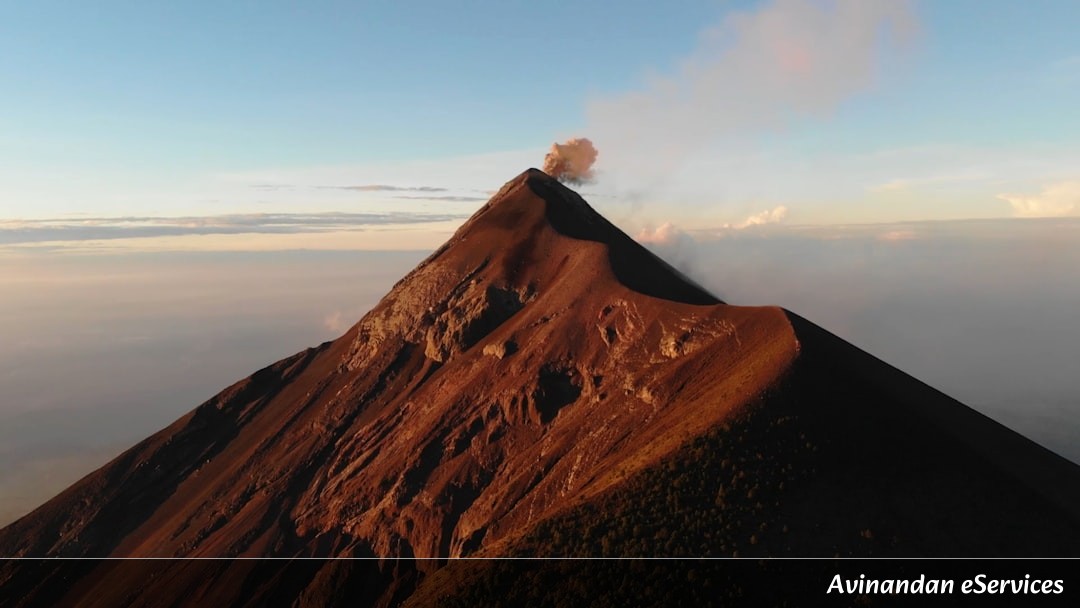
Saanvi: Haha, not quite! The cause wasn't in space; it was right here on Earth. The year before, in 1815, a gigantic volcano called Mount Tambora erupted on an island in Indonesia. It was the biggest and most powerful volcanic eruption in over a thousand years!
A Volcano's Giant Shadow
Samir: Wow! I’ve seen videos of volcanoes. They spit out lots of ash and lava. But Indonesia is so far away from places like Europe or America. How could one volcano make it snow there?
Saanvi: That’s the amazing part. It wasn't just the ash that you see on TV. That stuff is heavy and falls back to Earth pretty quickly. The real climate-changer was a gas the volcano blasted out: sulphur dioxide. Mount Tambora shot a huge cloud of this gas incredibly high up, all the way into the stratosphere.
Samir: The strato-what?
Saanvi: The stratosphere! It’s a layer of our atmosphere that’s way, way above the clouds and weather. Up there, the winds are super strong and can carry things all around the planet very quickly. Once the sulphur dioxide got up there, it spread out like butter on hot toast, covering the whole globe.
Samir: So the world was covered in a smelly gas cloud? Gross!
Saanvi: It wasn’t exactly like that. The magic happened when the sulphur dioxide gas mixed with water vapor in the stratosphere. They formed tiny, tiny droplets called sulfate aerosols. These aerosols are amazing at one thing: reflecting sunlight. They created a kind of invisible, planet-sized sunshade high in the sky.
Samir: A giant sunshade for Earth! So with less sunlight getting through, everything cooled down?
Saanvi: Exactly! With less solar energy reaching the surface, the average temperature of the whole world dropped. It doesn't sound like much, maybe just a degree or two, but that small change was enough to completely mess up the weather patterns and create the Year Without a Summer.
Snow, Famine, and a Famous Monster
Samir: So what was it like for people living then? Did they get to build snowmen in June?
Saanvi: They did see snow and frost in the middle of summer in places like North America and Europe, which was very strange. But it wasn’t fun at all. The cold and the lack of sunlight meant that farmers' crops failed. The plants just couldn't grow. This led to serious food shortages, and many people went hungry. It was a very difficult time all around the world.
Samir: Oh, that’s so sad. I didn’t think about that. So there were no good things that came out of it?
Saanvi: Well, there were a couple of interesting side effects. The particles in the air created the most spectacular, vivid orange and red sunsets you can imagine. Artists at the time painted these incredible skies without even knowing a volcano was the cause. And here's my favourite fact: a group of friends were on a gloomy, rainy holiday in Switzerland that summer. They were stuck indoors because of the terrible weather, so to pass the time, they decided to write ghost stories. One of the writers was a teenager named Mary Shelley, and the story she wrote became the famous novel, *Frankenstein*!
Samir: Whoa! The book *Frankenstein* exists because of a volcano on the other side of the world? That is one of the coolest facts I have ever heard! It just shows how one event can change everything, everywhere.
So, What Did We Learn Today?
Saanvi: You got it! It’s a perfect example of how connected our planet’s systems are. A geological event, like a volcano, can completely change our global climate and even affect human history and art. Let's recap what we learned:
- In 1815, Mount Tambora in Indonesia had one of the largest volcanic eruptions in recorded history.
- The eruption blasted a huge amount of sulphur dioxide gas into the stratosphere, a very high layer of the atmosphere.
- This gas formed tiny sulfate aerosols that spread around the globe, acting like a planetary sunshade and reflecting sunlight back into space.
- With less sunlight, the Earth cooled down, leading to 1816 being called the “Year Without a Summer.”
- This climate change caused crop failures but also inspired famous art and even the writing of the book *Frankenstein*!
Samir: It’s amazing to think that dust and gas from one spot on Earth can travel all around the world and make it snow in summer. Our planet is way more interconnected than I ever thought!