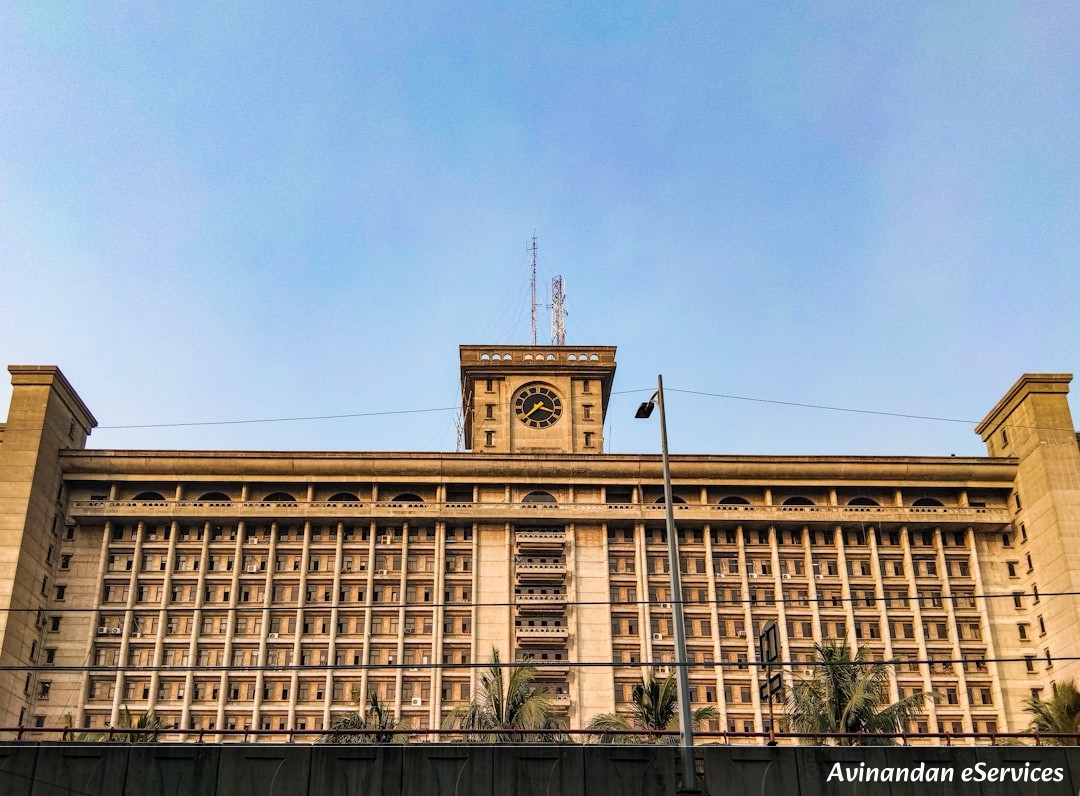
The Unprecedented Tenth: Nitish Kumar Sworn in as Bihar's Chief Minister
Patna, Bihar - In a ceremony that marks a significant chapter in India's political history, Janata Dal (United) chief Nitish Kumar was sworn in as the Chief Minister of Bihar for a record tenth time on Thursday, November 20, 2025. The grand event, held at Patna's historic Gandhi Maidan, was a display of the National Democratic Alliance's (NDA) formidable strength, following their sweeping victory in the recent state assembly elections. The swearing-in was attended by a galaxy of top political leaders, including Prime Minister Narendra Modi, Union Home Minister Amit Shah, and BJP National President J.P. Nadda, signifying the importance of this victory for the ruling coalition. Bihar Governor Arif Mohammad Khan administered the oath of office and secrecy to Mr. Kumar and 26 other legislators who will form the new state cabinet. The cabinet composition reflects the power dynamics of the alliance, with 14 ministers from the Bharatiya Janata Party (BJP), 8 from JD(U), and representatives from other NDA partners like LJP (Ram Vilas), HAM(S), and Rashtriya Lok Morcha. Prominent BJP leaders Samrat Choudhary and Vijay Kumar Sinha also took their oaths, expected to continue in their roles as Deputy Chief Ministers.
The 2025 Bihar Assembly elections resulted in a landslide victory for the NDA, which secured a massive 202 out of the 243 seats, a testament to the alliance's enduring appeal in the state. This victory has once again cemented the position of 74-year-old Nitish Kumar, often referred to as 'Sushasan Babu' (the good governance man), as the indispensable leader of Bihar. His political journey, spanning over two decades at the helm of the state, has been characterized by remarkable resilience, strategic alliance shifts, and a governance model focused on development and social welfare, particularly targeting women and Extremely Backward Classes (EBCs). This tenth term is not just a personal milestone for Kumar, making him one of the longest-serving chief ministers in Indian history, but also a moment of political introspection. Analysts are closely watching how this new government will navigate the complexities of coalition politics and address the aspirations of a state that has once again placed its faith in his leadership. The historic mandate and the presence of the national leadership underscore the expectations for continued development and stable governance in Bihar under its seasoned, and now ten-time, Chief Minister.
The Governor's Limits: Supreme Court Delivers a Landmark Advisory Opinion
New Delhi - In a significant constitutional pronouncement, a five-judge Constitution Bench of the Supreme Court on Thursday, November 20, 2025, delivered its advisory opinion on a Presidential Reference concerning the powers of Governors and the President in assenting to bills passed by state legislatures. The unanimous opinion has brought much-needed clarity to the often-contentious relationship between state governments and Raj Bhavans. The Court firmly held that a Governor cannot indefinitely withhold assent to a Bill. Chief Justice of India B.R. Gavai, reading out the opinion, clarified that under Article 200 of the Constitution, a Governor has only three clear options when a bill is presented: grant assent, return the bill to the legislature with a message for reconsideration, or reserve the bill for the consideration of the President. The Court stated that there is no fourth option of 'simpliciter withholding' the bill, effectively ending the practice of pocket vetoes at the state level.
The apex court, however, refrained from setting a fixed timeline for Governors or the President to act on bills, stating that imposing such deadlines would violate the separation of powers and the 'elasticity' preserved in the Constitution. The judgment emphasized that while the actions of a Governor under Article 200 are generally not subject to judicial review on their merits, an “unexplained indefinite delay” could invite limited judicial scrutiny. The Court also rejected the concept of 'deemed assent', where a bill would be considered passed if a decision is not made within a certain period, calling it antithetical to the constitutional framework. This landmark opinion stemmed from a Presidential Reference made in May 2025, following an earlier Supreme Court judgment in a case involving the Governor of Tamil Nadu, which had set a three-month deadline for such decisions. The court's advisory today, while overturning the imposition of a rigid timeline, has strongly affirmed that the elected government must remain in the 'driver's seat' and that a Governor cannot be allowed to frustrate the legislative process through inaction. This ruling is expected to have far-reaching implications for federalism and the balance of power between the executive and the legislature in India.
Red Fort Blast Investigation Widens: NIA Arrests More Suspects in 'White-Collar Terror Module' Probe
New Delhi/Srinagar - The National Investigation Agency (NIA) has intensified its probe into the November 10 car bombing near Delhi's Red Fort, with the arrest of four more prime accused, taking the total number of arrests in the case to six. The powerful blast, which killed at least 15 people and injured over 20, has been officially labeled a terrorist act, with investigators uncovering a sophisticated and deeply entrenched terror network. The four individuals arrested on Thursday were taken into custody from Srinagar, Jammu & Kashmir, and have been identified as Dr. Muzammil Shakeel Ganai, Dr. Adeel Ahmed Rather, Mufti Irfan Ahmad Wagay, and Dr. Shaheen Saeed from Lucknow. These arrests follow earlier detentions of key conspirators who allegedly provided logistical and technical support for the attack.
The investigation has revealed a chilling nexus, with several of the accused being highly educated professionals, including doctors associated with Al Falah University in Faridabad. The suicide bomber has been identified as Umar Un Nabi, an Assistant Professor at the same university. The probe suggests the existence of a 'white-collar terror module' that leverages the expertise of educated individuals for planning and executing attacks. Investigators found that one of the arrested, Jasir Bilal Wani, allegedly provided technical support by modifying drones and attempting to build rockets. The probe is also exploring links to the 2008 Ahmedabad blasts, suggesting a revival and mutation of older terror cells. The blast was carried out using a vehicle-borne Improvised Explosive Device (IED), and CCTV footage showed the car was parked for several hours near the Red Fort before it detonated. The NIA is conducting multi-state search operations and coordinating with various state police forces to dismantle the wider conspiracy. Adding an international dimension, a Pakistani politician has reportedly claimed Islamabad's involvement in the attack, a claim that is likely being investigated by Indian agencies.
PM-KISAN Payout Sparks Online Frenzy: Beneficiary List Becomes Top Google Search
New Delhi - The release of the 21st installment of the Pradhan Mantri Kisan Samman Nidhi (PM-KISAN) scheme has triggered a massive surge in online searches, with terms like 'PM Kisan beneficiary list' and 'PM Kisan status' dominating Google Trends in India. This highlights the immense public interest and reliance on the flagship direct benefit transfer (DBT) scheme. On November 19, Prime Minister Narendra Modi released over ₹18,000 crore, which was directly credited to the bank accounts of more than 9 crore eligible farmer families across the country. Each eligible farmer receives ₹2,000 in this installment, part of the annual financial assistance of ₹6,000 provided in three equal tranches.
The trending searches indicate that crores of farmers are anxiously checking whether the amount has been credited and verifying their eligibility for future installments. The government has made e-KYC (Know Your Customer) mandatory for all beneficiaries to ensure that the benefits reach only genuine farmers and to weed out irregularities. Farmers can complete their e-KYC through OTP-based verification on the PM-KISAN portal, biometric authentication at Common Service Centres (CSCs), or via a mobile-based face authentication app. The government has also been actively removing ineligible beneficiaries from the list. Recent reports suggest that a significant number of farmers could be excluded from receiving the 21st installment due to non-compliance with eligibility criteria, such as incorrect land records, Aadhaar-bank account linking issues, or multiple family members claiming benefits. The high search volume underscores the scheme's widespread impact on the rural economy, providing crucial financial support to farmers for purchasing agricultural inputs and meeting other essential expenses, while also reflecting the challenges and anxieties associated with a large-scale digital welfare program.