Introduction to Probability for RRB Exams
Welcome, future railway professionals! As you gear up for the highly competitive RRB exams like NTPC, Group D, and Technician, it's crucial to master every scoring topic. One such topic in the Mathematics (Quantitative Aptitude) section that often seems tricky but is highly logical and scoring is Probability. What is the chance of rain today? What are the odds of your favourite team winning the match? Our daily lives are filled with questions of chance and uncertainty. Probability is the branch of mathematics that quantifies this uncertainty, and the RRB uses it to test your logical thinking and problem-solving skills. A solid grasp of probability concepts can significantly boost your score and bring you one step closer to your dream government job. This comprehensive guide will break down the topic into simple, manageable parts, starting from the basics and moving to exam-level questions, ensuring you can tackle any probability problem with confidence.
Topic Weightage and Importance
Probability is a staple in the mathematics syllabus for almost all major RRB examinations. While it might not have the same high frequency as topics like Percentage or Time and Work, its importance cannot be understated.
- RRB NTPC: You can expect 1-2 questions in CBT-1 and 2-3 questions in CBT-2. In a high-stakes exam like NTPC CBT-2, these 2-3 questions can be the deciding factor for your selection.
- RRB Group D: Generally, 1-2 questions on probability appear in the Group D exam. These are usually direct formula-based questions.
- RRB Technician (Grade I & III): Similar to other exams, expect 1-2 questions. The difficulty level is typically easy to moderate.
The beauty of this topic is that the questions are often based on a few core concepts. Once you understand these concepts, solving the problems becomes a straightforward process, making it a high-return-on-investment topic for your preparation.
Key Concepts and Formulas
To master probability, you first need to be crystal clear about its fundamental terminology and formulas. Let's build your foundation brick by brick.
1. Basic Terminology
- Random Experiment: An action or operation whose result cannot be predicted with certainty but has a set of all possible outcomes. For example, tossing a coin or rolling a die.
- Outcome: A possible result of a random experiment. For example, getting 'Heads' when a coin is tossed.
- Sample Space (S): The set of all possible outcomes of a random experiment. It is denoted by 'S'. For example, when rolling a die, the sample space S = {1, 2, 3, 4, 5, 6}.
- Event (E): Any subset of a sample space. It is a specific outcome or a set of outcomes you are interested in. For example, the event of getting an even number on a die roll is E = {2, 4, 6}.
2. The Core Formula of Probability
The probability of an event 'E' happening is the ratio of the number of outcomes favorable to the event to the total number of possible outcomes in the sample space.
P(E) = (Number of Favorable Outcomes) / (Total Number of Possible Outcomes) = n(E) / n(S)
- The value of probability always lies between 0 and 1 (inclusive). 0 ≤ P(E) ≤ 1.
- If P(E) = 1, it's a Sure Event (it will definitely happen).
- If P(E) = 0, it's an Impossible Event (it will never happen).
- Complementary Event (E'): The event that 'E' does not happen. The probability of a complementary event is given by P(E') = 1 - P(E).
3. Common Scenarios in RRB Probability Questions
RRB exams typically frame questions around three common scenarios: coins, dice, and playing cards. Let's understand the sample space for each.
Problems on Coins
When a coin is tossed, the outcome is either a Head (H) or a Tail (T). The total number of outcomes for 'n' coins tossed simultaneously is 2n.
- 1 Coin Tossed: S = {H, T}. Total outcomes = 21 = 2.
- 2 Coins Tossed: S = {HH, HT, TH, TT}. Total outcomes = 22 = 4.
- 3 Coins Tossed: S = {HHH, HHT, HTH, THH, HTT, THT, TTH, TTT}. Total outcomes = 23 = 8.
Problems on Dice
A standard die has 6 faces numbered 1 to 6. The total number of outcomes when 'n' dice are rolled simultaneously is 6n.
- 1 Die Rolled: S = {1, 2, 3, 4, 5, 6}. Total outcomes = 61 = 6.
- 2 Dice Rolled: The sample space has 62 = 36 outcomes. It's helpful to visualize this in a table.
Table of Outcomes for Rolling Two Dice:
| 1 | 2 | 3 | 4 | 5 | 6 | |
|---|---|---|---|---|---|---|
| 1 | (1,1) | (1,2) | (1,3) | (1,4) | (1,5) | (1,6) |
| 2 | (2,1) | (2,2) | (2,3) | (2,4) | (2,5) | (2,6) |
| 3 | (3,1) | (3,2) | (3,3) | (3,4) | (3,5) | (3,6) |
| 4 | (4,1) | (4,2) | (4,3) | (4,4) | (4,5) | (4,6) |
| 5 | (5,1) | (5,2) | (5,3) | (5,4) | (5,5) | (5,6) |
| 6 | (6,1) | (6,2) | (6,3) | (6,4) | (6,5) | (6,6) |
Problems on Playing Cards
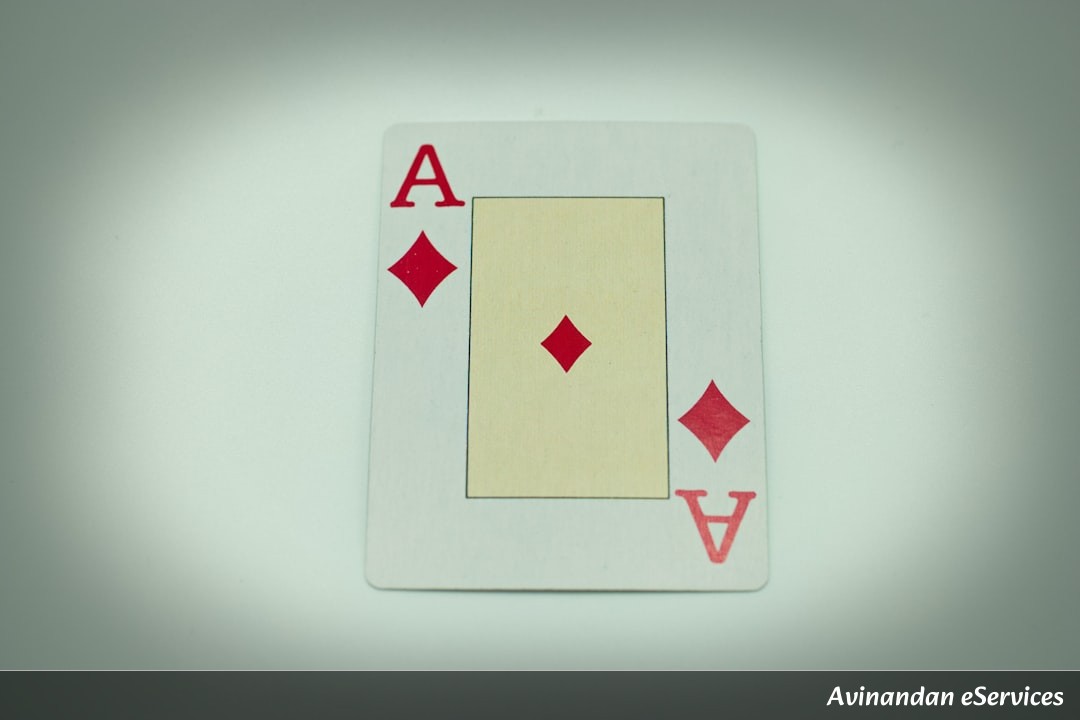
A standard deck of playing cards is a frequent source of questions. Understanding its composition is key.
Structure of a 52-Card Deck:
| Property | Details |
|---|---|
| Total Cards | 52 |
| Suits (4 types) | Hearts (♥), Diamonds (♦) [Red] Spades (♠), Clubs (♣) [Black] |
| Cards per Suit | 13 cards: A, 2, 3, 4, 5, 6, 7, 8, 9, 10, J, Q, K |
| Color Distribution | 26 Red Cards (13 Hearts + 13 Diamonds) 26 Black Cards (13 Spades + 13 Clubs) |
| Face Cards (12 total) | Jack (J), Queen (Q), King (K). There are 3 face cards in each of the 4 suits. |
| Aces | 4 Aces (one in each suit). Note: Aces are not considered face cards. |
4. Probability Rules (Addition & Multiplication)
Addition Rule (OR): Used when we want the probability of event A OR event B happening.
If A and B are mutually exclusive (cannot happen at the same time), then P(A or B) = P(A) + P(B).
Multiplication Rule (AND): Used for independent events (outcome of one doesn't affect the other).
The probability of both event A AND event B happening is P(A and B) = P(A) * P(B).
Solved Examples (Step-by-Step)
Let's apply these concepts to solve some typical RRB exam questions.
Example 1: The Dice Roll
Question: Two dice are rolled simultaneously. What is the probability of getting a sum of 9?
Solution:
- Step 1: Find the Total Number of Outcomes (Sample Space).
When two dice are rolled, the total number of outcomes is 6 × 6 = 36. So, n(S) = 36. - Step 2: Find the Number of Favorable Outcomes.
We need the pairs whose sum is 9. Let's list them: (3, 6), (4, 5), (5, 4), and (6, 3).
The number of favorable outcomes is 4. So, n(E) = 4. - Step 3: Apply the Probability Formula.
P(Sum = 9) = n(E) / n(S) = 4 / 36. - Step 4: Simplify the Fraction.
P(Sum = 9) = 1/9.
Answer: The probability of getting a sum of 9 is 1/9.
Example 2: The Bag of Balls
Question: A bag contains 5 red and 3 green balls. If two balls are drawn at random, what is the probability that both balls are red?
Solution:
- Step 1: Find the Total Number of Outcomes.
We are drawing 2 balls from a total of (5 + 3) = 8 balls. The total number of ways to do this is given by the combination formula nCr = n! / (r! * (n-r)!).
Total ways = 8C2 = (8 × 7) / (2 × 1) = 28. So, n(S) = 28. - Step 2: Find the Number of Favorable Outcomes.
We want to draw 2 red balls from the 5 available red balls.
Favorable ways = 5C2 = (5 × 4) / (2 × 1) = 10. So, n(E) = 10. - Step 3: Apply the Probability Formula.
P(Both Red) = n(E) / n(S) = 10 / 28. - Step 4: Simplify the Fraction.
P(Both Red) = 5/14.
Answer: The probability of drawing two red balls is 5/14.
Example 3: The Card Draw
Question: From a well-shuffled deck of 52 cards, one card is drawn at random. What is the probability that the card is either a King or a Spade?
Solution:
- Step 1: Identify the Total Number of Outcomes.
The total number of cards is 52. So, n(S) = 52. - Step 2: Find the Probability of Each Event Separately.
Let A be the event of drawing a King. There are 4 Kings. P(A) = 4/52 = 1/13.
Let B be the event of drawing a Spade. There are 13 Spades. P(B) = 13/52 = 1/4. - Step 3: Check for Overlap (Mutually Exclusive or Not).
Is there a card that is both a King and a Spade? Yes, the 'King of Spades'. This means the events are NOT mutually exclusive. The overlapping event is 'King of Spades'.
P(A and B) = Probability of drawing the King of Spades = 1/52. - Step 4: Apply the Correct Addition Rule.
For non-mutually exclusive events, P(A or B) = P(A) + P(B) - P(A and B).
P(King or Spade) = (4/52) + (13/52) - (1/52) = (4 + 13 - 1) / 52 = 16/52. - Step 5: Simplify the Fraction.
P(King or Spade) = 4/13.
Answer: The probability of drawing a King or a Spade is 4/13.
Common Mistakes to Avoid
Many aspirants lose marks due to silly mistakes. Be aware of these common pitfalls:
- Incorrect Sample Space: Rushing and miscalculating the total number of outcomes is the most common error. For two dice, it's 36, not 12. For three coins, it's 8, not 6. Always double-check n(S).
- Misinterpreting 'At Least' and 'At Most': 'At least 2' means 2 or more. 'At most 2' means 0, 1, or 2. Reading the question carefully is key. Often, calculating the complement is easier (e.g., P(at least one) = 1 - P(none)).
- Forgetting Card Deck Details: Not knowing the number of face cards, suits, or colors can lead to immediate incorrect answers. Revise the card structure table.
- Confusing Permutation and Combination: When the order of selection doesn't matter (like drawing balls or cards), use combinations (nCr). Permutations (nPr) are used when order matters. Most RRB probability questions use combinations.
- Addition vs. Multiplication: Remember 'OR' generally means addition, and 'AND' generally means multiplication. Be careful with dependencies between events.
Practice Questions with Solutions
Now it's your turn to practice! Solve these questions and then check your answers with the solutions provided below.
- Three unbiased coins are tossed. What is the probability of getting exactly two heads?
- A single die is rolled. What is the probability of getting a prime number?
- From a deck of 52 cards, what is the probability of drawing a red face card?
- A bag contains 6 white, 4 red, and 9 black balls. If 3 balls are drawn at random, what is the probability that all of them are black?
- Two dice are rolled. Find the probability that the sum is a multiple of 4.
- What is the probability that a leap year selected at random will contain 53 Sundays?
- In a lottery of 50 tickets numbered 1 to 50, one ticket is drawn. What is the probability that the number on the ticket is a multiple of 3 or 5?
Solutions to Practice Questions
- Solution: Total outcomes for 3 coins = 23 = 8. Favorable outcomes (exactly two heads) are {HHT, HTH, THH}, which are 3. Probability = 3/8.
- Solution: Total outcomes for a die = 6. Prime numbers on a die are {2, 3, 5}, which are 3. Probability = 3/6 = 1/2.
- Solution: Total cards = 52. Face cards are J, Q, K. There are 3 face cards in Hearts (red) and 3 in Diamonds (red). Total red face cards = 3 + 3 = 6. Probability = 6/52 = 3/26.
- Solution: Total balls = 6 + 4 + 9 = 19. Total ways to draw 3 balls = 19C3 = (19*18*17)/(3*2*1) = 969. Favorable ways (drawing 3 black balls from 9) = 9C3 = (9*8*7)/(3*2*1) = 84. Probability = 84/969. (Simplify by dividing by 3) = 28/323.
- Solution: Total outcomes = 36. Favorable sums (multiples of 4) are 4, 8, and 12. Sum 4: {(1,3), (2,2), (3,1)} -> 3 ways. Sum 8: {(2,6), (3,5), (4,4), (5,3), (6,2)} -> 5 ways. Sum 12: {(6,6)} -> 1 way. Total favorable outcomes = 3 + 5 + 1 = 9. Probability = 9/36 = 1/4.
- Solution: A leap year has 366 days. 366 days = 52 weeks and 2 odd days. The 52 weeks already contain 52 Sundays. The probability of having 53 Sundays depends on these 2 odd days. The possible combinations for these 2 days are (Sun, Mon), (Mon, Tue), (Tue, Wed), (Wed, Thu), (Thu, Fri), (Fri, Sat), (Sat, Sun). Total combinations = 7. The favorable combinations for a Sunday are (Sun, Mon) and (Sat, Sun), which are 2. Probability = 2/7.
- Solution: Total tickets = 50. Multiples of 3 up to 50 = 16 (3, 6, ..., 48). Multiples of 5 up to 50 = 10 (5, 10, ..., 50). Multiples of both 3 and 5 (i.e., multiples of 15) = 3 (15, 30, 45). Using the addition rule: Number of favorable outcomes = (Multiples of 3) + (Multiples of 5) - (Multiples of both) = 16 + 10 - 3 = 23. Probability = 23/50.
Frequently Asked Questions (FAQs)
Q1: Do I need to learn Permutations and Combinations (P&C) to solve Probability questions for RRB exams?
A1: Yes, a basic understanding of combinations (specifically the nCr formula) is essential. As seen in the 'bag of balls' example, it's used to calculate the total and favorable number of ways when selecting items from a group. You don't need to go very deep into P&C, but the basics of selection are a must.
Q2: What is the difference between mutually exclusive and independent events?
A2: Mutually exclusive events cannot happen at the same time. E.g., when you roll a single die, you cannot get both a 2 and a 5. Independent events are those where the outcome of one does not affect the outcome of the other. E.g., tossing a coin and then rolling a die are independent events.
Q3: Is there a quick way to find the sample space for 'at least' or 'at most' questions?
A3: Yes, using the complement rule is often faster. For example, to find the probability of getting 'at least one head' when tossing 3 coins, it's easier to calculate the probability of its complement, which is 'getting no heads' (i.e., all tails, TTT). P(no heads) = 1/8. Then, P(at least one head) = 1 - P(no heads) = 1 - 1/8 = 7/8.
Conclusion and Final Tips
Probability is a fascinating and highly logical topic. It might seem intimidating with its unique terminology, but as we've seen, it boils down to one simple formula: Favorable Outcomes / Total Outcomes. The entire challenge lies in correctly identifying these two values. To conquer this topic for your RRB NTPC, Group D, or Technician exam, follow these final tips:
- Strengthen Your Basics: Make sure you are absolutely clear on the concepts of sample space, events, and the structure of cards and dice.
- Practice, Practice, Practice: The more varied problems you solve, the more comfortable you will become with different question patterns.
- Analyze Previous Year Papers: Go through the previous year question papers of RRB exams to understand the exact type and difficulty level of probability questions asked.
- Focus on Accuracy: Probability questions often involve fractions and calculations. Be careful and avoid silly errors to ensure you secure these easy marks.
Stay focused, keep practicing, and you will undoubtedly turn Probability into one of your strongest scoring areas. All the best for your preparation!