Arjun: Mira, look at this picture in my history book! It’s a Roman Emperor, and his robe is such an amazing, deep purple colour. It almost seems to glow! I’ve never seen a purple quite like that. Was it just a special paint?
Mira: Oh, that’s not just any purple, Arjun. That’s Tyrian Purple! And it wasn’t made from paint or berries. It came from something much more surprising: sea snails!
Arjun: No way! Slimy, slow-moving snails? How can you get a colour that brilliant from a snail? That sounds like a prank.
Mira: It’s totally true! It’s one of the most fascinating stories in the history of science and colour. For thousands of years, this was the most valuable and sought-after dye in the world, worth more than its weight in gold.
How Do You Get Purple from a Snail?
Arjun: More than gold? For a colour? Okay, you have to tell me how it works. Did they just… crush the snails?
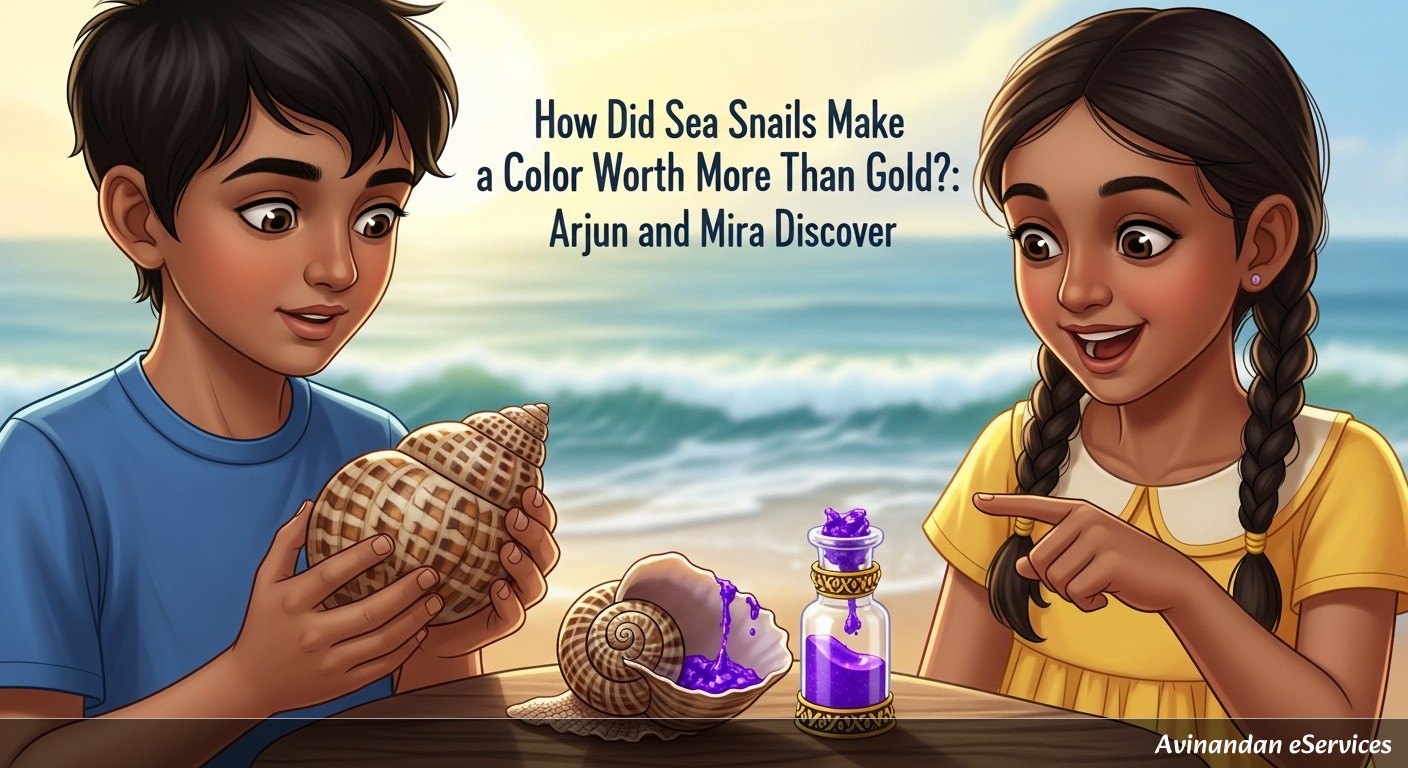
Mira: Sort of, but it’s more complex than that. The secret belonged to a specific type of sea snail, the Bolinus brandaris, or the spiny dye-murex. These snails have a special little gland, and if they are poked or get scared, they produce a few drops of a thick, stinky mucus.
Arjun: Ew, stinky mucus! This story is getting grosser and better at the same time. What happens to the mucus?
Mira: This is the magical part! When the mucus first comes out, it’s actually clear or a pale yellow. But when it’s exposed to sunlight and the oxygen in the air, a chemical reaction called photo-oxidation begins. The liquid slowly changes colour. It goes from yellow to green, then to blue, and finally settles into that incredibly deep, vibrant purple you see in your book. It’s like a chemistry experiment happening right in the sunshine!
Arjun: Wow! So the snail makes the ingredients, and the sun is the chef that cooks it into the right colour! But you said it was super expensive. Why?
Mira: Think about how small a snail is, and how it only produces a few drops of this liquid. To get enough dye for just the purple trim on one Roman senator’s toga, they needed to collect and process over ten thousand snails! Imagine that!
A Colour for Kings and Emperors
Arjun: Ten thousand! That’s a mountain of snails! No wonder it was so expensive. So, only really rich people could afford it?
Mira: Exactly! The people who first figured out this process were the ancient Phoenicians, from a city called Tyre—that's why it's called Tyrian purple. They kept the method a secret and became incredibly wealthy trading it. Later, in the Roman Empire, it became the ultimate status symbol. There were even laws, called sumptuary laws, that controlled who could wear it. At one point, only the Emperor himself was allowed to wear a toga made completely of Tyrian purple.
Arjun: So if you saw someone wearing that colour, you knew they were the most powerful person around. That’s like a superhero costume for an emperor! But wait… if they were processing thousands of snails, what did it smell like?
Mira: Ha! You’ve hit on the smelly secret of the ancient world’s most beautiful colour. The process of \textracting the mucus, letting it sit in salt water, and heating it up was famously stinky. Ancient writers often complained about the terrible smell that came from the dye-works. They were usually located on the edge of town for a good reason! So, the most beautiful colour came with the world's worst smell.
The Un-fadeable Science
Arjun: That’s hilarious! So, what makes the colour so special chemically? Why didn’t it just wash out or fade in the sun like my red t-shirt does?
Mira: That’s the other amazing scientific part. The key chemical compound in the dye is 6,6'-dibromoindigo. The ‘indigo’ part is similar to the blue dye you can get from plants. But the special part is the ‘dibromo,’ which means it has two bromine atoms attached to the molecule. The snails get this bromine from the seaweed and other things they eat in the ocean. These bromine atoms make the dye molecule incredibly stable. Instead of fading in the sunlight, Tyrian purple actually becomes brighter and more beautiful with exposure to the sun and weather! It was the world's first truly colourfast dye.
Arjun: It gets *brighter* with sunlight? That’s the opposite of every other colour! So it’s rare, has a cool science-y name, and is basically permanent. I get why it was so famous now.
So, What Did We Learn Today?
Mira: It’s pretty amazing, isn't it? We learned how ancient science, biology, and chemistry all came together. Here’s a quick recap:
- The world's most valuable ancient colour, Tyrian purple, was made from the mucus of thousands of sea snails per garment.
- The purple colour was created by a chemical reaction when the snail's mucus was exposed to sunlight and air (oxidation).
- It was so rare and expensive that in ancient Rome, it became a symbol of royalty and power, often reserved just for the Emperor.
- The process of making the dye was famously stinky because it involved fermenting huge numbers of snails.
- The chemical that makes the dye, 6,6'-dibromoindigo, is incredibly stable, meaning the colour doesn't fade—it actually gets brighter with sunlight!
Arjun: So the next time I see a boring-looking snail, I’ll remember it might have a royal, super-stinky, and scientific secret inside. Who knew something so small could change history?