Introduction to the Human Endocrine System
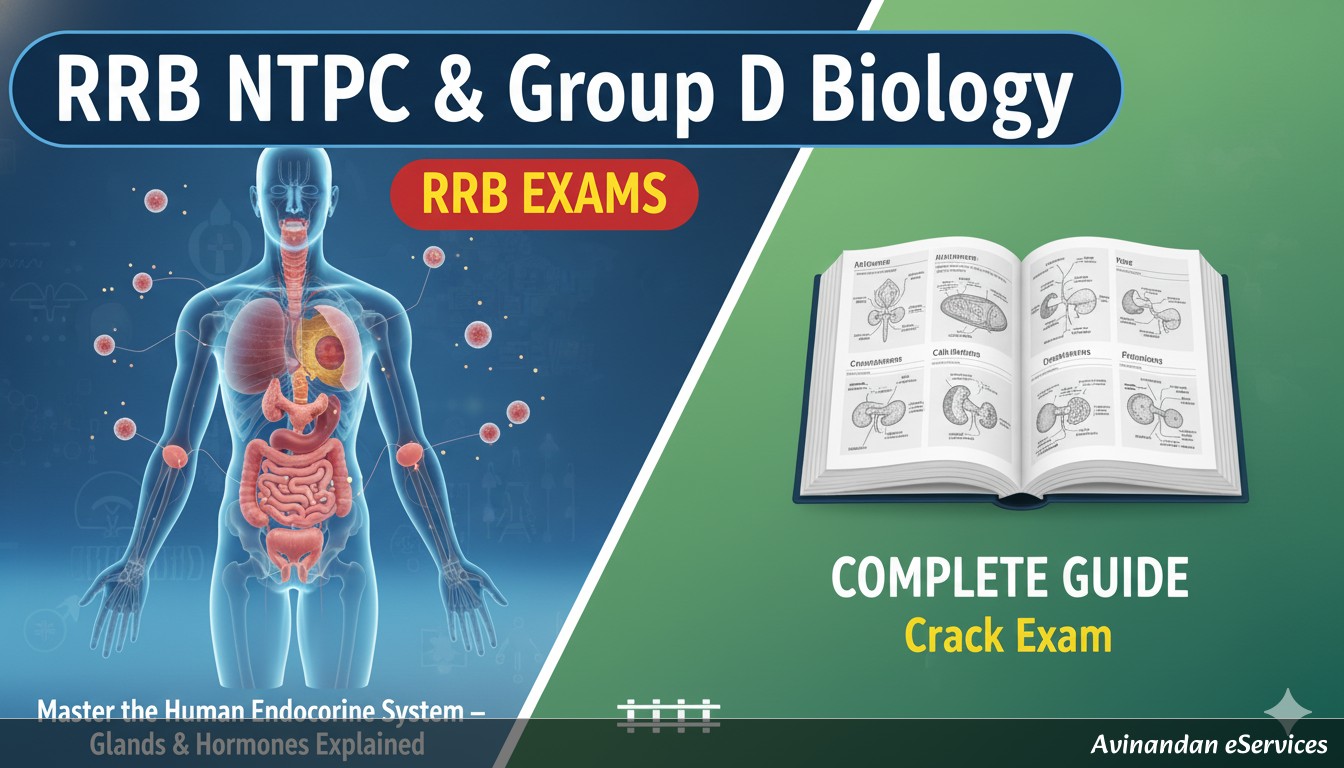
Welcome, future railway professionals! As you prepare for the highly competitive RRB NTPC, Group D, and Technician exams, a thorough understanding of General Science, especially Human Biology, is non-negotiable. Among the most frequently tested topics is the Human Endocrine System. This complex network of glands and hormones acts as the body's chemical messaging service, regulating everything from your metabolism and growth to your mood and sleep cycles. While the nervous system uses electrical impulses for rapid communication, the endocrine system uses chemical messengers called hormones for slower, more sustained control. Mastering this topic will not only fetch you crucial marks but also give you a fascinating insight into how your own body works. This comprehensive guide is designed to break down the complexities of the endocrine system into easy-to-understand concepts, complete with tables, examples, and practice questions tailored for your RRB exam success.
What are Glands? Types of Glands
A gland is an organ that produces and releases substances that perform a specific function in the body. In the human body, glands are broadly classified into two main types: Exocrine Glands and Endocrine Glands.
Exocrine Glands
These glands secrete their products through a duct onto an \texternal or internal surface. Their secretions do not enter the bloodstream directly. Examples include sweat glands (secreting sweat), salivary glands (secreting saliva), and the pancreas (in its exocrine role, secreting digestive enzymes into the small intestine).
Endocrine Glands
These are the stars of our topic. Endocrine glands are ductless glands. They release their chemical products, called hormones, directly into the bloodstream. The blood then carries these hormones to target cells and organs throughout the body, where they bind to specific receptors and trigger a response. The entire network of these ductless glands constitutes the endocrine system.
| Feature | Exocrine Glands | Endocrine Glands |
|---|---|---|
| Presence of Ducts | Present (Ducts carry secretions) | Absent (Ductless) |
| Method of Secretion | Secretions are released onto a surface (e.g., skin, digestive tract) via ducts. | Hormones are released directly into the bloodstream. |
| Examples | Salivary glands, sweat glands, mammary glands, sebaceous glands. | Pituitary gland, thyroid gland, adrenal glands, pineal gland. |
| Mixed Gland Example | Pancreas (acts as both exocrine by releasing digestive enzymes and endocrine by releasing insulin and glucagon). | |
Major Endocrine Glands and Their Hormones
Let's take a journey through the body and explore the major endocrine glands, the hormones they secrete, and their vital functions. This is the most important section for your RRB exams.
1. The Hypothalamus
Often called the 'master switchboard', the hypothalamus is a small region of the brain that connects the nervous system to the endocrine system via the pituitary gland. Its primary role is to control the pituitary gland by producing 'releasing hormones' and 'inhibiting hormones'. For example, Gonadotropin-releasing hormone (GnRH) from the hypothalamus tells the pituitary to release gonadotropins, while Somatostatin inhibits the release of growth hormone.
2. The Pituitary Gland (The Master Gland)
The pituitary gland, a pea-sized gland located at the base of the brain, is often called the 'Master Gland' because it controls the functions of many other endocrine glands. It is divided into two main parts: the Anterior Pituitary and the Posterior Pituitary.
- Anterior Pituitary: Produces and releases its own hormones.
- Growth Hormone (GH): Stimulates growth, cell reproduction, and regeneration. Its over-secretion can lead to Gigantism, and under-secretion can lead to Dwarfism.
- Thyroid-Stimulating Hormone (TSH): Stimulates the thyroid gland to produce thyroxine.
- Adrenocorticotropic Hormone (ACTH): Stimulates the adrenal cortex to produce its hormones (like cortisol).
- Follicle-Stimulating Hormone (FSH): Stimulates sperm production in males and follicle development in females.
- Luteinizing Hormone (LH): Stimulates testosterone production in males and ovulation in females.
- Prolactin (PRL): Stimulates milk production in females after childbirth.
- Posterior Pituitary: Does not produce hormones but stores and releases hormones made by the hypothalamus.
- Antidiuretic Hormone (ADH) or Vasopressin: Controls water balance by causing the kidneys to reabsorb more water. Its deficiency causes a condition called Diabetes Insipidus.
- Oxytocin: Stimulates uterine contractions during childbirth and milk ejection during breastfeeding. Often called the 'love hormone' or 'birth hormone'.
3. The Pineal Gland
Located deep in the center of the brain, the pineal gland produces Melatonin. This hormone is primarily responsible for regulating the body's circadian rhythms, also known as the sleep-wake cycle. Melatonin production is stimulated by darkness and inhibited by light.
4. The Thyroid Gland
The thyroid is a butterfly-shaped gland located in the neck, in front of the trachea. It plays a major role in metabolism, growth, and development.
- Thyroxine (T4) and Triiodothyronine (T3): These hormones regulate the body's basal metabolic rate (BMR). They are essential for normal physical and mental development. Iodine is a crucial element for the synthesis of these hormones.
- Calcitonin: This hormone helps regulate blood calcium levels by decreasing them. It works in opposition to the parathyroid hormone.
Common Disorders:
- Hypothyroidism: Underactivity of the thyroid gland, leading to weight gain, fatigue, and slowed metabolism. A severe deficiency of iodine can cause the thyroid gland to swell, a condition known as Goitre.
- Hyperthyroidism: Overactivity of the thyroid gland, leading to weight loss, rapid heartbeat, and anxiety.
5. The Parathyroid Glands
These are four tiny glands located on the posterior surface of the thyroid gland. They secrete Parathyroid Hormone (PTH). The primary function of PTH is to increase the level of calcium in the blood by stimulating the release of calcium from bones, increasing its absorption in the intestines, and reducing its excretion by the kidneys. It acts antagonistically to Calcitonin.
6. The Thymus Gland
Located in the upper part of the chest, behind the sternum, the thymus gland is most active during childhood and gradually shrinks after puberty. It secretes Thymosin, a hormone that plays a crucial role in the development and maturation of T-lymphocytes (T-cells), a key component of the immune system.
7. The Adrenal Glands
These are two glands that sit on top of each kidney. Each adrenal gland has two distinct parts: the outer Adrenal Cortex and the inner Adrenal Medulla.
- Adrenal Cortex: Produces corticosteroid hormones.
- Cortisol: Known as the 'stress hormone', it increases blood sugar, suppresses the immune system, and aids in fat, protein, and carbohydrate metabolism.
- Aldosterone: Regulates salt and water balance in the body, which in turn affects blood pressure.
- Adrenal Medulla: Produces catecholamines.
- Adrenaline (Epinephrine) and Noradrenaline (Norepinephrine): These are the famous 'fight or flight' hormones. They are released in response to stress, danger, or excitement. They increase heart rate, blood pressure, and blood glucose levels, preparing the body for rapid action.
8. The Pancreas
The pancreas is a unique gland that has both exocrine and endocrine functions. Its endocrine function is carried out by cell clusters called the Islets of Langerhans.
- Insulin: Secreted by Beta (β) cells, insulin lowers blood glucose levels by promoting the absorption of glucose from the blood into liver, fat, and skeletal muscle cells.
- Glucagon: Secreted by Alpha (α) cells, glucagon raises blood glucose levels by stimulating the liver to convert stored glycogen into glucose (glycogenolysis) and release it into the bloodstream.
Common Disorder: Diabetes Mellitus is a condition caused by either a deficiency of insulin or the body's inability to use insulin effectively, leading to high blood sugar levels.
9. The Gonads (Testes and Ovaries)
The gonads are the primary reproductive organs.
- Testes (in males): Produce Testosterone, the primary male sex hormone. It is responsible for the development of male secondary sexual characteristics (deep voice, facial hair) and sperm production.
- Ovaries (in females): Produce Estrogen and Progesterone. Estrogen is responsible for female secondary sexual characteristics (breast development, menstruation). Progesterone plays a crucial role in the menstrual cycle and in maintaining the early stages of pregnancy.
Summary Table of Endocrine Glands and Hormones
| Gland | Hormone(s) | Key Function(s) |
|---|---|---|
| Pituitary Gland | GH, TSH, ACTH, FSH, LH, Prolactin, ADH, Oxytocin | Controls other glands; regulates growth, water balance, and childbirth. |
| Thyroid Gland | Thyroxine (T4), Triiodothyronine (T3), Calcitonin | Regulates metabolism and blood calcium levels. |
| Parathyroid Glands | Parathyroid Hormone (PTH) | Increases blood calcium levels. |
| Adrenal Glands | Cortisol, Aldosterone, Adrenaline, Noradrenaline | Manages stress, salt/water balance, and the 'fight or flight' response. |
| Pancreas | Insulin, Glucagon | Regulates blood glucose levels. |
| Pineal Gland | Melatonin | Regulates the sleep-wake cycle. |
| Thymus Gland | Thymosin | Develops the immune system (T-cells). |
| Ovaries | Estrogen, Progesterone | Regulates female reproductive system and secondary sexual characteristics. |
| Testes | Testosterone | Regulates male reproductive system and secondary sexual characteristics. |
Solved Examples (MCQ Style for RRB Exams)
Let's test your understanding with some questions in the format you'll see in your RRB exam.
Question 1: Which gland is often referred to as the 'Master Gland' of the endocrine system?
- Thyroid Gland
- Adrenal Gland
- Pituitary Gland
- Pineal Gland
Solution: (c) Pituitary Gland. The pituitary gland is called the 'Master Gland' because it produces hormones that control the functions of several other endocrine glands, such as the thyroid, adrenal glands, and gonads.
Question 2: Deficiency of which of the following causes Goitre?
- Calcium
- Iodine
- Iron
- Sodium
Solution: (b) Iodine. The thyroid gland requires iodine to produce thyroxine and triiodothyronine hormones. A deficiency of iodine in the diet leads to the enlargement of the thyroid gland, a condition known as Goitre, as the gland works harder to produce hormones.
Question 3: Which hormone is responsible for the 'fight or flight' response?
- Insulin
- Thyroxine
- Oxytocin
- Adrenaline (Epinephrine)
Solution: (d) Adrenaline (Epinephrine). Adrenaline is secreted by the adrenal medulla during stressful or emergency situations. It prepares the body for immediate action ('fight or flight') by increasing heart rate, blood pressure, and energy supplies.
Question 4: Which of the following hormones is responsible for lowering blood sugar levels?
- Glucagon
- Cortisol
- Insulin
- Growth Hormone
Solution: (c) Insulin. Insulin, produced by the beta cells of the pancreas, facilitates the uptake of glucose from the blood into the cells, thus lowering blood sugar levels. Glucagon has the opposite effect.
Question 5: The regulation of the sleep-wake cycle in humans is controlled by which hormone?
- Melatonin
- Serotonin
- Progesterone
- Testosterone
Solution: (a) Melatonin. The pineal gland secretes melatonin, which regulates the body's internal clock or circadian rhythm, primarily the sleep-wake cycle.
Practice Questions for RRB Aspirants
Now it's your turn! Solve these questions to solidify your knowledge.
- Which endocrine gland is present in the neck?
- Pituitary
- Adrenal
- Thymus
- Thyroid
- Which hormone regulates the balance of calcium and phosphate in the blood?
- Growth Hormone
- Parathyroid Hormone
- Melatonin
- Adrenaline
- Diabetes Mellitus is caused by the malfunctioning of which gland?
- Pineal
- Pancreas
- Thyroid
- Ovaries
- The hormone responsible for uterine contractions during childbirth is:
- Prolactin
- Estrogen
- Oxytocin
- Progesterone
- Which of these is NOT secreted by the anterior pituitary?
- Growth Hormone (GH)
- Thyroid-Stimulating Hormone (TSH)
- Antidiuretic Hormone (ADH)
- Luteinizing Hormone (LH)
- The Islets of Langerhans are found in which organ?
- Liver
- Stomach
- Pancreas
- Kidney
- Which gland plays a vital role in the functioning of the immune system by maturing T-cells?
- Thymus
- Thyroid
- Pineal
- Adrenal
- Which male hormone is responsible for the development of secondary sexual characteristics?
- Estrogen
- Progesterone
- Cortisol
- Testosterone
- Aldosterone, a hormone secreted by the adrenal cortex, helps in the regulation of:
- Blood sugar
- Stress response
- Salt and water balance
- Metabolism
- Which of the following is an example of a gland that is both exocrine and endocrine?
- Thyroid
- Pituitary
- Pancreas
- Liver
Solutions to Practice Questions
- d) Thyroid
- b) Parathyroid Hormone
- b) Pancreas
- c) Oxytocin
- c) Antidiuretic Hormone (ADH) - It is released by the posterior pituitary.
- c) Pancreas
- a) Thymus
- d) Testosterone
- c) Salt and water balance
- c) Pancreas
Conclusion
The Human Endocrine System is a cornerstone of the biology syllabus for RRB exams. A clear understanding of the major glands, the hormones they secrete, their specific functions, and the diseases associated with their malfunction is essential. Use the summary table for quick revisions and practice as many MCQs as possible to build confidence. By mastering these concepts, you are taking a significant step towards securing a top rank in your upcoming railway examination. Keep studying, stay consistent, and success will be yours. All the best!