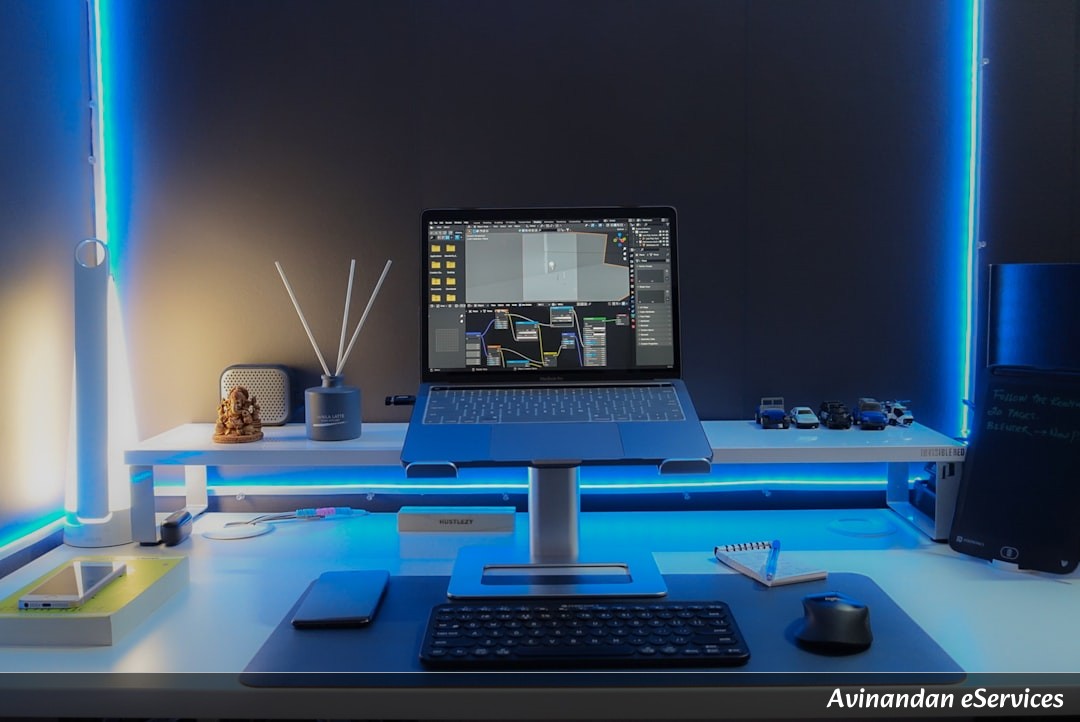
Introduction: What is the Full Form of COMPUTER?
The full form of COMPUTER is Common Operating Machine Purposely Used for Technological and Educational Research. While this is a widely accepted expansion, it's important to note that "computer" is not a true acronym. The word itself is derived from the Latin word "computare," which means "to calculate" or "to compute." Originally, the term "computer" referred to a person who performed calculations.
Detailed Breakdown of the Acronym
Though not an official acronym, the breakdown provides insight into the versatile nature of these machines:
- C - Common: Refers to the widespread and general-purpose use of computers in various fields.
- O - Operating: Describes the function of the machine to process and manipulate data.
- M - Machine: Signifies that it is a mechanical and electronic device.
- P - Purposely: Implies that computers are designed with specific functions in mind.
- U - Used for: Highlights its role as a tool for various applications.
- T - Technological: Points to its use in the advancement of technology.
- E - Educational: Emphasizes its importance in learning and research.
- R - Research: Acknowledges its critical role in scientific and academic research.
History and Purpose
The term "computer" was first used in the early 17th century to describe a person who performed calculations. It wasn't until the mid-20th century that the word began to refer to a machine. The conceptual foundation for the modern computer was laid by English mathematician and inventor Charles Babbage in the 19th century. He is often called the "father of the computer" for his designs of the Difference Engine and the Analytical Engine. The Analytical Engine, first described in 1837, had the fundamental components of a modern computer, including an arithmetic logic unit, control flow, and integrated memory. However, due to technological and financial limitations, these machines were never fully built in his lifetime. The principle of the modern computer was further developed by Alan Turing in his 1936 paper, which introduced the concept of a "Universal Computing machine."
Importance and Usage
Today, computers are indispensable in nearly every aspect of life. They are used in homes for entertainment, communication, and managing household budgets. In education, computers have revolutionized learning by providing access to vast amounts of information and enabling online courses. Businesses rely on computers for a multitude of tasks, including data storage, project management, marketing, and communication. Governments use computers for everything from traffic control to managing public services. Furthermore, computers are critical in scientific research, healthcare for patient monitoring and medical imaging, and in the military for tracking and defense systems.
Frequently Asked Questions (FAQs) about COMPUTER
- What is the most accepted full form of COMPUTER?
The most widely accepted full form is Common Operating Machine Purposely Used for Technological and Educational Research. - Who is known as the father of the computer?
Charles Babbage is widely regarded as the father of the computer for his concepts of the Difference Engine and the Analytical Engine in the 19th century. - Is "COMPUTER" actually an acronym?
No, the word "computer" is not a true acronym. It is derived from the Latin word "computare," meaning "to calculate." The expanded form is a backronym created to describe its functions. - What are the main components of a computer system?
A basic computer system consists of a Central Processing Unit (CPU), memory (RAM), storage (like a hard drive or SSD), input devices (keyboard, mouse), and output devices (monitor, printer).