Introduction to the Mughal Empire for RRB Exams
The Mughal Empire stands as one of the most magnificent and historically significant eras in Indian history. Spanning over three centuries, the Mughal dynasty profoundly influenced the subcontinent's culture, administration, architecture, and socio-economic fabric. For aspirants preparing for Indian Railway Recruitment Board (RRB) exams such as RRB NTPC, RRB Group D, and RRB Technician, questions based on medieval Indian history—specifically the Mughal Empire—frequently appear in the General Awareness and General Knowledge sections. Understanding the chronological order of emperors, their military campaigns, administrative reforms, revenue systems, and architectural marvels is essential for securing high scores in the competitive examination.
Topic Weightage and Importance
In the General Awareness section of RRB NTPC and RRB Group D examinations, History carries a substantial weightage. Out of the 40 to 50 questions dedicated to General Awareness (depending on the CBT stage), medieval Indian history typically accounts for 2 to 4 questions. Within medieval history, the Mughal Empire is the most heavily tested sub-topic. Aspirants can expect direct questions regarding the founders, key battles, prominent treaties, revenue ministers like Todar Mal, architectural wonders built by Shah Jahan, and administrative terms such as Mansabdari and Jagirdari systems. Mastering this chapter ensures you do not miss out on these high-yielding, factual questions.
Key Concepts and Key Rulers of the Mughal Empire
The Mughal Empire was founded by Zahir-ud-din Muhammad Babur in 1526 after his victory in the First Battle of Panipat. Below is a detailed breakdown of the major Mughal emperors and their historical contributions:
- Babur (1526–1530 AD): Founder of the empire. Defeated Ibrahim Lodi in the First Battle of Panipat (1526), Rana Sanga in the Battle of Khanwa (1527), and Mahmud Lodi in the Battle of Ghagra (1529). Authored his memoirs, Tuzuk-i-Baburi (Baburnama), in the Chagatai Turkic language.
- Humayun (1530–1540 & 1555–1556 AD): Son of Babur. Faced stiff resistance from Sher Shah Suri, who defeated him at Chausa (1539) and Kannauj (1540), forcing Humayun into exile. He regained Delhi in 1555 with the help of Persian forces. Died by falling from the stairs of his library, Dinpanah.
- Akbar the Great (1556–1605 AD): Ascended the throne at a young age under the regency of Bairam Khan. Won the Second Battle of Panipat (1556) against Hemu. Adopted a liberal religious policy, abolished Jizya, founded Din-i Ilahi, and introduced the Mansabdari system of military administration along with Todar Mal's Dahsala land revenue system.
- Jahangir (1605–1627 AD): Known for his sense of justice (Zanjir-i-Adal). Promoted painting and fine arts. Married Nur Jahan, who held significant political influence. Executed the fifth Sikh Guru, Guru Arjan Dev. Sir Thomas Roe visited his court as an ambassador of King James I.
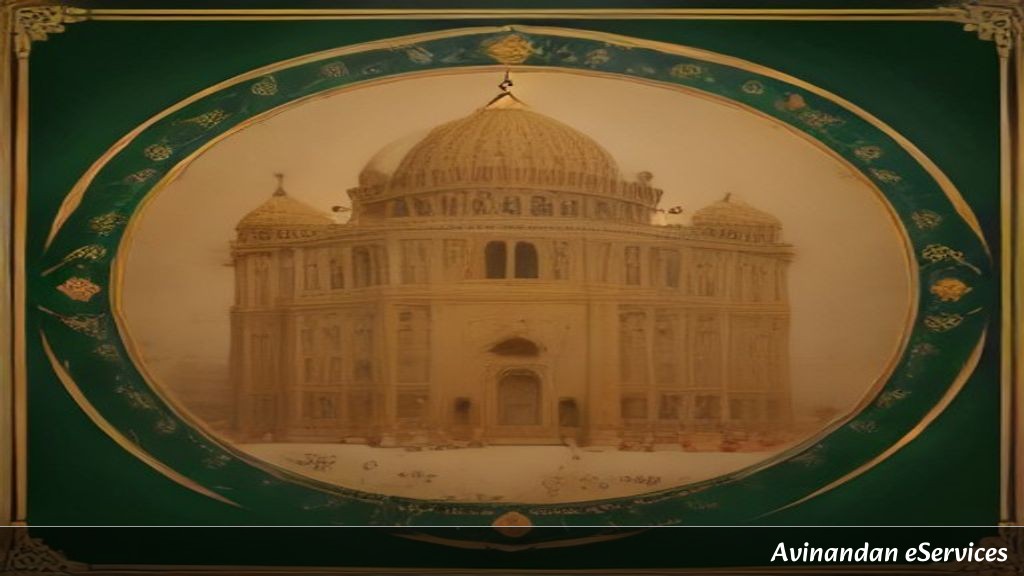
- Shah Jahan (1628–1658 AD): The golden age of Mughal architecture. Constructed the Taj Mahal, Red Fort, Jama Masjid, and Peacock Throne. His reign witnessed severe famines, yet architectural splendor reached its peak. Fought a war of succession among his sons, resulting in Aurangzeb imprisoning him in Agra Fort.
- Aurangzeb (Alamgir) (1658–1707 AD): The last of the Great Mughals. Expanded the empire to its greatest territorial \textent, stretching from Assam to Kabul and down to the Deccan. Re-imposed Jizya tax, executed the ninth Sikh Guru, Guru Tegh Bahadur, and maintained a strained relationship with the Rajputs and Marathas (Shivaji).
Important Administrative and Revenue Terms
RRB exams frequently test technical and administrative terminology from the Mughal period:
- Mansabdari System: A grading system introduced by Akbar to fix rank (Zat) and cavalry status (Sawar) of military officials.
- Zabt / Dahsala System: Land revenue system formulated by Raja Todar Mal, where average yield of crops and prices prevailing over the last 10 years were calculated.
- Jagir: A piece of land assigned to a noble (Jagirdar) in lieu of cash salary.
- Suba: A province governed by a Subedar. Provinces were further divided into Sarkars, Parganas, and Villages.
Solved Examples (Step-by-Step)
Let us review some standard objective questions patterned after recent RRB CBT papers:
Example 1
Question: Who defeated Ibrahim Lodi in the First Battle of Panipat in 1526, thereby laying the foundation of the Mughal Empire?
Step-by-Step Explanation:
1. Analyze the options or historical facts related to the establishment of Mughal rule.
2. Babur, a descendant of Timur and Genghis Khan, invaded India from Kabul.
3. He faced Ibrahim Lodi, the last ruler of the Lodi Dynasty of the Delhi Sultanate, at Panipat in 1526.
4. Babur's superior tactical use of artillery and cavalry tactics (Tulughma) secured a decisive victory.
Correct Answer: Babur
Example 2
Question: Which Mughal emperor introduced the famous Mansabdari system?
Step-by-Step Explanation:
1. Identify the administrative innovations of major Mughal rulers.
2. Akbar undertook \textensive administrative and military restructuring to consolidate his empire.
3. He introduced the Mansabdari system to organize the nobility and military contingents efficiently.
Correct Answer: Akbar
Example 3
Question: The famous autobiographical work Baburnama was originally written in which language?
Step-by-Step Explanation:
1. Recall literary works of the Mughal period.
2. Babur was of Turco-Mongol origin and wrote his personal memoirs in his mother tongue.
3. The mother tongue of Babur was Chagatai Turkic (later translated into Persian by Abdur Rahim Khan-i-Khana during Akbar's reign).
Correct Answer: Chagatai Turkic
Common Mistakes to Avoid
Aspirants often lose marks in medieval history sections due to avoidable conceptual and factual blunders. Keep the following pitfalls in mind:
- Confusing Battles of Panipat: Remember that the First Battle of Panipat (1526) was between Babur and Ibrahim Lodi, the Second Battle (1556) was between Akbar and Hemu, and the Third Battle (1761) was between the Marathas and Ahmad Shah Abdali.
- Mixing up Architectural Builders: Students frequently confuse builders of monuments. For example, Taj Mahal and Red Fort were built by Shah Jahan, whereas Humayun's Tomb was commissioned by Humayun's widow, Bega Begum, during Akbar's reign.
- Misinterpreting Religious Policies: Akbar is known for his liberal policies (abolishing Jizya, introducing Din-i Ilahi), whereas Aurangzeb reversed many of these and re-imposed Jizya. Do not attribute religious intolerance to Akbar.
- Chronological Confusion: Always memorize the exact sequence of the six Great Mughal emperors: Babur → Humayun → Akbar → Jahangir → Shah Jahan → Aurangzeb (BHAKJ-A shortcut can help).
Practice Questions with Solutions
Test your preparation level with the following practice questions:
Q1. In which year was the First Battle of Panipat fought?
A) 1520
B) 1526
C) 1556
D) 1761
Q2. Who was the revenue minister of Akbar who devised the Dahsala system?
A) Birbal
B) Abul Fazl
C) Raja Todar Mal
D) Raja Man Singh
Q3. During whose reign did the famous English traveler Sir Thomas Roe visit the Mughal court?
A) Akbar
B) Jahangir
C) Shah Jahan
D) Aurangzeb
Q4. Which Mughal emperor banned music at his court and prohibited the practice of Jharokha Darshan?
A) Akbar
B) Jahangir
C) Shah Jahan
D) Aurangzeb
Q5. Who translated Babur's memoirs (Baburnama) from Chagatai Turkic into Persian?
A) Abul Fazl
B) Badauni
C) Abdur Rahim Khan-i-Khana
D) Faizi
Q6. The tomb of which Mughal emperor is situated outside India (at Lahore)?
A) Babur
B) Akbar
C) Jahangir
D) Aurangzeb
Answers and Explanations:
- Q1. Answer: B (1526) — Babur defeated Ibrahim Lodi in 1526 at Panipat.
- Q2. Answer: C (Raja Todar Mal) — Todar Mal was Akbar's finance minister who introduced standard land measurement and revenue fixation.
- Q3. Answer: B (Jahangir) — Sir Thomas Roe visited Jahangir's court in 1615 as an envoy of King James I to secure trading rights for the East India Company.
- Q4. Answer: D (Aurangzeb) — Aurangzeb adopted orthodox Islamic policies, banning court music, painting, and traditional imperial customs like Jharokha Darshan.
- Q5. Answer: C (Abdur Rahim Khan-i-Khana) — He translated the Baburnama into Persian during Akbar's reign.
- Q6. Answer: C (Jahangir) — Jahangir is buried at Shahdara Bagh in Lahore, Pakistan. (Babur is buried in Kabul, Afghanistan).
Frequently Asked Questions (FAQs)
Q1. Which RRB exams include questions from the Mughal Empire?
Exams like RRB NTPC (Graduate and Undergraduate levels), RRB Group D, and RRB Technician Grade I & III include questions from Medieval Indian History within their General Awareness syllabus.
Q2. Are dates and chronology important for RRB exams?
Yes, RRB exams frequently ask questions regarding the chronological sequence of rulers, major battles, and the years in which key treaties or monuments were established.
Q3. How should I revise the Mughal administration terms?
Create flashcards for administrative titles like Mansab, Jagir, Subedar, Bakshi, Diwan, and Sadr. Reviewing them weekly will help retain these factual terms easily.
Conclusion and Final Tips
Mastering the Mughal Empire is a vital step toward cracking the General Awareness section of Indian Railway Recruitment Board exams. By structuring your study plan around imperial chronology, administrative frameworks, economic reforms, and architectural achievements, you can confidently tackle any objective question in CBT 1 and CBT 2. Consistent revision, practicing previous years' questions, and avoiding common chronological errors will ensure you secure full marks in this high-weightage topic. Stay dedicated, keep practicing, and success will follow!