Aarav: Hey Saanvi! I was reading about arctic animals today, and I came across something that sounds totally impossible. Can a real animal freeze into a solid rock of ice, stop breathing completely, and then wake up totally fine when spring arrives?
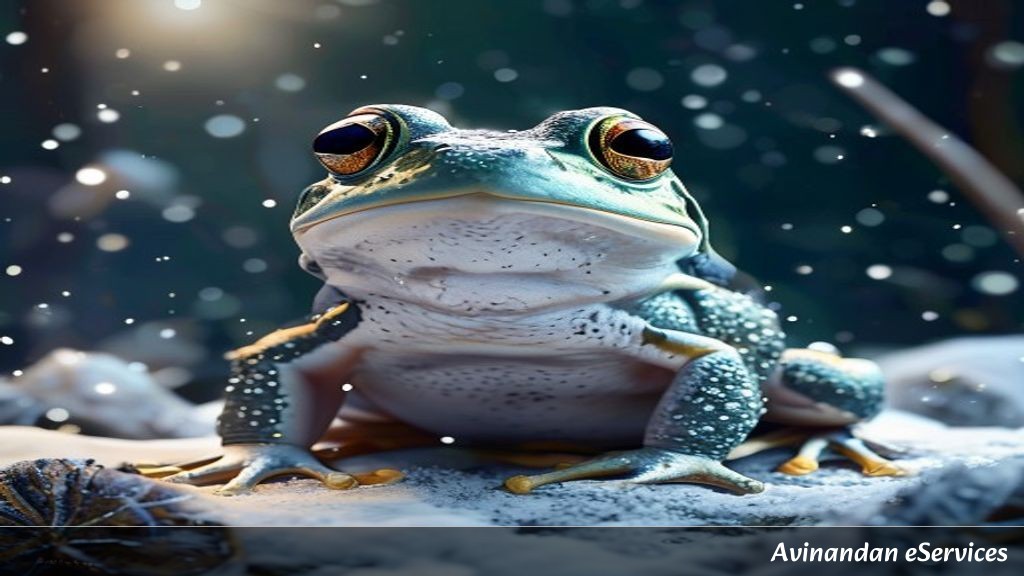
Saanvi: Haha, you must have stumbled upon the incredible story of the Alaskan Wood Frog! Yes, Aarav, it is 100% real. During the chilly winter months in Alaska and Canada, these tiny frogs literally turn into living 'frog-sicles'!
Aarav: Wait, 'frog-sicles'? That sounds like a cold summer snack! But seriously, how is that even scientifically possible? When water inside living tissues freezes, sharp ice crystals usually slice through cell walls like tiny knives and destroy the organs. That's why frostbite is so dangerous for humans!
Saanvi: You hit the nail right on the head, Aarav! Liquid freezing inside a cell expands and tears the cell membrane apart, which kills the cell. But the wood frog, known scientifically as Rana sylvatica, has evolved a mind-blowing survival strategy called cryoprotection.
Aarav: Cryo-protection? That sounds like something straight out of a sci-fi movie! How does it work?
Saanvi: It all starts in autumn when temperatures drop. As soon as ice crystals touch the wood frog's skin, special proteins in its blood trigger ice to start forming—but only in specific places. At the same time, the frog's liver goes into super-drive and starts producing massive amounts of glucose, which is a type of simple sugar.
Aarav: Sugar? So the frog floods its body with sweet syrup?
Saanvi: Exactly! The frog pumps this dense sugar solution deep inside all of its cells. The high concentration of sugar acts like a natural antifreeze. It lowers the freezing point inside the cell, preventing water from turning into sharp ice crystals inside the cell walls.
Aarav: Ah, I get it! So the sugar keeps the liquid inside the cells from freezing. But what about the rest of the frog's body?
Saanvi: That's where the wild part comes in! While the inside of the cells remains liquid and sugary, ice does freeze in the spaces outside the cells—like in the body cavity, around the muscles, and under the skin. Up to 60 to 70 percent of all the water in the frog's body freezes solid!
Aarav: Whoa! So if you picked up an Alaskan wood frog in the middle of January, what would it feel like?
Saanvi: It would feel as hard as a hockey puck and as cold as an ice cube! If you gently bent its leg, it would actually snap because it is frozen solid. Its eyes turn white and opaque, its heart completely stops beating, it stops breathing, and its brain activity drops to zero.
Aarav: That sounds like it's dead! How long can it stay in that frozen state without dying?
Saanvi: It can stay frozen like that for up to seven whole months! It can easily survive shivering temperatures as low as zero degrees Fahrenheit, or minus eighteen degrees Celsius, tucked underneath a blanket of fallen autumn leaves.
Aarav: Seven months without a single heartbeat! That is unbelievable. So what happens when warm weather returns?
Saanvi: When the sunshine of spring warms the forest floor, the thawing process begins from the inside out. As the ice melts, the sugar in the cells is gradually converted back or absorbed. Then, completely on its own without any electric shocks or CPR, the frog's heart spontaneously restarts beating! Within a couple of hours, its lungs inflate, its brain turns back on, and the frog simply hops away to look for breakfast.
Aarav: That is like a real-life magic trick! Are scientists studying these frogs to learn their secrets?
Saanvi: Absolutely! Medical researchers are \textremely interested in wood frogs. Right now, donated human organs like hearts or kidneys can only survive outside the human body for a few hours. If doctors can figure out how to replicate the wood frog's natural cryoprotectant trick, they could freeze human organs for weeks or months, saving thousands of lives around the world!
Aarav: Nature really is the ultimate engineer, isn't it? I am definitely going to tell everyone at school about the frozen frog super-hero tomorrow!
So, What Did We Learn Today?
- The Frozen Wonder: The Alaskan Wood Frog can freeze up to two-thirds of its body liquid during arctic winters without dying.
- Natural Antifreeze: The frog floods its cells with high levels of glucose (sugar), which stops sharp ice crystals from forming inside cell membranes.
- Paused Life: While frozen solid, the frog stops breathing, its heart stops beating, and brain activity pauses for up to seven months.
- Self-Restarting Heart: In spring, as ice melts, the frog's heart miraculously restarts on its own, bringing it back to active life in just a few hours.
- Medical Promise: Scientists study this unique biological trick hoping to find ways to freeze human organs for long-term transplant storage.
Aarav: Science never fails to amaze me, Saanvi! Who knew a tiny frog could hold the secret to future medical breakthroughs?