A Hidden World at the Bottom of the Ocean
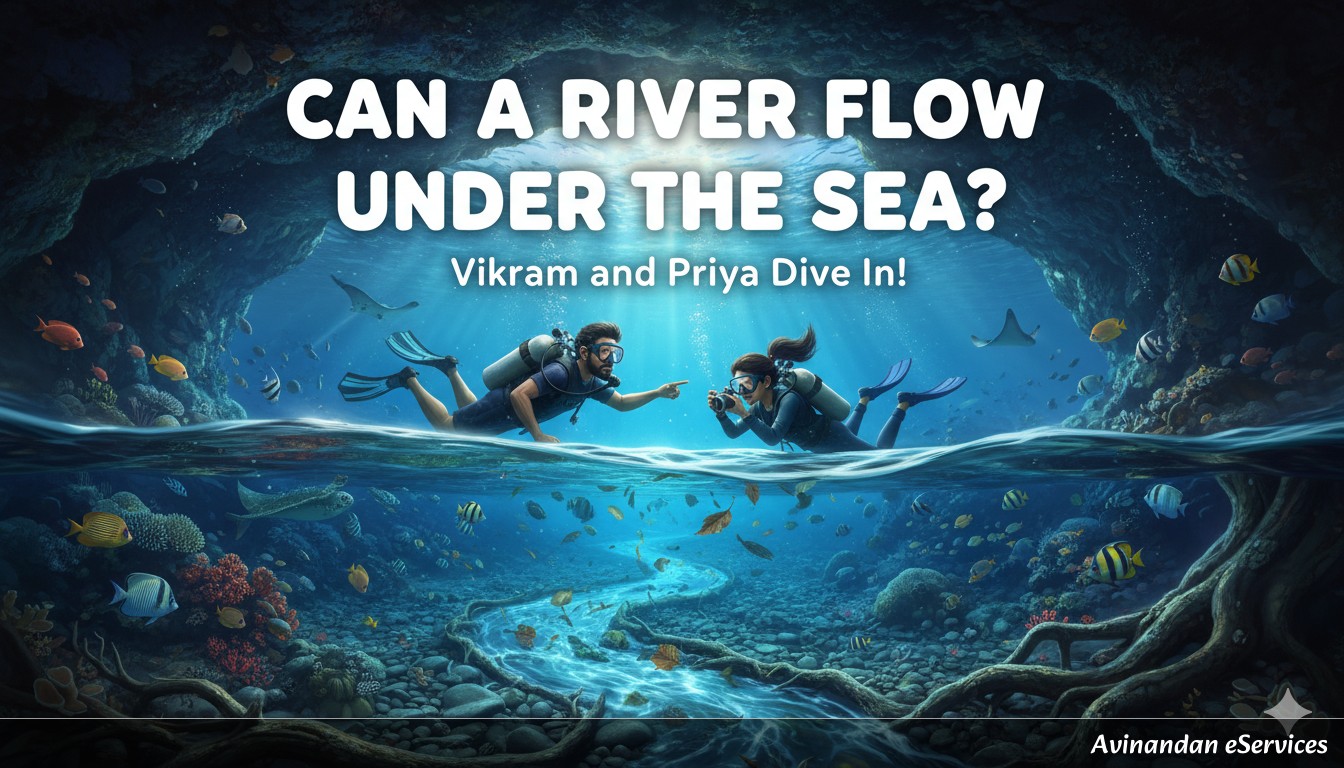
Vikram: Priya, you won't believe what I saw in a documentary last night! A deep-sea submarine was exploring the ocean floor, and it looked like it found a river flowing there. A river… under the sea! That’s impossible, right? How can you have water flowing through other water?
Priya: I know it sounds like something from a fantasy movie, Vikram, but it’s completely real! What you saw is one of the ocean's most amazing secrets. They are often called brine pools, or more simply, underwater lakes and rivers.
Vikram: Brine? You mean like salty water? But isn't the whole ocean already salty? My mind is spinning!
Priya: (Laughs) It is! But the water in these underwater rivers is super-duper salty. It can be three to eight times saltier than the ocean water around it. This makes it much, much denser and heavier.
The Science of Sunken Rivers
Vikram: Denser? What does that mean?
Priya: Think of it like this. If you have a glass of regular water and you carefully pour some honey into it, what happens? The honey sinks and forms its own layer at the bottom, right? It doesn’t mix in immediately because it’s denser than the water.
Vikram: Oh, I’ve seen that! The honey is thicker and heavier.
Priya: Exactly! The super-salty brine acts just like the honey, and the normal ocean water is like the tap water. The dense brine sinks to the deepest parts of the seafloor, forming pools with clear surfaces and even shorelines. Sometimes, when these pools overflow, they create flowing underwater rivers that carve channels into the seabed.
Vikram: Wow! So how does the water get so \textra salty in the first place?
Priya: It's a really cool process. Deep beneath the seafloor, there are massive layers of salt left over from ancient seas that dried up millions of years ago. Seawater seeps down through cracks in the ocean floor, dissolves this salt, and then gets heated by the Earth's core. This hot, super-salty water then bubbles back up to the seafloor, but because it's so dense, it doesn't mix. It just settles there, creating a lake under the ocean.
A Lake of Despair?
Vikram: That is amazing. So, are there fish swimming in these underwater lakes? Can you go for a dive in one?
Priya: Well, that’s the spooky part. Most sea creatures can't survive in the brine. The water is so salty it would be toxic to them, and there's usually no oxygen in it at all. If a fish or a crab accidentally wanders into a brine pool, it gets pickled and preserved. Scientists have found perfectly preserved creatures in them that died years ago! Because of this, some people call them the 'Jacuzzis of Despair'.
Vikram: 'Jacuzzis of Despair'! That sounds scary but also kind of cool. So they're just empty, lifeless pools at the bottom of the sea?
Priya: Not entirely! This is where it gets even more interesting. While nothing can live *in* the brine, the 'shorelines' of these pools are packed with life! Huge communities of mussels, shrimp, and giant tube worms crowd around the edges. They don’t need sunlight to survive. Instead, they get their energy from chemicals like methane and hydrogen sulfide that seep out from the seafloor along with the brine. It’s a completely unique ecosystem.
Vikram: So life found a way to live on the edge of the 'Lake of Despair'! When did scientists even discover these? It sounds like a recent discovery.
Priya: You're right, it's relatively recent in the history of science. They were first properly explored in the 1980s in places like the Gulf of Mexico and the Red Sea. Explorers in deep-sea vehicles, like the famous Alvin submarine, were shocked when their lights showed a distinct shoreline, ripples, and even waves on the surface of a lake, all while being thousands of feet beneath the ocean's surface.
Vikram: It’s like finding another planet in our own backyard. It just shows you how much we still have to explore!
So, What Did We Learn Today?
Priya: You got it! It’s a great reminder that our world is full of wonders. So, let’s quickly recap what we learned about these incredible underwater rivers.
- There are real lakes and rivers at the bottom of the ocean called brine pools.
- They are formed by water that is \textremely salty and dense, which prevents it from mixing with the surrounding seawater.
- This super-salty water comes from ancient salt deposits deep beneath the seafloor.
- Most sea creatures cannot survive inside the toxic brine, but the edges of the pools are home to unique ecosystems that thrive on chemicals instead of sunlight.
Vikram: And we learned that even the deepest, darkest parts of our planet have amazing secrets waiting to be discovered. It’s not an impossible magic trick, just really cool science!