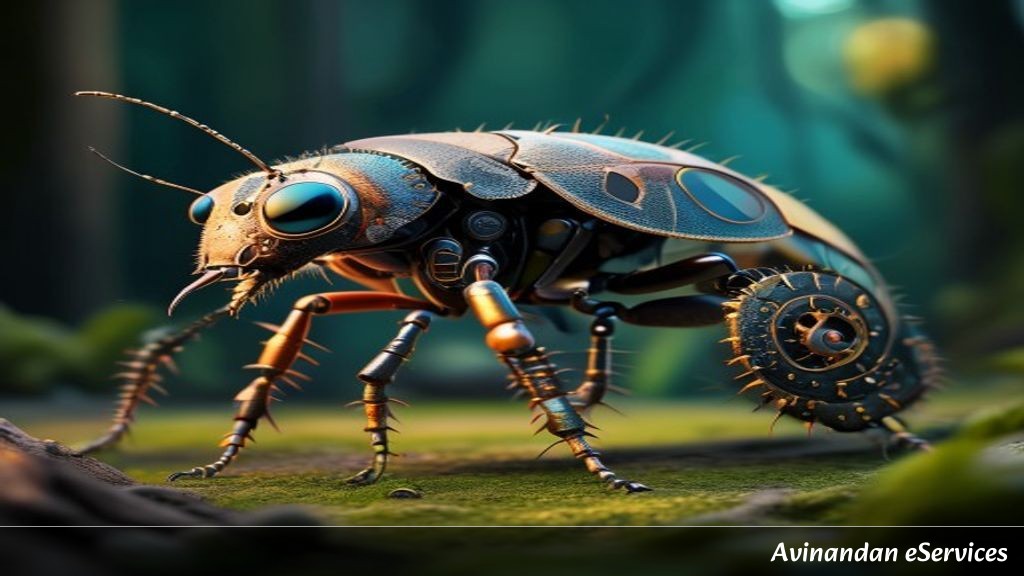
Rohan: Hey Saanvi! Look at my bicycle chain and gears. I was fixing my bike today, and it got me thinking. Humans are so clever for inventing mechanical gears, aren't we? Without gears, bicycles, clocks, and cars couldn't work at all!
Saanvi: Humans are definitely creative, Rohan! But what if I told you that nature actually invented mechanical gears millions of years before humans even walked the Earth?
Rohan: Wait, what? Are you joking? Nature doesn't make gears out of metal and grease! Plants and animals have bones, muscles, and leaves, not intermeshing cogwheels with teeth!
Saanvi: I am completely serious! Scientists discovered a tiny creature that has real, functioning mechanical gears built right into its hind legs. It is called the planthopper nymph, or scientifically, Issus coleoptratus.
Rohan: A planthopper insect with actual gears? Like a tiny living robot? How does that even work, Saanvi?
Saanvi: It really is mind-blowing! These tiny insects live in gardens and hedges across Europe. When they are young, called nymphs, they need to leap huge distances across branches to escape hungry predators like spiders or birds. But their jumps are so insanely fast that normal biology just isn't quick enough!
Rohan: What do you mean normal biology isn't quick enough? Don't frogs and grasshoppers jump using their muscles and nervous system?
Saanvi: They do, but here is the trick: a planthopper's jump takes less than two milliseconds! That is faster than the blink of an eye. For a creature that tiny, sending an electrical signal from its brain down its nervous system to tell both hind legs to jump takes about one millisecond.
Rohan: One millisecond sounds super fast to me!
Saanvi: It is fast for us, but not for the planthopper! If one leg receives the brain's command just half a millisecond earlier than the other leg, that leg pushes off first. Do you know what happens if you push hard on only one side of a speeding object?
Rohan: Oh! You spin out of control! Like paddling a canoe on only the left side!
Saanvi: Exactly! The poor insect would spin wildly in circles, lose all its jumping power, and crash right into the waiting jaws of a predator. The nervous system alone is simply too slow and imprecise to synchronize both legs perfectly down to the microsecond.
Rohan: Woah, that sounds like a disaster. So how do these interlocking gears solve that problem?
Saanvi: Nature came up with a brilliant mechanical solution! On the top part of each hind leg, called the trochanter, the insect has a row of curved, interlocking gear teeth. There are about 10 to 12 gear teeth on each leg. When the insect prepares to leap, the teeth lock together tightly, just like the cogs inside a bicycle gear or a mechanical wristwatch.
Rohan: So when one leg starts to move, the gear teeth force the other leg to move at the exact same instant?
Saanvi: Bingo! As one leg \textends, its gear teeth physically push against the teeth of the other leg. This forces both legs to rotate at the exact same speed and angle, locking them in perfect synchronization. Because it is a physical mechanical lock, it doesn't rely on slow nerve impulses at all!
Rohan: That is incredible! It's like the insect is using actual mechanical engineering to override its own nervous system!
Saanvi: It really is! In fact, when Cambridge scientists filmed these jumps using high-speed cameras shooting thousands of frames per second, they saw the gear teeth mesh together seamlessly. The gears transferred power from one leg to the other with incredible precision.
Rohan: Do adult planthoppers have these cool gears too? I want to find one and see it!
Saanvi: Surprisingly, no! Only the young nymphs have these gears. When the insect grows up into a full adult, it sheds its gears during its final molt. Adult planthoppers use a different mechanism called friction pressing to jump.
Rohan: Why would they throw away such an awesome superpower when they grow up?
Saanvi: That’s a great question, Rohan. Gears have one big weakness: if a gear tooth breaks, the whole gear jams! When the planthopper is a young nymph, it molts—which means it sheds its skin and grows a brand-new outer skeleton every few weeks. If a gear tooth snaps off, the nymph can just grow a fresh set of gears during its next molt!
Rohan: Ah, I get it! But adult insects don't molt anymore, right?
Saanvi: Precisely! If an adult broke a gear tooth, it would be stuck with a broken leg forever and couldn't jump to escape danger. So adults switch to a simpler system that doesn't risk breaking fragile gear teeth.
Rohan: Nature really thinks of everything. Humans thought we were the first ones to design gearwheels, but insects were zooming around with gears millions of years before us!
Saanvi: It just shows how much we can learn by looking closely at the tiny creatures around us. Scientists call this bio-inspiration—studying nature's designs to improve human technology!
So, What Did We Learn Today?
- Nature Invented Gears First: Long before human engineers designed cogwheels, the planthopper insect (Issus coleoptratus) developed mechanical gears on its hind legs.
- Microsecond Precision: The interlocking gear teeth synchronize the insect's legs faster than nerve signals can travel, preventing the insect from spinning out of control during a jump.
- Nymphs vs. Adults: Only young planthopper nymphs have gears because they can regrow damaged teeth whenever they molt. Adults shed their gears because they can no longer molt to repair broken teeth.
- Rohan's Final Thought: Next time I look at my bicycle gears, I'll remember that nature was the ultimate engineer first!