Introduction to Molecular Basis of Inheritance for NEET UG
The chapter Molecular Basis of Inheritance (Class 12 NCERT Biology, Chapter 6) forms the bedrock of modern modern genetics and molecular biology. Understanding how genetic information is stored, replicated, transcribed, and translated is vital not only for scoring top ranks in NEET UG but also for medical studies in biochemistry and clinical genetics.
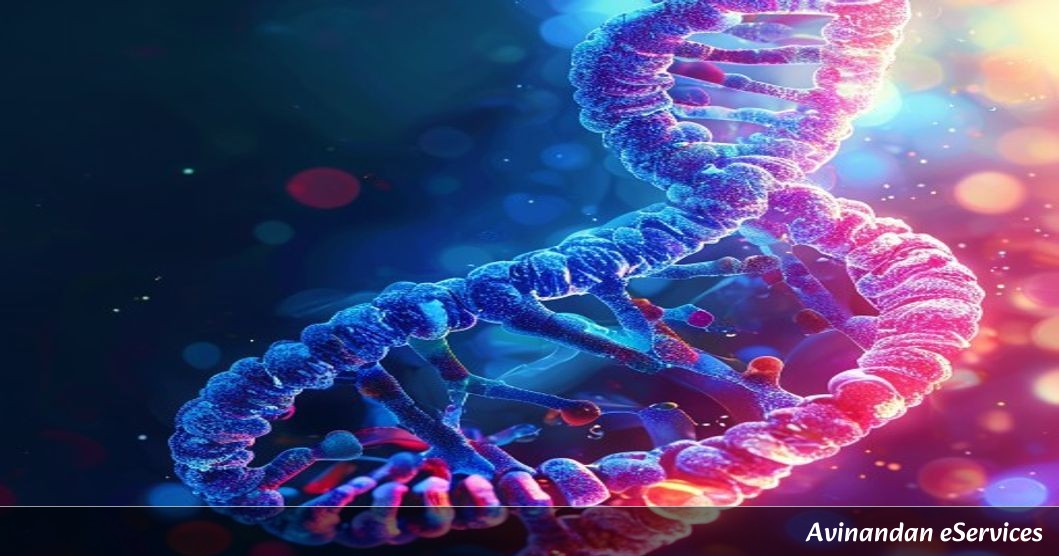
Genetic material in almost all living organisms (except certain RNA viruses like TMV, QB bacteriophage, and HIV) is Deoxyribonucleic Acid (DNA). DNA is a long polymer of deoxyribonucleotides. The length of DNA is usually defined as the number of nucleotides or base pairs ($bp$) present in it. For instance, Bacteriophage $\phi \times 174$ has 5386 single-stranded nucleotides, Bacteriophage Lambda ($\lambda$) has 48,502 base pairs, Escherichia coli has $4.6 \times 10^6$ base pairs, and human haploid DNA content ($n$) is $3.3 \times 10^9$ base pairs.
NEET Weightage & Expected Questions
In the NEET UG exam pattern, genetics carries the highest weightage among all Biology units. Specifically, Molecular Basis of Inheritance alone contributes 5 to 8 questions (20 to 32 marks) every year in the NTA NEET question paper.
- High-Frequency Topics: DNA Structure & Chargaff’s Rules, Hershey-Chase Experiment, Semi-Conservative DNA Replication, Transcription Unit & Processing, Genetic Code & Wobble Hypothesis, Lac Operon Mechanism, and DNA Fingerprinting (VNTRs).
- Question Types: Direct NCERT match-the-following, statement-assertion-reason questions, numericals based on Chargaff's rule, sequence translation/transcription orientation identification (5' to 3' vs 3' to 5'), and diagrammatic identification.
Core Concepts & Key Mechanisms Explained
1. Structure of Nucleic Acids & Packaging of DNA
A nucleotide consists of three fundamental components: a nitrogenous base (Purines: Adenine [A], Guanine [G]; Pyrimidines: Cytosine [C], Thymine [T] in DNA / Uracil [U] in RNA), a pentose sugar (Ribose in RNA, 2'-deoxyribose in DNA), and a phosphate group.
Nitrogenous bases are linked to the $1'$-OH of pentose sugar via N-glycosidic linkage to form a nucleoside. When a phosphate group is linked to the $5'$-OH of a nucleoside via a phosphoester linkage, a nucleotide is formed. Two nucleotides are joined through a $3'-5'$ phosphodiester bond to form a dinucleotide.
Chargaff's Rules (For Double-Stranded DNA):
- Purines are always equal to Pyrimidines: $A + G = T + C$.
- The ratio of Adenine to Thymine and Guanine to Cytosine is equal to $1$: $\frac{A}{T} = 1$ and $\frac{G}{C} = 1$.
- The base ratio $\frac{A + T}{G + C}$ is constant for a specific species, but varies between species. It is less than 1 for prokaryotes (GC rich) and greater than 1 for eukaryotes (AT rich).
Packaging of DNA in Eukaryotes:
Negatively charged DNA (due to phosphate groups) is wrapped around positively charged, basic protein octamer called histone octamer (containing two copies each of $H2A, H2B, H3, H4$) to form a structure named Nucleosome. A typical nucleosome contains $200\text{ bp}$ of DNA helix. Histones are rich in basic amino acid residues: Lysine and Arginine.
2. The Search for Genetic Material
- Frederick Griffith (1928) - Transforming Principle: Worked with Streptococcus pneumoniae (S-strain: virulent/capsulated; R-strain: non-virulent/rough). Injection of Heat-killed S strain + Live R strain killed mice, establishing that R-strain transformed into virulent S-strain by absorbing a transforming principle.
- Avery, MacLeod, and McCarty (1944): Proved that the transforming substance was DNA by using purified enzymes (proteases, RNases, DNases). DNase inhibited transformation, proving DNA is the hereditary material.
- Hershey and Chase Experiment (1952): Conclusive proof that DNA is genetic material came from experiments using Bacteriophages ($\text{T}_2$) labeled with Radioactive Phosphorus ($^{32}\text{P}$ in DNA) and Radioactive Sulfur ($^{35}\text{S}$ in protein coat). Radioactive $^{32}\text{P}$ entered bacterial cells, while $^{35}\text{S}$ remained in the supernatant after centrifugation.
3. DNA Replication
DNA replication is semi-conservative, semidiscontinuous, and occurs during the S-phase of the cell cycle in eukaryotes. Watson and Crick proposed semi-conservative replication, which was experimentally proven by Meselson and Stahl (1958) using Heavy Isotope of Nitrogen ($^{15}\text{N}$) in E. coli and $\text{CsCl}$ density gradient centrifugation.
- Unwinding: Enzyme Helicase unwinds the double helix at the Origin of Replication ($\text{ori}$). Single-Strand Binding Proteins (SSBs) stabilize single strands, and DNA Topoisomerase / Gyrase relieves torsional tension.
- Synthesis: RNA Primase synthesizes a short RNA primer ($5' \to 3'$). DNA Polymerase III adds deoxyribonucleotides exclusively in the $5' \to 3'$ direction.
- Leading vs Lagging Strand: On the $3' \to 5'$ template strand, synthesis is continuous (Leading Strand). On the $5' \to 3'$ template strand, synthesis is discontinuous, forming short Okazaki fragments (Lagging Strand), which are later joined by DNA Ligase.
4. Transcription & RNA Processing
Transcription is the copying of genetic information from one strand of DNA into RNA. Unlike replication, only a selective segment of DNA is transcribed.
A Transcription Unit in DNA consists of three main regions: a Promoter (located upstream at $5'$-end relative to coding strand), a Structural Gene, and a Terminator (located downstream at $3'$-end relative to coding strand).
- Template Strand: Strand with $3' \to 5'$ polarity.
- Coding Strand: Strand with $5' \to 3'$ polarity (does not code for anything, but reference point coordinates are defined by it).
In Eukaryotes, three distinct RNA Polymerases exist:
- RNA Polymerase I: Transcribes $rRNAs$ ($28S, 18S, 5.8S$).
- RNA Polymerase II: Transcribes precursor of mRNA, i.e., heterogenous nuclear RNA ($hnRNA$).
- RNA Polymerase III: Transcribes $tRNA$, $5S\text{ rRNA}$, and $snRNAs$.
Post-Transcriptional Modifications in Eukaryotes:
- Splicing: Introns (non-coding sequences) are removed and Exons (coding sequences) are joined together by spliceosomes.
- Capping: An unusual nucleotide, 7-methylguanosine triphosphate ($m^7G_{ppp}$), is added to the $5'$-end of $hnRNA$.
- Tailing (Polyadenylation): $200-300$ Adenylate residues are added at the $3'$-end in a template-independent manner.
5. Genetic Code & Translation
The genetic code was deciphered by Marshall Nirenberg, Severo Ochoa, Har Gobind Khorana, and Heinrich Matthaei. Key features include:
- Triplet & Universal: $61$ codons code for $20$ amino acids; $3$ codons act as stop codons (UAA - Ochre, UAG - Amber, UGA - Opal).
- Unambiguous & Specific: One codon codes for only one specific amino acid.
- Degenerate: Some amino acids are coded by more than one codon (e.g., Leucine, Serine, Arginine).
- Comma-less & Non-overlapping: The mRNA is read continuously in triplets without punctuation.
- Initiator Codon: AUG has dual functions: it codes for Methionine ($\text{Met}$) and serves as the start codon.
6. Gene Regulation: The Lac Operon Model
Elucidated by François Jacob and Jacques Monod, the Lac Operon in E. coli is a polycistronic inducible operon system regulating lactose metabolism.
- $i$-gene (Regulatory gene): Codes for the Repressor protein. It is expressed constitutively (all the time).
- Promoter ($p$) & Operator ($o$): Binding sites for RNA Polymerase and Repressor protein, respectively.
- Structural Genes:
- $z$-gene: Codes for $\beta$-galactosidase (hydrolyzes lactose into glucose and galactose).
- $y$-gene: Codes for Permease (increases cell permeability to $\beta$-galactosides).
- $a$-gene: Codes for Transacetylase (transfers an acetyl group to $\beta$-galactoside).
- Inducer: Lactose or Allolactose. In the presence of lactose, it binds to the repressor protein, inactivating it. RNA Polymerase then binds to the promoter and transcribes $z, y, a$ genes (Operon ON). In the absence of lactose, active repressor binds to operator, blocking RNA polymerase (Operon OFF).
Important Formulas & Key Terms Table
| Parameter / Term | Definition / Formula / Key Value | NEET Importance |
|---|---|---|
| Chargaff's Equation | $\%A = \%T$ and $\%G = \%C$; $\%A + \%G + \%T + \%C = 100\%$ | High (Numerical Problems) |
| DNA Helix Pitch & Rise | Pitch $= 3.4\text{ nm}$ ($34\text{ Å}$); Rise per $bp = 0.34\text{ nm}$ ($3.4\text{ Å}$) | Direct NCERT memory fact |
| Nucleosome Wrap Length | $\approx 200\text{ base pairs}$ of DNA per core nucleosome particle | Identifies eukaryotic DNA packaging |
| Central Dogma | $\text{DNA} \xrightarrow{\text{Transcription}} \text{mRNA} \xrightarrow{\text{Translation}} \text{Protein}$ | Foundational sequence flow |
| Start & Stop Codons | Start: $\text{AUG}$; Stop: $\text{UAA}, \text{UAG}, \text{UGA}$ | Translation initiation & termination |
| VNTR (Variable Number of Tandem Repeats) | Satellite DNA used as probes in DNA Fingerprinting ($0.1$ to $20\text{ kb}$) | Forensic & paternity testing questions |
Solved Step-by-Step Previous Years Questions (PYQs)
Question 1 (NEET 2021)
If a double-stranded DNA molecule has $20\%$ Cytosine, calculate the percentage of Adenine present in the DNA.
Options:
(a) $20\%$
(b) $30\%$
(c) $60\%$
(d) $40\%$
Detailed Solution:
According to Chargaff's rule for double-stranded DNA:
$$\% Cytosine (C) = \% Guanine (G)$$
Given: Cytosine $= 20\%$. Therefore, Guanine $= 20\%$.
Sum of $G + C = 20\% + 20\% = 40\%$.
Since the total percentage of all four bases is $100\%$:
$$\% Adenine (A) + \% Thymine (T) = 100\% - 40\% = 60\%$$
By Chargaff's rule, $\% A = \% T$. Therefore:
$$\% Adenine (A) = \frac{60\%}{2} = 30\%$$
Correct Option: (b)
Question 2 (NEET 2020)
Name the enzyme that facilitates opening of DNA helix during transcription.
Options:
(a) DNA ligase
(b) DNA helicase
(c) DNA polymerase
(d) RNA polymerase
Detailed Solution:
During transcription in prokaryotes and eukaryotes, RNA Polymerase binds to the promoter region and itself has the intrinsic capability to unwind the DNA strands locally to initiate transcription (forming a transcription bubble). Note that during replication, DNA Helicase unwinds DNA, but in transcription, RNA polymerase acts directly.
Correct Option: (d)
Question 3 (NEET 2019)
Under which of the following conditions will there be no expression of genes present in the lac operon?
Options:
(a) Glucose is present and lactose is absent
(b) Lactose is present and glucose is absent
(c) Both glucose and lactose are present
(d) Lactose is present in medium with active repressor
Detailed Solution:
The Lac Operon is an inducible operon system. In the absence of lactose (inducer), the repressor protein synthesized by the $i$-gene binds firmly to the operator region ($o$). This physically blocks RNA polymerase from transcribing structural genes $z, y,$ and $a$. Thus, when glucose is present and lactose is absent, the operon remains completely OFF.
Correct Option: (a)
Common NEET Traps & Mistakes to Avoid
- Template vs Coding Strand Confusion: Always remember that transcription takes place in the $5' \to 3'$ direction relative to the new RNA strand. Therefore, the DNA template strand MUST have $3' \to 5'$ polarity. The strand labeled $5' \to 3'$ is the coding strand, and its sequence is identical to the synthesized mRNA (except Uracil replaces Thymine).
- Direction of DNA Synthesis: All DNA polymerases (Replication DNA Pol I, II, III) synthesise DNA strictly in the $5' \to 3'$ direction only. They require a free $3'$-OH group to attach incoming deoxyribonucleotides.
- Isotope Confusion in Experiments: Hershey & Chase used radioactive Sulfur ($^{35}\text{S}$) for proteins (due to Cysteine and Methionine) and radioactive Phosphorus ($^{32}\text{P}$) for DNA. Do not mix these up with Meselson & Stahl, who used non-radioactive heavy nitrogen isotope ($^{15}\text{N}$).
- Constitutive Gene Expression: The regulatory gene ($i$-gene) in the Lac Operon is constitutive—it synthesizes repressor continuously regardless of whether lactose is present or absent.
High-Yield NEET Practice MCQs with Answer Keys
Q1. If the sequence of coding strand in a transcription unit is 5'-ATG C AT CG AT C-3', what will be the sequence of synthesized mRNA?
(a) 5'-AUG C AU CG AU C-3'
(b) 3'-UAC G UA GC UA G-5'
(c) 5'-UAC G UA GC UA G-3'
(d) 3'-AUG C AU CG AU C-5'
Answer: (a)
Explanation: The mRNA sequence is identical to the coding strand sequence, written in the $5' \to 3'$ orientation, with Thymine (T) replaced by Uracil (U).
Q2. Select the correct statement regarding DNA Replication:
(a) DNA polymerase synthesizes both strands continuously.
(b) Okazaki fragments are synthesized in 3' to 5' direction.
(c) Deoxyribonucleoside triphosphates serve dual purposes: acting as substrates and providing energy.
(d) DNA ligase joins fragments on the leading strand.
Answer: (c)
Explanation: $dNTPs$ act as substrate molecules and their terminal high-energy phosphate bonds provide energy for polymerization during DNA replication.
Q3. How many histones make up the core nucleosome particle?
(a) 6
(b) 8
(c) 10
(d) 4
Answer: (b)
Explanation: The core histone octamer consists of 8 molecules: two molecules each of $H2A, H2B, H3,$ and $H4$. $H1$ histone stays outside the core as a linker histone.
Q4. Which RNA polymerase in eukaryotic cells is responsible for transcribing tRNA and 5S rRNA?
(a) RNA Polymerase I
(b) RNA Polymerase II
(c) RNA Polymerase III
(d) RNA Polymerase IV
Answer: (c)
Explanation: RNA Polymerase III transcribes $tRNA, 5S\text{ rRNA},$ and $snRNA$. RNA Polymerase I transcribes $28S, 18S, 5.8S\text{ rRNA}$, and RNA Polymerase II transcribes $hnRNA$ (mRNA precursor).
Q5. Spliceosomes are NOT observed in cells of:
(a) Fungi
(b) Animals
(c) Bacteria
(d) Plants
Answer: (c)
Explanation: Bacteria are prokaryotes. Prokaryotic genes are continuous and do not contain introns; therefore, post-transcriptional splicing and spliceosomal machinery are completely absent in bacteria.
Summary & Final NEET Revision Tips
- Master NCERT Figures: Memorize Figure 6.4a/b (Nucleosome), Figure 6.8 (Replication fork), Figure 6.11 (Transcription in Eukaryotes), and Figure 6.14 (Lac Operon) directly from NCERT Biology.
- Remember Polarity: Always double-check strand polarities ($5' \to 3'$ vs $3' \to 5'$) in questions related to replication and transcription before picking options.
- Focus on Enzyme Specificity: Practice matching enzymes with their exact functions (e.g., Aminoacyl tRNA synthetase, Peptidyl transferase ribozyme $23S\text{ rRNA}$ in bacteria, DNA Topoisomerase).
- Revise Lac Operon Mutations: Remember that a mutation in the $i$-gene making repressor non-functional leads to constitutive (always ON) synthesis of enzymes in the presence or absence of lactose.