Introduction to the Topic
Have you ever wondered how you are able to jump, run, sit, or even blink your eyes? Our body is a marvelous machine capable of a wide range of actions. Chapter 8: Body Movements in the Class VI Science curriculum introduces students to the intricate system of bones, joints, and muscles that work in harmony to allow us to move through the world.
Key Concepts Explained
Movement is a fundamental sign of life. While plants remain fixed to the ground, animals and humans exhibit movement and locomotion. Here is how our body accomplishes this:
The Human Skeleton
The skeleton is the framework of bones that gives our body shape and protects our delicate internal organs. It acts as a support system, allowing us to stand upright.
- Skull: Protects the brain.
- Ribcage: Safeguards the heart and lungs.
- Backbone: Provides flexibility and structural support.
The Magic of Joints
If our body were made of one single long bone, we would be stiff like a stick! Joints are the meeting points where two or more bones connect, allowing for movement. Key types include:
- Ball and Socket Joint: Allows movement in all directions (e.g., shoulder).
- Hinged Joint: Allows back-and-forth movement, like a door hinge (e.g., elbow, knee).
- Pivot Joint: Allows rotation (e.g., the neck).
- Fixed Joints: Bones that do not move at all (e.g., the skull).
Muscles and Cartilage
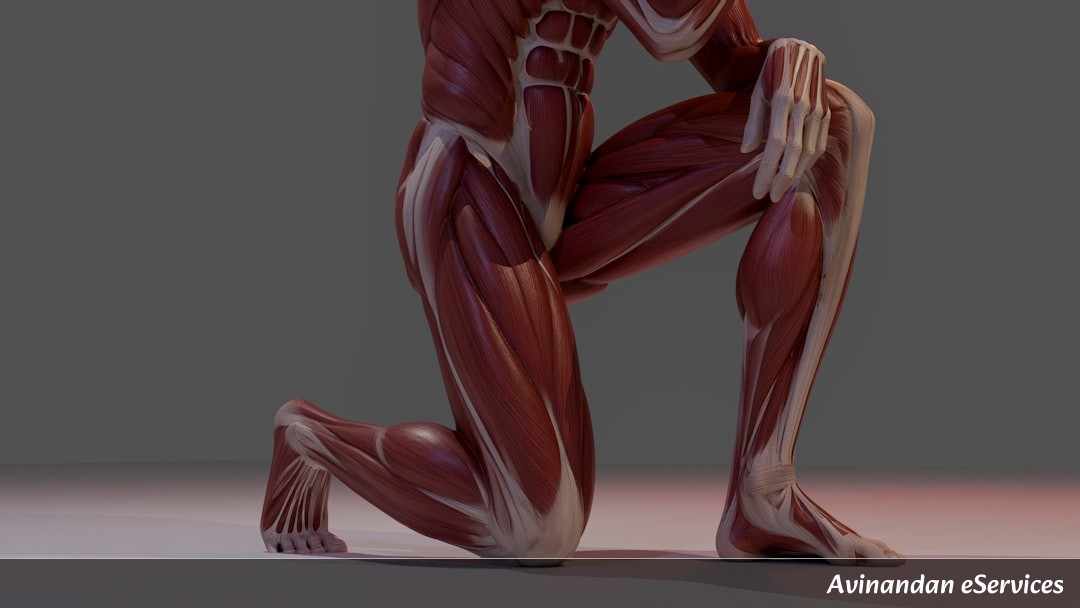
Bones cannot move on their own. They rely on muscles, which contract and relax to pull bones. Cartilage, a softer, flexible tissue found at joints like the ear and nose, prevents bones from wearing down against each other.
Gait of Animals
The chapter also explores how different creatures move. Earthworms use muscular contractions to stretch and shorten, snails use a muscular 'foot', birds use hollow bones for flight, and fish use streamlined bodies to swim.
Summary & Key Takeaways
To master this chapter, remember these essential points:
- Movement is possible due to the coordinated action of muscles and bones.
- The skeleton provides the structural base for the body.
- Different types of joints permit specific types of motion.
- Cartilage provides flexibility to structures like the ear.
- Animals have evolved unique body structures to adapt to their environments, such as wings for birds and fins for fish.