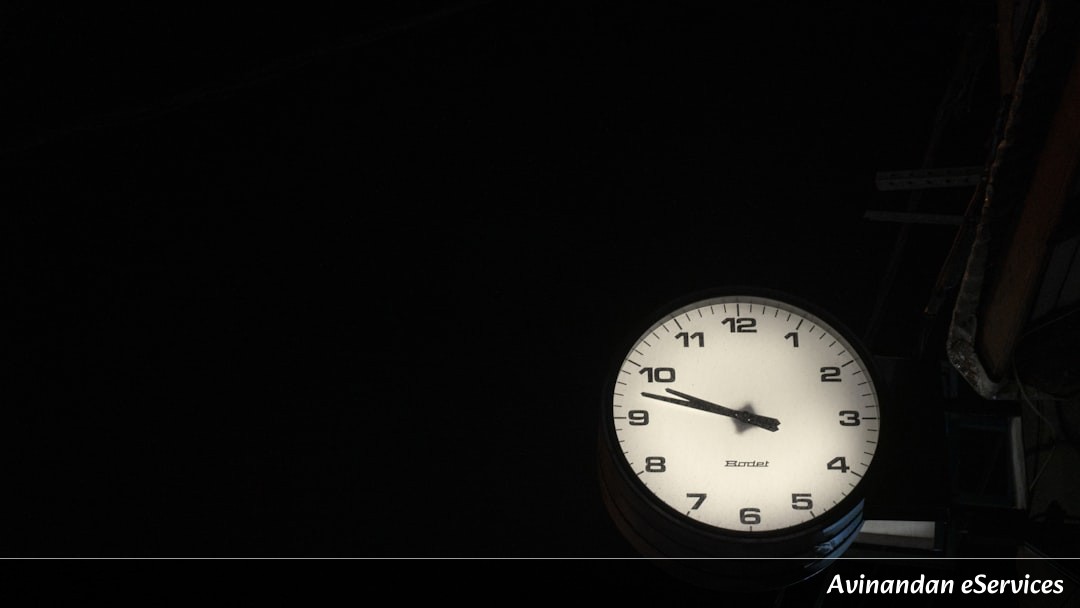
Introduction to Clock Problems for RRB Exams
In the reasoning section of competitive exams like RRB NTPC and Group D, Clock Problems represent a significant category of non-verbal and logical reasoning. These questions test a candidate's ability to visualize the movement of hands on a clock and calculate the angular relationship between the hour and minute hands. Mastering this topic is essential for scoring high in the reasoning section.
Topic Weightage and Importance
Clock-based reasoning problems appear frequently in RRB exams. You can typically expect 1 to 2 questions per paper. While the concepts are simple, the pressure of an exam environment often leads students to make calculation errors. By understanding the underlying geometry, you can solve these in seconds.
Key Concepts and Formulas
To master clock problems, keep these fundamental concepts in mind:
- Total degrees in a circle: 360°
- Minute Hand: Moves 360° in 60 minutes, which is 6° per minute.
- Hour Hand: Moves 360° in 12 hours, which is 30° per hour or 0.5° per minute.
- Relative Speed: The minute hand gains 5.5° on the hour hand every minute (6 - 0.5 = 5.5).
- Formula for Angle (θ): θ = |(30H - (11/2)M)|, where H is hours and M is minutes.
Solved Examples (Step-by-Step)
Example 1: Find the angle between hands at 3:20.
H=3, M=20. θ = |(30*3) - (11/2)*20| = |90 - 110| = 20°.
Example 2: At what time between 4 and 5 o'clock are the hands coincident?
Hands coincide when the angle is 0°. Using (11/2)M = 30H, we get (11/2)M = 30*4. M = 240/11 = 21 9/11 minutes past 4.
Common Mistakes to Avoid
- Miscalculating the hour hand position when the minute hand has moved.
- Confusing the angle between hands with the reflex angle (360 - θ).
- Failing to account for the fractional minutes in the calculation.
Practice Questions with Solutions
- What is the angle between hands at 7:30? (Ans: 45°)
- At what time between 2 and 3 do hands form a 90° angle? (Ans: 2:27 3/11 mins)
- How many times do hands overlap in 24 hours? (Ans: 22)
- If a clock shows 3:15, what is the angle? (Ans: 7.5°)
- What is the reflex angle at 6:00? (Ans: 180°)
Frequently Asked Questions (FAQs)
Q: Are formulas necessary? A: Formulas help, but understanding the speed per minute is better for speed-solving.
Q: How many times do hands meet in 12 hours? A: They meet 11 times.
Q: Can I use digital clock logic? A: No, always stick to the analog 12-hour face logic.
Conclusion and Final Tips
Practice regularly and use the 5.5° relative speed rule. Dedication is the key to cracking your RRB dream. Stay consistent and keep solving!