Introduction: A Moment in Time
The autumn air on October 19, 1781, was still and heavy with anticipation over the fields of Yorktown, Virginia. For three long weeks, the combined forces of the American Continental Army and their French allies had relentlessly squeezed a powerful British army, trapping it against the York River. Inside the besieged town, British spirits and supplies were dwindling under a near-constant barrage of cannon fire. Outside, an unlikely alliance of weathered colonial rebels and disciplined European soldiers held their breath. This day would not see the war's official end, but it would witness the decisive moment that made American independence an inevitable reality. On this day, a world superpower was humbled, and a new nation was effectively born as Lieutenant General Charles Cornwallis surrendered his army, marking the final major battle of the American Revolutionary War.
The Build-Up: What Led to This Day?
The Southern Strategy
The road to Yorktown began years earlier with a strategic shift in British thinking. After facing a frustrating stalemate in the northern colonies, British command implemented a “Southern Strategy.” They believed a majority of colonists in the South, particularly in Georgia and the Carolinas, remained loyal to the Crown. The plan was to rally these Loyalists, restore royal authority, and then sweep north to crush the rebellion. Initially, the strategy saw success. The British captured Savannah in 1778 and Charleston in 1780, securing key ports and inflicting a humiliating defeat on American forces.
Command of this southern campaign fell to General Charles Cornwallis, an aggressive and capable, if sometimes reckless, commander. He won a major victory at Camden, South Carolina, in August 1780, and it seemed the South was on the verge of being completely pacified. However, the American resistance, though battered, was far from broken. Under the brilliant leadership of General Nathanael Greene, the Continental Army engaged in a masterful campaign of attrition. Greene understood he couldn't win a head-on-battle with Cornwallis's superior force. Instead, he led the British on a grueling chase through the Carolina backcountry, fighting and retreating, stretching their supply lines to the breaking point. Battles like Cowpens and Guilford Courthouse, though technically British victories, were so costly that they shattered Cornwallis's army. Exhausted and in need of resupply, Cornwallis made a fateful and controversial decision in the spring of 1781: he abandoned the Carolinas and marched his army north into Virginia, the largest and wealthiest of the colonies.
A Franco-American Gambit
Meanwhile, hundreds of miles to the north, General George Washington watched and waited. His Continental Army, encamped near New York City, was weary after six years of war. Allied with him was a formidable French army under the command of the Comte de Rochambeau. The initial plan had been to use the French forces to attack the main British headquarters in New York, commanded by the British Commander-in-Chief, General Sir Henry Clinton. But in August 1781, a message arrived that would change the course of history.
The message was from Admiral François de Grasse, commander of the French fleet in the West Indies. He was sailing north with 28 warships and 3,000 soldiers, but he could only remain on the American coast until mid-October. His destination was not New York, but the Chesapeake Bay in Virginia. This was the opportunity Washington and Rochambeau had been dreaming of. Cornwallis had entrenched his 7,500-man army at the tobacco port of Yorktown, on a peninsula formed by the York and James Rivers. He was awaiting resupply or evacuation by the Royal Navy. If de Grasse could control the Chesapeake, Cornwallis would be trapped. Washington, in a masterful display of strategic leadership, abandoned the planned attack on New York. He and Rochambeau began a rapid, secret march south, covering hundreds of miles in what became known as the "celebrated march." They left a ghost army behind to deceive General Clinton, who remained convinced that New York was the true target and failed to send aid to Cornwallis until it was far too late.
The Event Itself
The Noose Tightens
By late September, the trap was set. Admiral de Grasse's fleet arrived and engaged the British navy under Admiral Thomas Graves at the Battle of the Chesapeake on September 5. The French victory was decisive; de Grasse blockaded the bay, cutting off Cornwallis from any hope of rescue by sea. Soon after, Washington and Rochambeau's combined army of over 17,000 men—a force more than double the size of Cornwallis's—arrived and surrounded Yorktown by land.
The siege of Yorktown officially began on September 28, 1781. With the help of French engineers, the allied forces began digging a series of parallel trenches that crept ever closer to the British fortifications. On October 9, the American and French heavy cannons were in position and began a relentless bombardment. The thunder of the guns was deafening, and for days, the town was battered into submission. One observer noted that the shells and cannonballs were "flying in every direction." Cornwallis's situation grew more desperate by the hour.
The key to breaking the British defenses were two outlying fortifications known as Redoubt #9 and Redoubt #10. On the moonless night of October 14, allied troops prepared for a daring assault. In a bid for stealth, soldiers were ordered not to load their muskets. The French, under Colonel Guillaume de Deux-Ponts, stormed Redoubt #9, while American troops, led by the young and ambitious Colonel Alexander Hamilton, charged Redoubt #10. The fighting was fierce and hand-to-hand, but in less than 30 minutes, both positions were captured. The allies could now move their artillery even closer, making the British position completely untenable. In a last-ditch effort, Cornwallis attempted to ferry his troops across the York River to escape, but a violent storm scattered the boats, ending any hope of a breakout.
The Surrender
At 10 a.m. on October 17, a lone British drummer boy appeared on a parapet, beating the signal for a parley, followed by an officer waving a white handkerchief. The cannons fell silent. Cornwallis, acknowledging his situation was hopeless, had requested a ceasefire to negotiate the terms of surrender. The following day, American and French officers met with British commissioners at the nearby Moore House to draft the Articles of Capitulation.
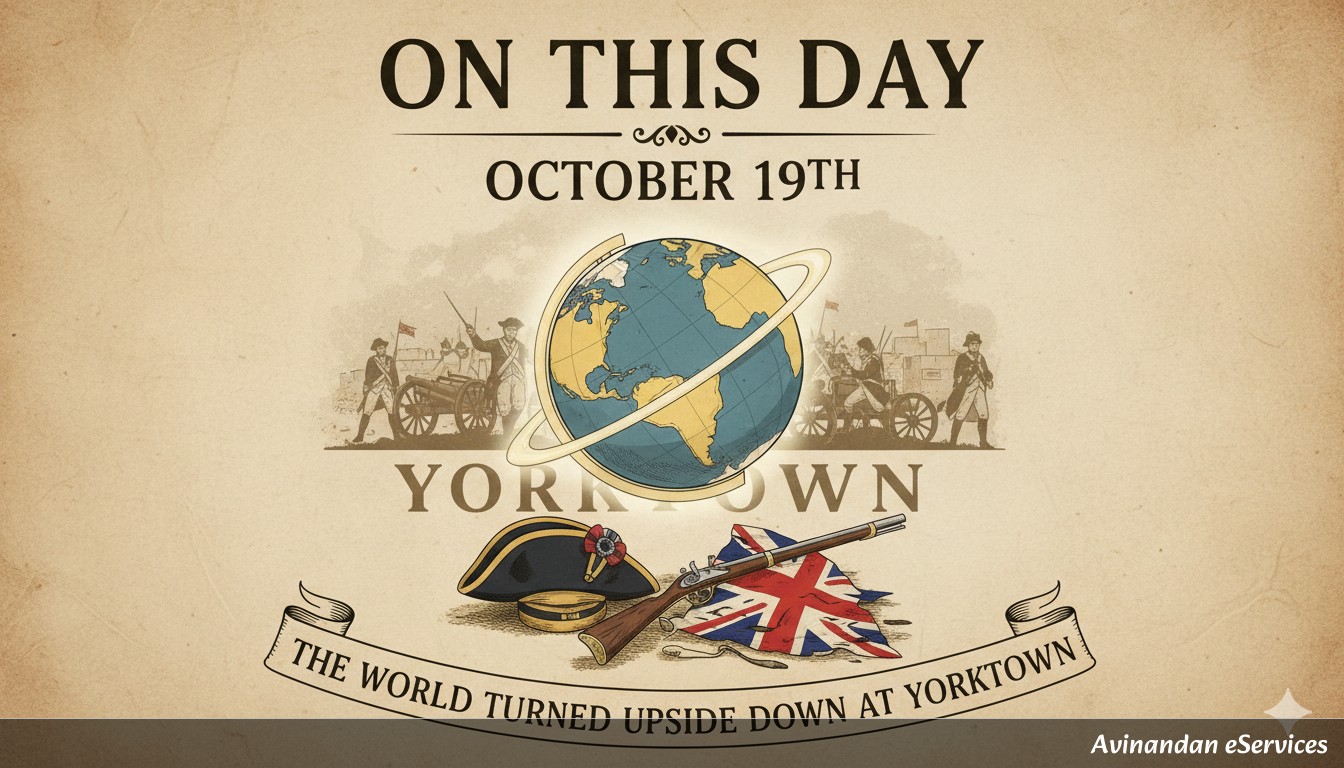
The formal surrender ceremony took place on the afternoon of October 19, 1781. The defeated British army marched out of Yorktown between two long lines of victorious soldiers—the Americans on one side, the French on the other—stretching for over a mile. General Cornwallis, claiming to be ill, did not attend, sending his second-in-command, Brigadier General Charles O’Hara, in his place. O'Hara first tried to surrender his sword to the French general, Rochambeau, who simply pointed him toward Washington. Washington, in turn, upholding military protocol that a subordinate should not accept a surrender from a commander's deputy, directed O'Hara to his own second-in-command, General Benjamin Lincoln. As the British and Hessian soldiers sullenly laid down their arms, legend holds that their bands played a fitting tune: "The World Turned Upside Down." Over 7,000 British troops became prisoners of war.
The Aftermath and Legacy
News of the surrender at Yorktown spread like wildfire, igniting celebrations across America. In London, the reaction was one of shock and despair. When the Prime Minister, Lord North, heard the news, he reportedly cried, "Oh God! It is all over!" He was right. While the surrender at Yorktown did not officially end the war—the British still held New York, Charleston, and Savannah, and minor skirmishes continued—it shattered the British will to continue the fight. The defeat led to the collapse of Lord North's government and convinced the new British leadership to enter into peace negotiations.
Two years later, on September 3, 1783, the Treaty of Paris was signed, formally recognizing the United States of America as an independent nation. The treaty granted the new nation vast territories, \textending its borders to the Mississippi River. The victory at Yorktown, therefore, was the final, decisive act that cemented the outcome of the American Revolution. It was a testament to George Washington's steadfast leadership, the resilience of the Continental Army, and, crucially, the indispensable military and financial support of France. It was a moment when a fledgling nation, through a combination of grit, strategy, and a timely alliance, defeated the most powerful empire on Earth, truly turning the world upside down.
References
- American Battlefield Trust. "Battle of Yorktown." Accessed October 19, 2025.
- Britannica. "Siege of Yorktown." Accessed October 19, 2025.
- George Washington's Mount Vernon. "Yorktown Campaign." Accessed October 19, 2025.
- U.S. Department of State, Office of the Historian. "Treaty of Paris, 1783." Accessed October 19, 2025.
- U.S. National Park Service. "History of the Siege - Yorktown Battlefield." Accessed October 19, 2025.
- Wikipedia. "Siege of Yorktown." Accessed October 19, 2025.