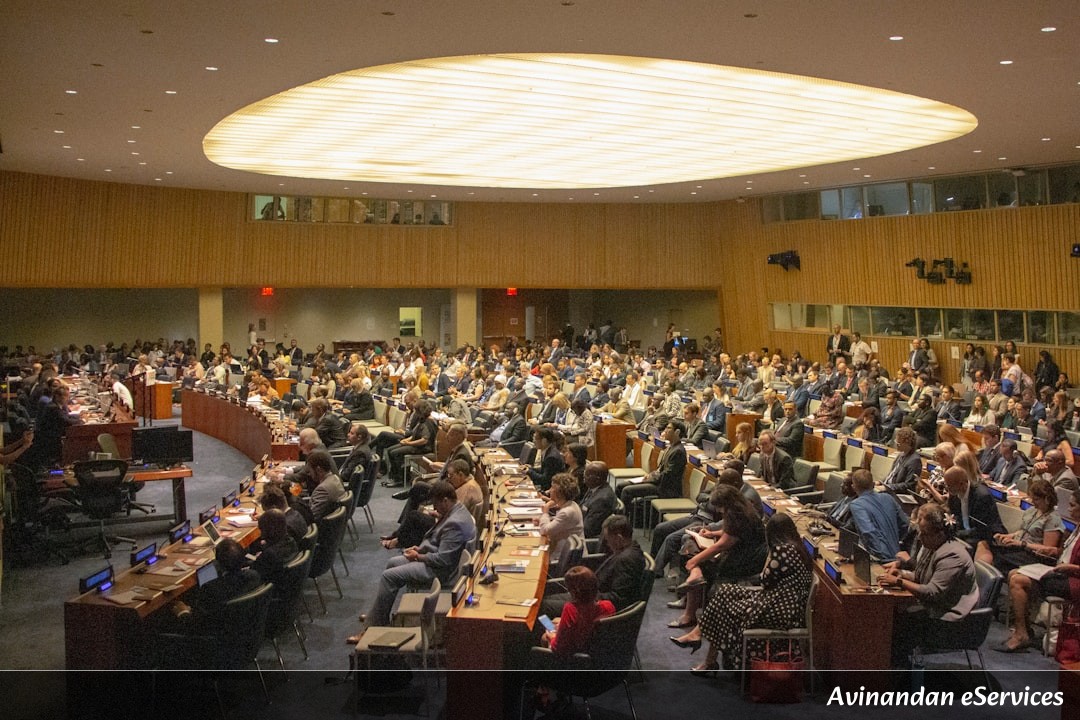
Introduction to United Nations and International Organizations for RRB Exams
In the landscape of competitive exams like RRB NTPC, Group D, and Technician, the General Awareness section holds the key to a high merit rank. Among the various subjects, Static General Knowledge (GK) is a major contributor, and United Nations (UN) and International Organizations is one of the most high-yielding topics. The United Nations was established on October 24, 1945, following the devastation of World War II, with the primary objective of maintaining international peace and security. For an RRB aspirant, understanding the structure of the UN, its specialized agencies, and other prominent international bodies (like SAARC, BRICS, and G20) is essential. This guide provides an exhaustive breakdown of these organizations, their headquarters, and their functions to help you secure full marks in this segment.
Topic Weightage and Importance
General Awareness in RRB exams typically consists of 40 to 50 questions. Based on previous year analysis of RRB NTPC (CBT-1 & CBT-2) and RRB Group D papers, at least 1 to 3 questions are consistently asked from International Organizations. These questions usually focus on:
- Headquarters of specific agencies (e.g., Where is the HQ of UNESCO?).
- Establishment years.
- Current Heads/Director-Generals.
- Member countries (especially regarding India's membership).
- Acronyms and full forms.
Given the objective nature of these questions, they are 'low-hanging fruit'—if you know the fact, you get the mark in seconds, saving time for complex Math or Reasoning problems.
Key Concepts and the Structure of the United Nations
The United Nations operates through six principal organs and several specialized agencies. Let's explore the core components every aspirant must memorize.
1. The Six Principal Organs of the UN
- General Assembly (UNGA): Often called the 'World Parliament,' where all 193 member states have equal representation.
- Security Council (UNSC): Responsible for global peace. It has 15 members: 5 Permanent (P5 - China, France, Russia, UK, USA) with Veto Power and 10 non-permanent members elected for 2-year terms.
- Economic and Social Council (ECOSOC): Coordinates the economic and social work of the UN.
- Trusteeship Council: Currently inactive (suspended operations in 1994).
- International Court of Justice (ICJ): The judicial organ, located in The Hague, Netherlands (Note: This is the only principal organ not in New York).
- Secretariat: The administrative arm, headed by the Secretary-General (Current: Antonio Guterres).
2. Important Specialized Agencies and Headquarters
Memorizing the locations of these agencies is the most common requirement in RRB exams. Use the following table for quick revision:
| Organization | Acronym | Headquarters | Established |
|---|---|---|---|
| World Health Organization | WHO | Geneva, Switzerland | 1948 |
| International Labour Organization | ILO | Geneva, Switzerland | 1919 |
| United Nations Educational, Scientific and Cultural Org | UNESCO | Paris, France | 1945 |
| International Monetary Fund | IMF | Washington D.C., USA | 1944 |
| World Bank Group | WBG | Washington D.C., USA | 1944 |
| Food and Agriculture Organization | FAO | Rome, Italy | 1945 |
| United Nations Children's Fund | UNICEF | New York, USA | 1946 |
| International Atomic Energy Agency | IAEA | Vienna, Austria | 1957 |
3. Other Vital International Organizations
Beyond the UN, several regional and economic blocs are frequent topics in RRB papers:
- SAARC (South Asian Association for Regional Cooperation): HQ in Kathmandu, Nepal. India is a founding member.
- ASEAN (Association of Southeast Asian Nations): HQ in Jakarta, Indonesia.
- BRICS (Brazil, Russia, India, China, South Africa): A group of emerging economies.
- NATO (North Atlantic Treaty Organization): HQ in Brussels, Belgium.
- Asian Development Bank (ADB): HQ in Manila, Philippines.
- INTERPOL: HQ in Lyon, France.
Solved Examples (Step-by-Step)
Example 1: Which of the following is NOT a permanent member of the UN Security Council?
A) China
B) France
C) India
D) Russia
Solution: The correct answer is C) India. The P5 members are China, France, Russia, UK, and USA. While India is a frequent non-permanent member, it does not yet have permanent status or veto power.
Example 2: In which city is the headquarters of the International Court of Justice (ICJ) located?
A) New York
B) Geneva
C) The Hague
D) Vienna
Solution: The correct answer is C) The Hague. Most UN organs are in New York, but the ICJ is uniquely situated in the Netherlands.
Example 3: Which organization is known as the 'Lender of Last Resort' and is headquartered in Washington D.C.?
A) WTO
B) IMF
C) UNESCO
D) ADB
Solution: The correct answer is B) IMF (International Monetary Fund). It provides financial stability and loans to countries facing balance-of-payment crises.
Common Mistakes to Avoid
- Mixing up Geneva and Vienna: Many agencies are in Geneva (WHO, ILO, WTO, WIPO). Don't confuse them with Vienna-based ones like IAEA or UNIDO.
- Confusing the IMF and World Bank: Remember that both are in Washington D.C., but the World Bank focuses on long-term developmental projects/poverty reduction, while the IMF focuses on global monetary cooperation and currency stability.
- P5 Members: Often students confuse 'Germany' or 'Japan' as permanent members because of their economic power. They are NOT permanent members of the UNSC.
- Founding Date: The UN was formed in 1945, but its predecessor, the League of Nations, was formed in 1920. Don't mix the two.
Practice Questions with Solutions
- Where is the headquarters of the World Trade Organization (WTO) located?
- Who was the first Secretary-General of the United Nations?
- How many official languages does the United Nations have?
- Which international organization publishes the 'World Economic Outlook' report?
- In which year did India join the United Nations?
- Where is the headquarters of the 'New Development Bank' (formerly BRICS Bank)?
- What is the total number of non-permanent members in the UN Security Council?
Answers to Practice Questions
- 1. Geneva, Switzerland: (Formed in 1995, replacing GATT).
- 2. Trygve Lie: (From Norway, served from 1946–1952).
- 3. Six: Arabic, Chinese, English, French, Russian, and Spanish.
- 4. IMF: The International Monetary Fund publishes this influential report twice a year.
- 5. 1945: India is an original/founding member of the UN, having signed the Declaration by United Nations in Jan 1942 and the UN Charter in Oct 1945.
- 6. Shanghai, China: It was established by BRICS nations.
- 7. 10 Members: They are elected for a term of two years by the General Assembly.
Frequently Asked Questions (FAQs)
Q1: What is 'Veto Power' in the UN?
A: Veto power is the power of the five permanent members (P5) of the Security Council to reject any 'substantive' resolution. If even one of the P5 votes 'No,' the resolution fails.
Q2: Is the G20 a part of the United Nations?
A: No, the G20 is an independent international forum for the governments and central bank governors from 19 countries and the European Union/African Union. It is not a UN agency.
Q3: How many member states are there in the UN currently?
A: There are currently 193 member states. South Sudan was the last country to join in 2011.
Q4: Why is October 24th celebrated as United Nations Day?
A: Because on October 24, 1945, the UN Charter officially came into force after being ratified by the majority of signatories.
Conclusion and Final Tips
Mastering the topic of United Nations and International Organizations is a strategic move for any RRB aspirant. To remember the HQs, use mnemonics: for example, "Money related organizations (IMF, World Bank) are in Washington D.C." or "Health, Labour, and Trade are based in Geneva." Keep a close eye on current affairs for any changes in the heads of these organizations, as the RRB frequently updates its question bank with current Director-Generals. Keep revising the tables provided above, and you will surely ace this section. Good luck with your preparation!


