Aarav: Mira, I was just reading my animal encyclopedia, and it says the Blue Whale is the biggest living thing to ever exist. Isn't that mind-blowing? Imagine a heart the size of a bumper car!
Mira: It is incredible, Aarav. The Blue Whale is definitely the heaviest animal. But, if you are talking about the largest living organism on the planet, the whale actually loses the crown to something much quieter, much older, and much... more mushroom-y.
Aarav: Wait, a mushroom? You mean like the ones on a pizza? There's no way a mushroom is bigger than a whale that’s 100 feet long!
Mira: I’m serious! It’s called Armillaria ostoyae, or more commonly, the 'Humongous Fungus.' While a Blue Whale might grow to be 30 meters long, this fungus in Oregon, USA, covers nearly 10 square kilometers. That’s about 2,400 acres!
Aarav: Ten square kilometers?! That’s like... thousands of football fields! How can a mushroom be that big? Whenever I see them in the park, they’re just tiny little umbrellas.
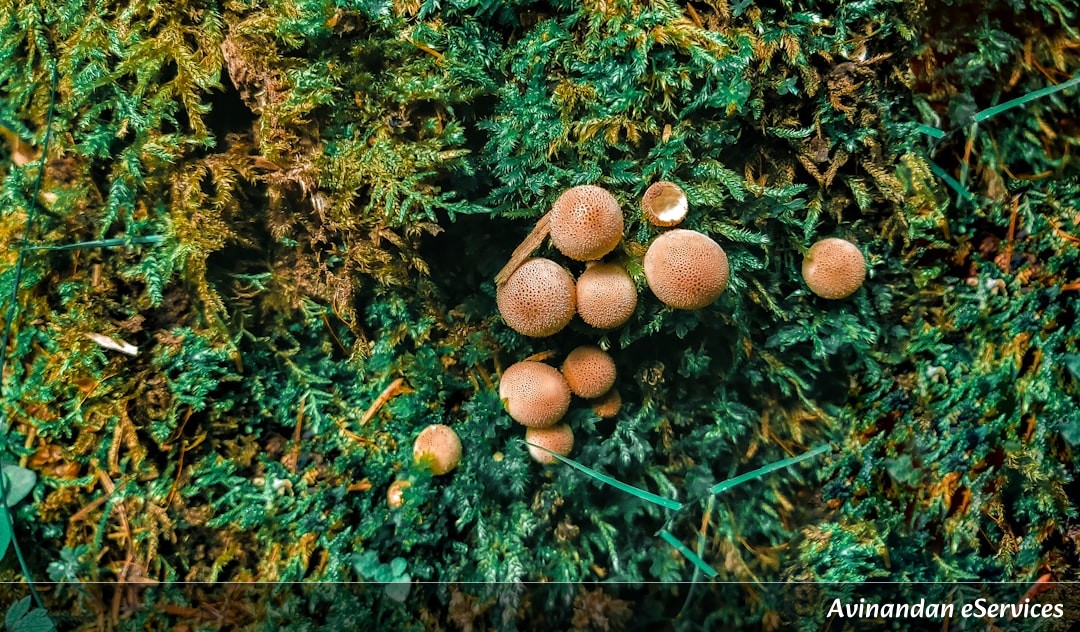
Mira: That’s the secret, Aarav. What you see above the ground—the little umbrella—is just the 'fruit' of the fungus. It’s like the apple on a tree. The actual 'body' of the fungus is underground. It’s a massive network of tiny, white, thread-like structures called mycelium.
Aarav: So, it’s like a giant, invisible spiderweb living under the dirt?
Mira: Exactly! These threads, or hyphae, spread out through the soil and even wrap around the roots of trees. In the Malheur National Forest in Oregon, this single network has been growing and spreading for thousands of years. Scientists used DNA testing to prove that it’s all one single, continuous organism.
Aarav: Wow, how does that work? Does it just keep growing forever? And what does it eat to get that big?
Mira: It grows by reaching out its hyphae to find new food sources. Unfortunately for the forest, this specific fungus is a bit of a parasite. It feeds on the roots of trees, especially Douglas firs. It breaks down the wood to get nutrients, which helps it expand even further. It’s a very slow but very steady conqueror.
Aarav: That sounds a bit scary, like an underground alien takeover! But if it’s underground, how did anyone even find it? Did someone just start digging and never stop?
Mira: Scientists actually noticed that groups of trees in the forest were dying in a specific pattern. When they looked closer at the roots of the dead trees, they found these white, shoestring-like structures. They took samples from different areas miles apart and realized the DNA was identical. That’s when they knew it wasn't a bunch of different fungi, but one giant individual.
Aarav: That is so cool. It’s like a natural mystery. But Mira, if it’s so big, how old is it? It must have taken a long time to cover 2,400 acres.
Mira: You’re right! Based on its growth rate, scientists estimate that this particular Humongous Fungus is at least 2,400 years old. Some even think it could be as old as 8,000 years! It was growing way before the Pyramids of Egypt were even built.
Aarav: 8,000 years old?! That makes it one of the oldest living things on Earth, too. I guess the Blue Whale has some serious competition. But is the fungus useful for anything other than being huge?
Mira: It actually plays a huge role in the ecosystem. Even though it kills some trees, it helps recycle nutrients back into the soil. When it breaks down dead wood, it clears space for new plants to grow. It’s like the forest’s own recycling and renovation crew. Plus, it helps us understand how organisms communicate and transfer nutrients over vast distances.
Aarav: I’ll never look at a mushroom the same way again. I’ll be wondering if there’s a giant network hiding underneath my feet every time I go for a walk!
Mira: That’s the spirit of science, Aarav! There is a whole hidden world beneath us that we’re only just beginning to map out.
So, What Did We Learn Today?
- The Largest Organism: The world's largest living thing isn't the Blue Whale, but a fungus called Armillaria ostoyae.
- Massive Scale: The largest known specimen covers about 2,385 acres (nearly 10 square km) in Oregon's Malheur National Forest.
- The Mycelium Network: Most of the fungus lives underground as a network of threads called mycelium; the mushrooms we see are just the reproductive 'fruit.'
- Ancient Life: This giant fungus is estimated to be between 2,400 and 8,000 years old!
- Ecological Role: While it can be parasitic to trees, it is essential for decomposing organic matter and recycling nutrients in the forest.
Aarav: Science is full of surprises! I guess sometimes the biggest things in the world are the ones that are best at hiding. Thanks for the lesson, Mira!