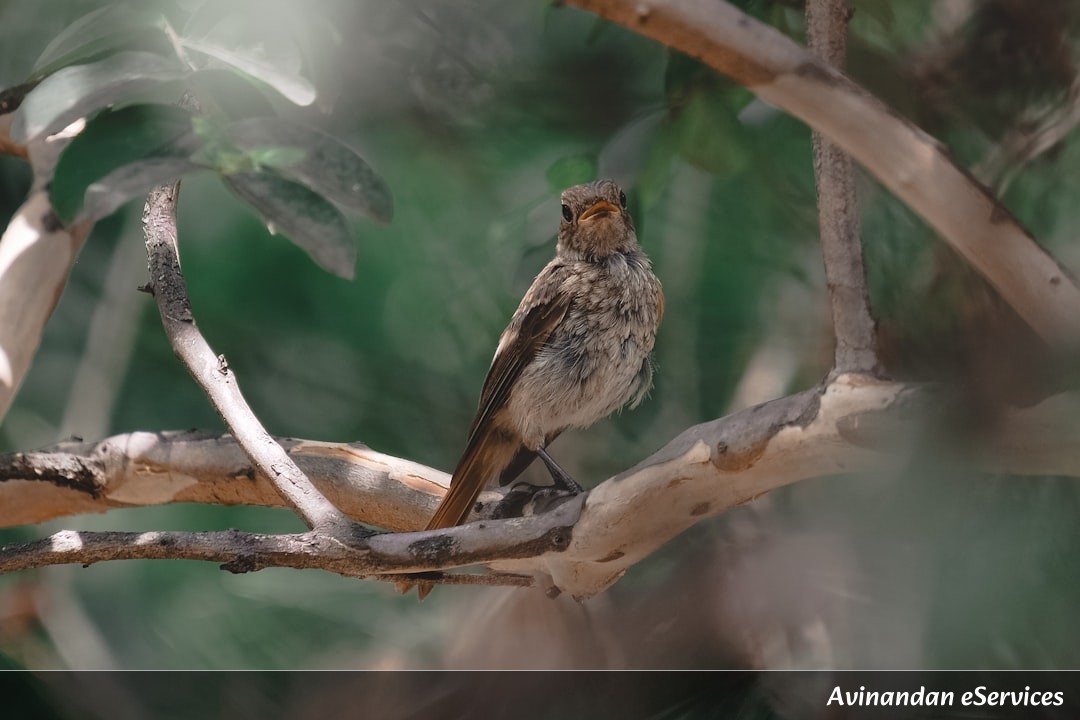
Aarav: Saanvi, stop everything! I just saw a video that looks like it’s straight out of a Disney movie. There was this man in Africa walking through the forest, and he made this weird clicking and whistling sound. Suddenly, this little brown bird flew down, chirped back, and started leading him through the trees!
Saanvi: Oh, I know exactly what you’re talking about, Aarav! That’s not movie magic; that’s real science. You probably saw a Greater Honeyguide bird in action. It’s one of the coolest examples of a 'conversation' between humans and wild animals.
Aarav: Wait, you mean they actually talk to each other? Like, the bird understands him? I thought only parrots could do that, and even then, they’re just mimicking us.
Saanvi: This is much deeper than mimicry. This is called 'Mutualism.' It’s a type of symbiosis where two different species work together because they both get something out of it. In this case, the Greater Honeyguide—scientific name Indicator indicator—literally guides humans to beehives hidden deep inside trees.
Aarav: Whoa, how does the bird even know where the honey is? And more importantly, why doesn't it just eat the honey itself? If I found a secret stash of chocolate, I wouldn't go looking for a partner to share it with!
Saanvi: Haha, I believe you! But for the Honeyguide, it’s a matter of safety and ability. You see, while the bird is excellent at finding beehives, it’s not very good at breaking into them. Bees are dangerous! They can sting a small bird to death. Plus, the hives are often tucked behind thick wood or high up in hollow trunks that the bird’s beak can’t penetrate.
Aarav: So the bird finds the treasure but can't open the vault? That's frustrating!
Saanvi: Exactly. That’s where the humans come in. For thousands of years, tribes like the Yao people in Mozambique and the Boran people in Kenya have developed a partnership with these birds. The humans have something the bird doesn't: fire, smoke, and axes. When the bird leads them to a hive, the humans use smoke to calm the bees and then use their tools to open the tree and harvest the honey.
Aarav: But what does the bird get? Is it just being nice? I bet it wants a taste of that honey too.
Saanvi: Actually, the bird isn't after the honey. It wants the beeswax! Most animals can't digest wax, but the Honeyguide has special enzymes and bacteria in its gut that allow it to break down beeswax into energy. It also loves to eat the bee larvae, which are full of protein. Once the humans take the honeycombs, they leave the wax and larvae behind as a 'thank you' payment for the bird.
Aarav: That is genius! But Saanvi, how does the 'talking' part work? How does the bird know the human wants to go hunting?
Saanvi: This is the part that fascinates scientists. The Yao people use a specific call that has been passed down for generations. It sounds like a loud 'Brrr-hm!' Researchers found that when humans make this specific sound, the birds are three times more likely to come and help than if the humans just made random shouts or animal noises. The birds have actually learned to recognize that specific human signal!
Aarav: No way! So the bird hears the 'Brrr-hm' and thinks, 'Oh, my business partner is here, let's go get lunch'?
Saanvi: Precisely! Once the bird arrives, it flies from tree to tree, chirping loudly and spreading its white tail feathers to stay visible. If the human falls behind, the bird will fly back, perch nearby, and keep calling until the human catches up. It’s a two-way communication system between a wild bird that hasn't been trained by people and a human who relies on ancient knowledge.
Aarav: Has anyone actually proven this with experiments? It sounds almost too perfect.
Saanvi: They have! A famous biologist named Dr. Claire Spottiswoode did a study on this. She found that when hunters used the traditional honey-hunting call, the probability of finding a beehive jumped from 17% to 54%. That’s a huge difference! It proves that the 'talk' between the bird and the human is the key to their success.
Aarav: I wonder if the bird does this with other animals too. I mean, humans aren't the only ones who like honey, right? Bears love it!
Saanvi: Great question! Scientists believe this behavior might have originally started with Honey Badgers. The bird would lead the badger to a hive, the badger would rip it open with its claws, and they would both feast. Over time, when humans started using fire and tools, the birds realized we were even more efficient partners. It’s a rare example of an animal evolving its behavior to work specifically with us.
Aarav: That is so cool. It’s like a real-life team-up. Imagine if we could talk to other animals like that. I could ask my dog where he hid my socks!
Saanvi: Haha! Maybe one day. But for now, the Honeyguide remains one of the only wild animals that actively seeks out humans to complete a task. It shows just how interconnected nature is and how humans have been a part of that ecosystem for a very long time.
So, What Did We Learn Today?
- Mutualism is Key: We learned that the Greater Honeyguide and humans share a mutualistic relationship where both benefit from working together.
- The Bird’s Reward: Unlike us, the bird isn't after the honey; it has a rare ability to digest beeswax and loves eating bee larvae.
- Specific Communication: Humans and birds use unique sounds, like the 'Brrr-hm' call, to signal their intent to hunt together, and the bird uses visual cues to lead the way.
- Ancient Partnership: This relationship has likely existed for thousands of years, possibly starting with honey badgers before the birds 'partnered up' with humans.
Aarav: Science is honestly better than any movie. I’m going to go practice my whistling, just in case a Honeyguide ever visits our balcony!
Saanvi: Good luck with that, Aarav! Just make sure you have some beeswax ready for the payout!